December 05, 2018
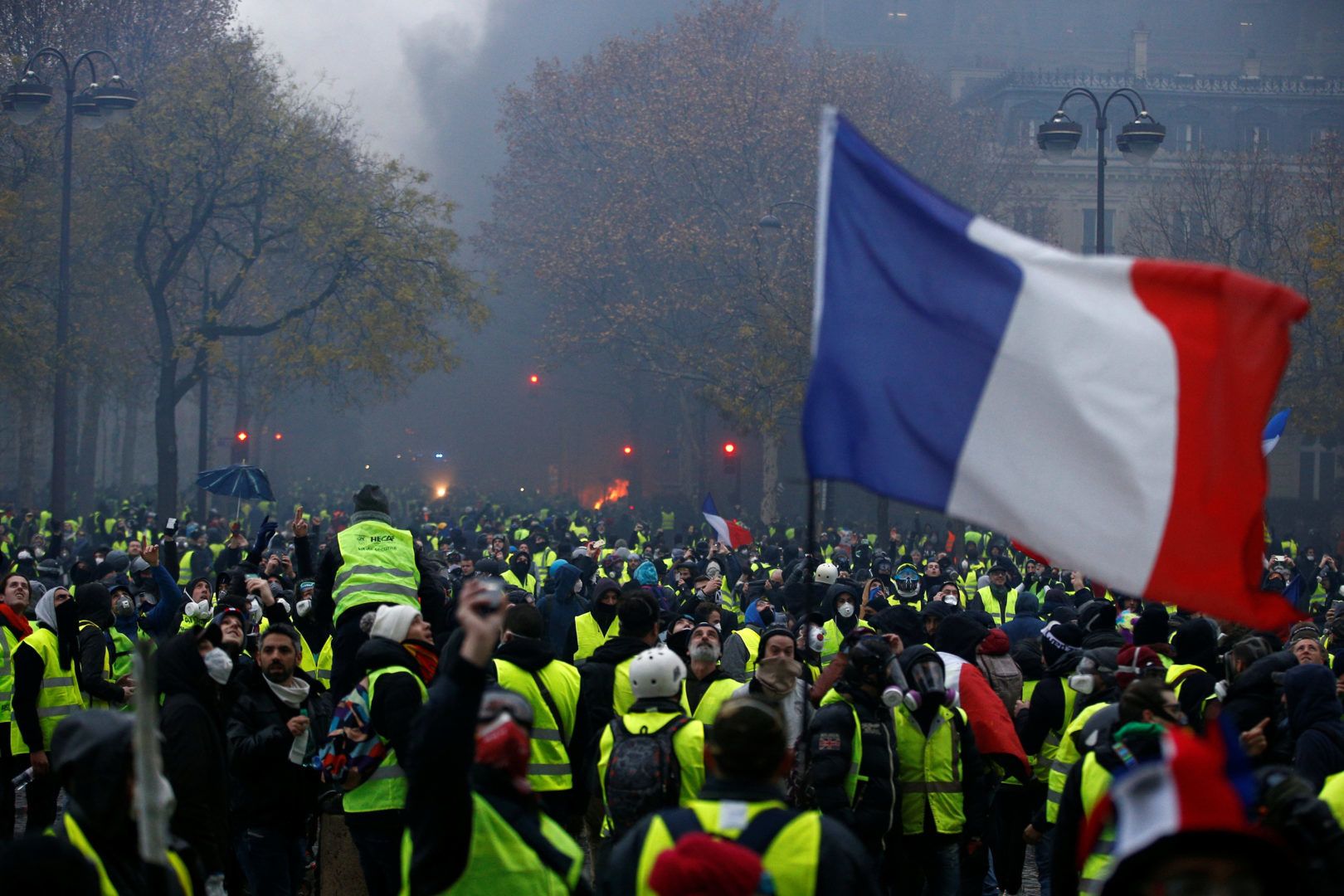
French President Emmanuel Macron faces the biggest test of presidency as a protest movement, sparked by discontent with a plan to raise gasoline taxes, has grown and become violent. Gabe is here to walk you through the latest:
The gilets jaunes ("yellow vests") protests began just over two weeks ago in response to a government proposal to further increase a "green tax" on gas and diesel fuels. Gas currently costsmore than $7 per gallon in France, and the tax would add 30 percent to that.
Since then the protests have come to embody widespread disillusionment with an aloof president. The protests have, accordingly, gained in intensity. Over the weekend, three people were killed and 260 wounded. Shops were destroyed, and monuments vandalized.
Even after this weekend's violence: 71 percent of French people surveyed support the movement, according to RTL, and nearly 90 percent say the government has mishandled the entire episode. Both the far-right National Front and far-left Unsubmissive Front support thegilets jaunes and have called on parliament to scuttle the tax hike before it takes effect in January.
These protests could well determine the trajectory of the rest of Macron's presidency. He has to placate the protestors but without capitulating in a way that politically dooms his broader plans to reform France's lethargic economy.
Mr. Macron was elected in part because he was a political outsider – now that he is in the cockpit, does he have the political acumen to manage a crisis like this?
More For You
- YouTube
In his latest Quick Take, Ian Bremmer examines the growing gap between President Trump’s threats to escalate against Iran and his reluctance to follow through with military action.
Most Popular
- YouTube
Ten years after Brexit, former UK cabinet minister Rory Stewart joins Ian Bremmer to assess its legacy, Nigel Farage's resurgence, Britain's revolving door of prime ministers, and whether the UK is entering a new political era.
- YouTube
Why is a man wearing a trash can on his head polling nearly as high as Reform UK leader Nigel Farage? Rory Stewart explains.
Ten years after Brexit, former UK cabinet minister Rory Stewart joins Ian Bremmer to examine the referendum's lasting impact on Britain's economy, politics, and place in the world—and why the UK is still grappling with the consequences today.
© 2025 GZERO Media. All Rights Reserved | A Eurasia Group media company.