Today, we thought we’d skip geopolitics and talk about Celine Dion’s comeback tour. Just kidding, and happy April Fool's Day (though we do love Celine Dion).
We’re actually examining the war in Iran’s impact on Europe’s economy, NASA’s journey back to the moon, and birthright citizenship arguments underway in the US Supreme Court.
- The Daily crew
How the Iran war is affecting Europe’s economy
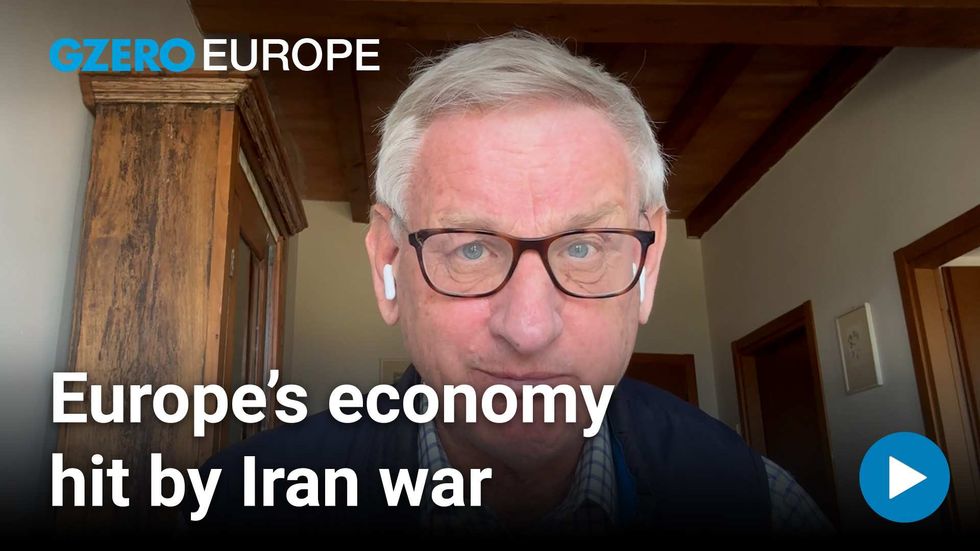
Europe thought it had tamed inflation, but the war in Iran is unleashing the beast.
Just weeks ago, the economy and inflation were in a “good place,” in the words of the European Central Bank chief. Energy prices in February across the eurozone were falling at an annual rate of 3.1%, while headline inflation hovered just below the Central Bank’s target of 2%. It was welcome progress for a continent that not so long ago overcame a separate energy shock spurred by Russia’s full-scale invasion of Ukraine in 2022.
Then, missiles started flying in Iran. Tehran responded with retaliatory strikes on the oil-producing nations in the Gulf and by effectively sealing off the Strait of Hormuz, the waterway through which one-fifth of the world’s oil flows.
The impact on Europe has been immediate. Since airstrikes began in February, European gas prices have surged more than 70%, freeing inflation from its tight leash. Annual inflation in the eurozone jumped to 2.5% in March. On a month-over-month basis, consumer prices rose 1.2%, the steepest increase since October 2022.
Europe now faces a “serious inflation shock,” according to Carl Bildt, former prime minister of Sweden. In this episode of GZERO Europe, Bildt explains that inflation will add intense pressure on the continent’s fragile growth.
Governments are responding with subsidies, tax cuts, and, in some cases, like Slovenia, even rationing fuel, but Bildt argues that their room to maneuver is limited. The longer the conflict drags on, Bildt suggests, the greater the risk of deeper economic pain, renewed strains with the United States, and rising fears of “stagflation.”
Watch the video here.
What We're Watching
REUTERS/Evan Vucci
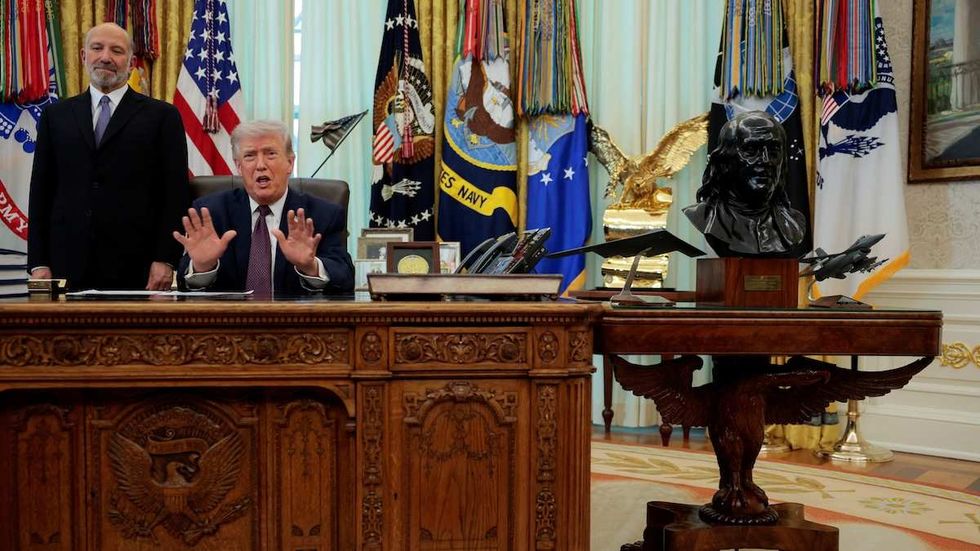
Trump takes Iran war to prime-time
What are Donald Trump’s aims in Iran? He’s sent conflicting signals in recent days — is he ending the war soon or launching a ground invasion? Is he forcing open the Strait of Hormuz or forgetting about it? Has the Iranian regime changed, or not? This evening may bring some clarity when he addresses the nation at 9 pm Eastern with what the White House called an “important” update. He faces a tough crowd: the American public largely opposes the war, partly because it has driven up energy costs, further stoking high prices that 87% of Americans say have now reached “crisis” levels. The average price for gasoline has now topped $4 per gallon for the first time in three years.
NASA goes back to the future with moon mission
Tonight, weather permitting, the US will launch the first crewed mission to the moon since the Apollo 17 expedition of 1972. The four astronauts — three Americans and one Canadian — will orbit the moon (without touching down on it) before returning to Earth on April 10. There’s a lot riding on the mission, known as Artemis II. Success would be a critical step towards returning humans to the lunar surface for the first time since Apollo 17. The mission comes as space is taking on a new role in geopolitics and technology – not as a distant frontier, but as an emerging industrial zone. Since 2009, the US and China have invested some $400 billion in the space economy – with applications spanning defense, connectivity, and navigation. Space is also attracting the AI industry’s attention – companies like OpenAI and xAI want to build solar-powered, space-cooled data centers in space to meet the enormous energy demands of the AI boom.
The world’s largest census begins
Can you count to 1.4 billion? India is about to. The world’s most populous country is beginning its census, blending in-person surveys with a first-ever digital option that allows residents to submit their information on a mobile app. After being delayed by the COVID-19 pandemic, the process will proceed in two phases. The first will record the number of people and facilities in the country, the second will take into account people's economic indicators, quality of life, and – for the first time since India’s independence – caste. Caste is an ancient social hierarchy system in India that has been influential in deciding access to opportunities and resources, and the government is collecting it to create targeted welfare programs, though some fear it will increase social tension. Once the data is collected (which will employ 3 million enumerators over a year), it could prompt changes to India's political map, including seats in Parliament and state legislatures, as well as the distribution of government welfare programs in the world’s fastest-growing major economy.
Empowering nonprofits to meet tomorrow’s challenges

Last week, Microsoft announced Microsoft Elevate for Changemakers, a new initiative designed to help nonprofit leaders confidently navigate the AI era. The program provides essential AI credentials, access to a peer community, and role-based resources to support responsible, mission-driven AI adoption.
Part of Microsoft’s broader Elevate commitment, the initiative builds on the company’s 50-year legacy of supporting nonprofits worldwide. Microsoft partners with nearly one million nonprofit and education organizations globally and will deliver more than $5 billion in discounts, donations, and grants in the coming year. By equipping those closest to social challenges with the tools to lead, Microsoft Elevate for Changemakers helps ensure nonprofits remain at the forefront of AI-powered solutions.
Read the full blog here.
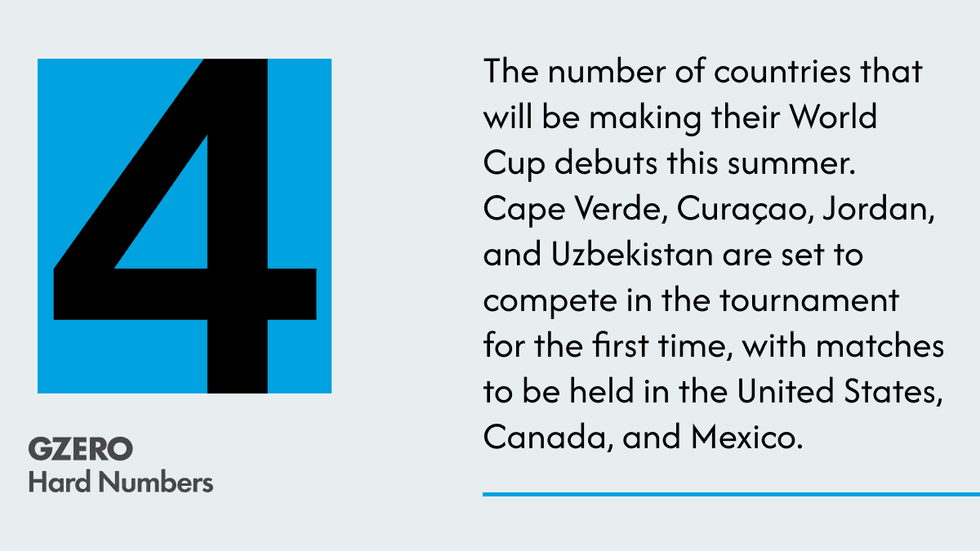
Hard number: 2026 World Cup debuts
Natalie Johnson
Forty-eight countries have officially qualified for the World Cup, after Iraq booked the final spot with its win against Bolivia on Tuesday. It’s the first time Iraq will be competing in the tournament in 40 years. The Democratic Republic of Congo, too, is set to participate for the first time in years (52 to be exact!), and even declared a national holiday today to celebrate.
Quote of the day
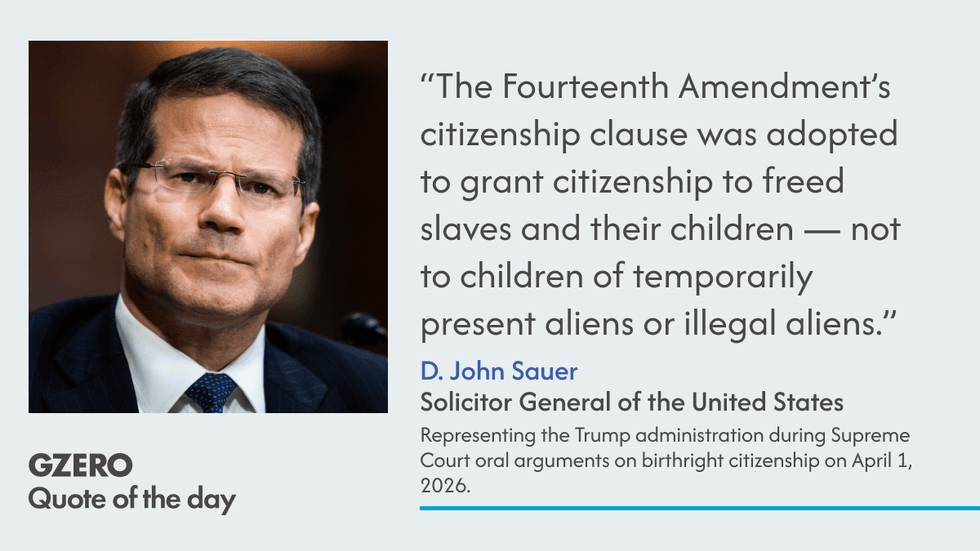
Today, the US Supreme Court is hearing oral arguments over President Donald Trump’s challenge to automatic birthright citizenship. The administration argues that the 14th Amendment – which has historically guaranteed citizenship to anyone born in the US – should not extend to babies whose parents are in the country illegally or who are temporary foreign visitors. The court's decision isn’t expected until the end of June, but it could prevent millions of future children from being granted US citizenship at birth. Trump has also taken the unprecedented step of attending the hearing today at the nation’s highest court, the first for a sitting American president.
What’s Good Wednesday: April 1st, 2026
See: “Raphael: Sublime Poetry at the Met.” The first Raphael retrospective ever mounted in the US is running through June 28 at the Met Museum. This is the kind of show that only comes around once in a generation. It traces his entire career, from his early days in Urbino to rivaling Leonardo and Michelangelo in Florence, to becoming the papal court's go-to artist in Rome, all before dying at just 37. Perhaps most striking is the show's focus on Raphael's revolutionary depictions of women, and what modern science is only now revealing about how he made them. For those outside New York, the Met's illustrated catalog and metmuseum.org offer a worthy consolation prize. – Hélène
Find: The rituals you lack. The modern world, with its relentless focus on progress, work, individualism, and production! production! production! has robbed us of the rituals, play, and communal connections that give us meaning in this life. That’s the argument of Korean-German philosopher Byung-Chul Han, whose short, intense book The Disappearance of Rituals traces this deracinating fixation with “production” into everything from James Bond films, to drone wars, to selfie culture, to the resurgence of nationalism, and the problems with pornography. In all, he writes, we have become a society of "communication without community.”A bracing book from Han, who made his name with the 2010 manifesto The Burnout Society. -Alex K
Play: Outside. The war is over (no, not that one, but the one against winter in the North East). Go frolick. – RileyListen: “The Rest is History” podcast. Hosted by expert historians Tom Holland (no, not the actor) & Dominic Sandbrook, this series has a prolific library of episodes covering all kinds of historical subjects. With lively banter and a circumspect view of all their primary and secondary sources, each episode teaches me something new and fascinating. Some historical sagas that merit six episodes; I particularly enjoyed the series on Hernan Cortés & the conquest of the Aztecs, and also the series on Francisco Pizarro & the conquest of the Incas. I’m currently listening to their series on "Custer vs. Crazy Horse”… perhaps there’s a common theme here? — Ted
This edition of GZERO Daily was produced by Riley Callanan, Natalie Johnson, and Alex Kliment.