World Economic Forum
Artificial intelligence and the importance of civics
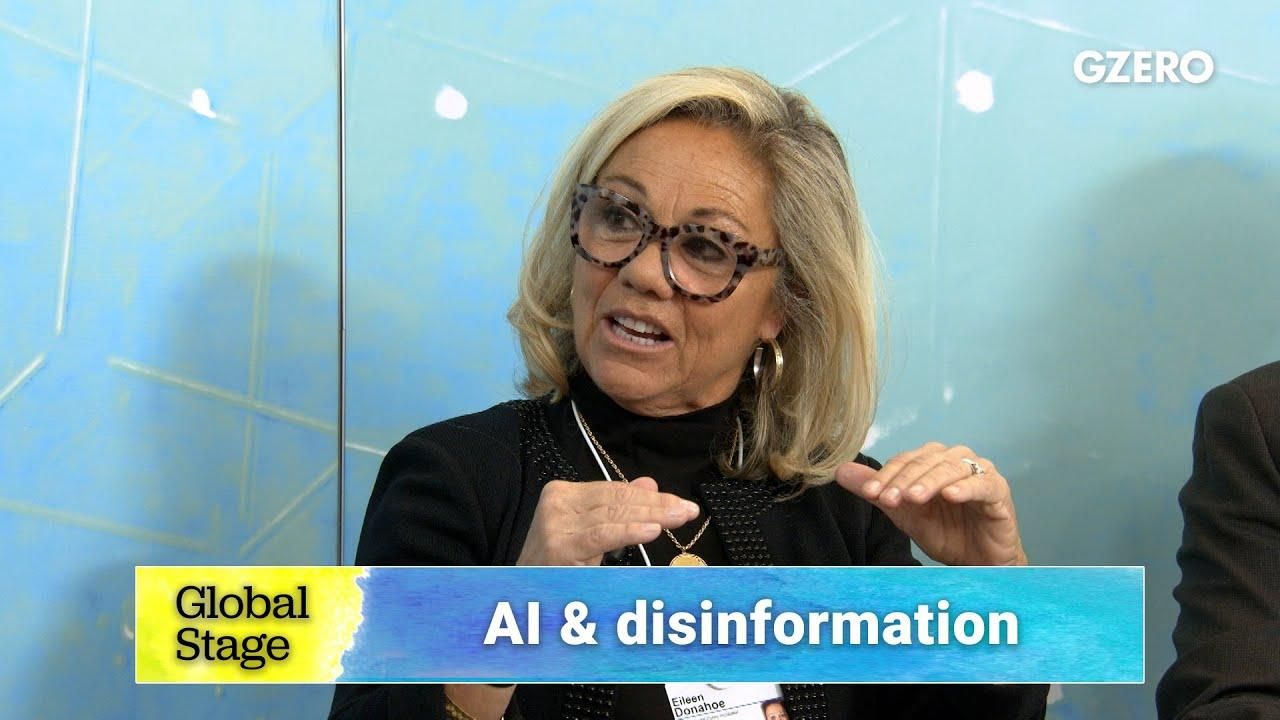
Should We Ban Artificial Intelligence? | Global Stage | GZERO Media
What's more important to fight AI-enabled disinformation: policies or social norms?
Eileen Donahoe, executive director of Stanford University's Global Digital Policy Incubator, believes we haven't done enough on the cultural level and in terms of civic education.
But, should governments ban AI? She's on the fence when asked during a Global Stage livestream conversation hosted by GZERO in partnership with Microsoft.
On the one side, Donahoe understands those like Larry Diamond, her partner at Stanford, who want to put a stop to it all before AI ryuins democrac. On the other, Donahue also believes that the founders of OpenAI are genuinely commitment to the future of humanity.
Watch the full Global Stage conversation: AI at the tipping point: danger to information, promise for creativity
South Sudan is accusing neighboring Sudan of launching a drone strike that killed at least 73 people at a market in Abyei, a disputed, oil-rich region of roughly 4,000 square miles claimed by both countries.
In this Quick Take, Ian Bremmer says President Donald Trump's approach to the war in Ukraine is putting more pressure on President Volodymyr Zelensky and raising concerns among European allies about the future of NATO.
Ongoing student protests in France descended into looting and riots over the weekend as more than half a million people took to the streets across the country.
After his father was killed in a plane crash in 2023, Pavel was tapped to lead Wagner.