What We're Watching
Can Biden salvage Gaza cease-fire plan?
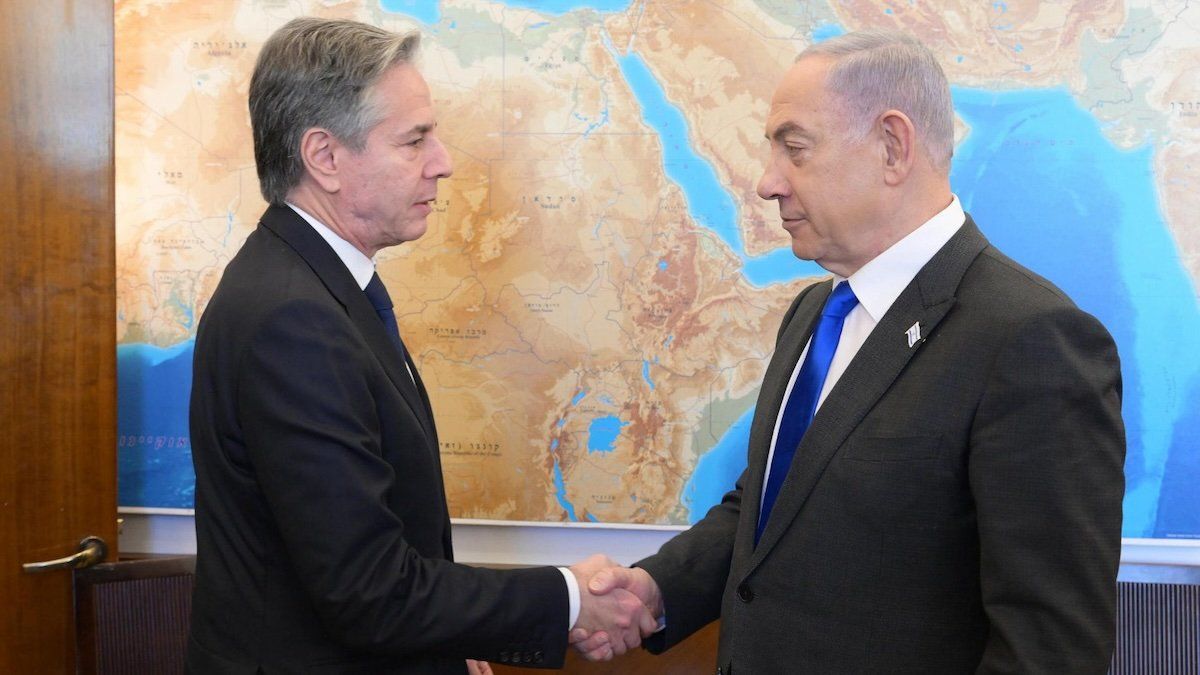
Prime Minister of Israel Benjamin Netanyahu (R) receives US Secretary of State Antony Blinken.
Reuters
The US is looking to bolster support for President Joe Biden’s Gaza cease-fire proposal and hostage deal. Secretary of State Antony Blinken is in the Middle East this week for negotiations, and the Biden administration successfully convinced the UN Security Council to back the proposal on Monday.
The US-drafted UNSC resolution urges both Israel and Hamas “to fully implement” the terms of the proposal “without delay and without condition.” Though they often use their vetoes to tank US-backed resolutions, China voted in favor and Russia abstained. While this ramps up diplomatic pressure, there are still major obstacles to the truce becoming a reality.
Though Washington says the plan was put forward by Israel and that it’s up to Hamas to accept it, Israeli Prime Minister Benjamin Netanyahu has yet to formally embrace it.
Far-right members ofNetanyahu’s fragile coalition vocally oppose the plan. But Bibi also faces ongoing pressure from the Israeli public to reach a deal to bring more hostages home, even after four were rescued over the weekend, and this plan offers a path to get that done.
For now, Netanyahu continues to say that the war won’t end until Hamas is destroyed, but we’ll be watching to see if he changes course.
In this Quick Take, Ian Bremmer breaks down Brazilian President Luiz Inácio Lula da Silva’s historic re-election victory and what it means for the country’s political future and democracy.
Could replacing Benjamin Netanyahu change Israel’s direction? Brett McGurk explains why a government led by Gadi Eisenkot would likely maintain Israel’s security doctrine while taking a different approach to the West Bank.
The competition to master this technology shapes everything from high-level tensions between the US and China to the local politics of where to build data centers.