News
April 04, 2019
1.4 billion: President Trump continues to threaten to close the US border with Mexico to resolve what he says is a national emergency created by illegal immigration into the US. More than $500 billion in goods — some $1.4 billion a day — crossed that border in 2018, according to the US Commerce Department.
77,000: Since a failed coup attempt in Turkey in July 2016, President Recep Tayyip Erdogan has detained 77,000 people and suspended or fired more than 150,000 civil servants and members of the military. But this week's local election results, in which Erdogan's party lost control of Istanbul, Ankara, and other major cities, shows that even the harshest of crackdowns can't ensure lasting political dominance.
40: In North Korea, 11 million people, about 40 percent of the population, are undernourished. Chronic malnutrition has stunted the growth of an estimated 20 percent of the country's children. The UN has called on the US to help with food aid despite the lack of progress toward denuclearization of North Korea.
45: Last December, Japan's parliament passed a bill that creates a mandatory 10-day holiday from April 27 to May 6 to mark the imperial transition from Emperor Akihito to his eldest son, Naruhito. A recent poll revealed that 45 percent of respondents in Japan "felt unhappy" about the long vacation, with just 35 percent saying they "felt happy," presumably because costs for travel during this period have spiked, and closed schools leave children at home with parents.
More For You
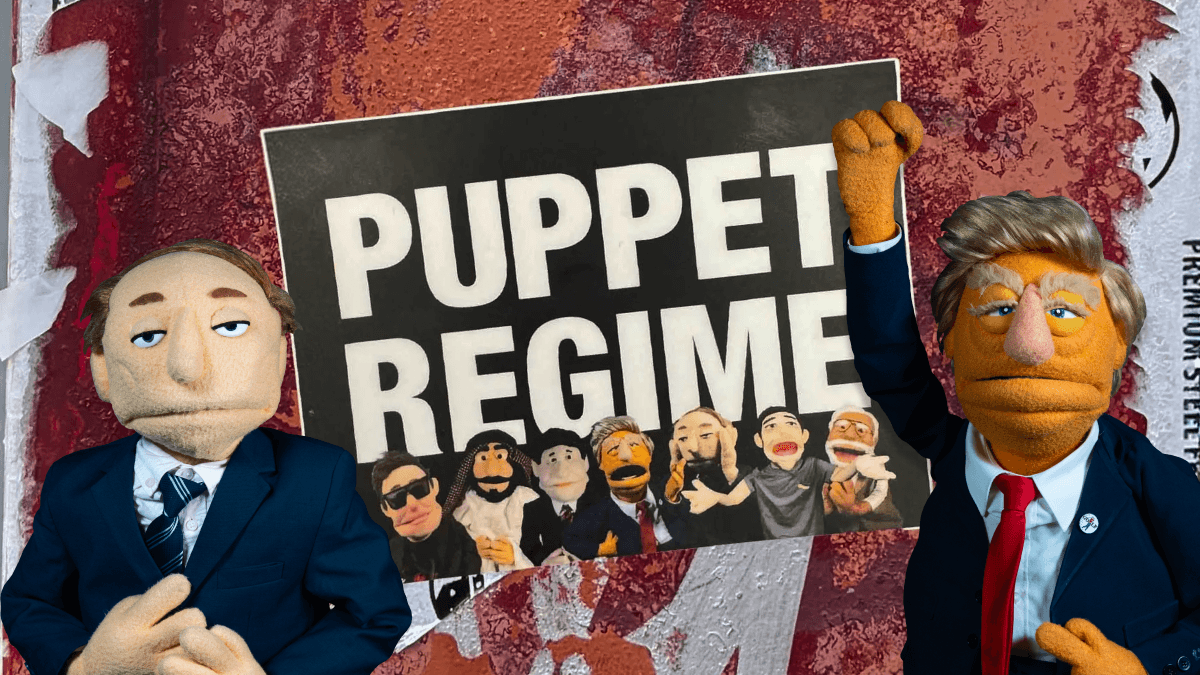
Check out the latest swag from the official Puppet Regime merchandise store! Browse an array of products that will show the world you are a devoted subject of the Regime, including: A big, beautiful mug for drinking coffee very strongly, A handsome tote bag to carry your favorite classified documents, Collectible stickers, Stylish t-shirts and hoodies – now also available in pink. We ship worldwide! Shop now at shop.puppetregime.tv!
Most Popular
US-Canada talks hit tariff deadline, Meta goes on trial, Japan to test missiles in Australia
Aug 18, 2026
A banner reading "Buy Canadian", in response to U.S. President Donald Trump's 25% tariffs on goods from Canada, is held aloft by a pair of hockey sticks in front of a house in Winnipeg, Manitoba, Canada March 5, 2025.
REUTERS/Ed White
Washington and Ottawa are down to the wire with last-minute talks to reach an agreement by 12:01 a.m. Wednesday, when President Donald Trump has threatened to impose 50% tariffs on over $20 billion of Canadian goods.
On Monday, public health officials said the virus had killed 2,325 people.
A staff member holds a dummy as staff and customers take shelter at a storage room, during an air raid exercise at a PX Mart supermarket as part of the civil defence drills in Taipei, Taiwan. July 10, 2025.
REUTERS/Annabelle Chih
As the line between the battlefield and everyday life blurs, countries are increasingly preparing civilians for the next war.
© 2025 GZERO Media. All Rights Reserved | A Eurasia Group media company.