April 14, 2026
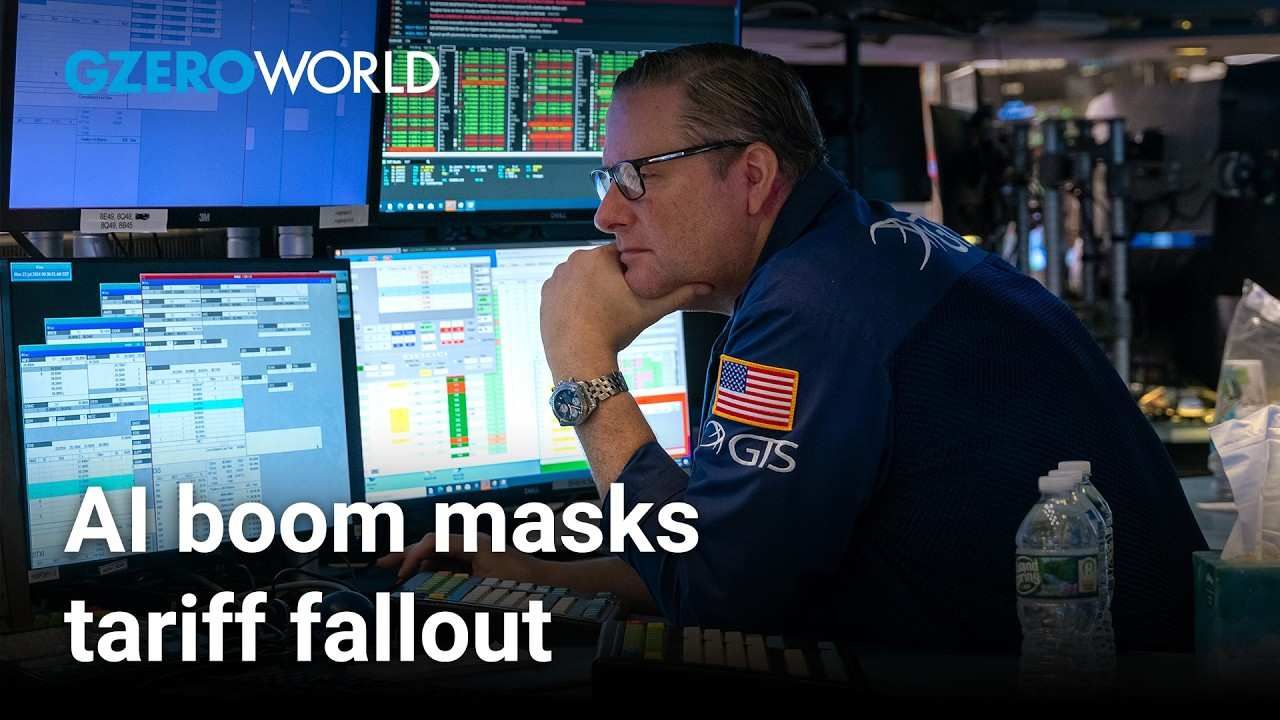
AI may be doing more than driving hype—it’s helping prop up the US economy. Harvard economist and former IMF Deputy Managing Director Gita Gopinath says a surge in AI investment helped offset the economic drag from tariffs. “The positive effect that came from AI offset the negative effect that came from tariffs,” she explains, noting that the two were “almost equivalent.”
As part of a larger conversation in the latest episode of GZERO World, Gopinath cautions that the longer-term impact is still uncertain. While US productivity has been strong, there’s no clear, economy-wide evidence yet that AI is driving those gains. Adoption remains early, and the path to profits is still unclear.
The takeaway: AI may be cushioning the economy for now—but its lasting impact is still an open question.
More For You
Can Washington turn military pressure into a diplomatic strategy? Brett McGurk joins Ian Bremmer on the GZERO World podcast to discuss the Iran war, Houthi attacks, and how elections in Israel and the US could reshape the region.
Most Popular
Think you know what's going on around the world? Here's your chance to prove it.
Turkish President Recep Tayyip Erdogan receives Canadian Prime Minister Mark Carney with an official ceremony in Ankara, Turkiye on October 22, 2026.
Anadolu via Reuters Connect
Canadian Prime Minister Mark Carney is in Turkey on Thursday for talks with President Recep Tayyip Erdogan - the visit is the first by a Canadian prime minister.
© 2025 GZERO Media. All Rights Reserved | A Eurasia Group media company.