
Podcast: Former Israeli Prime Minister Ehud Barak
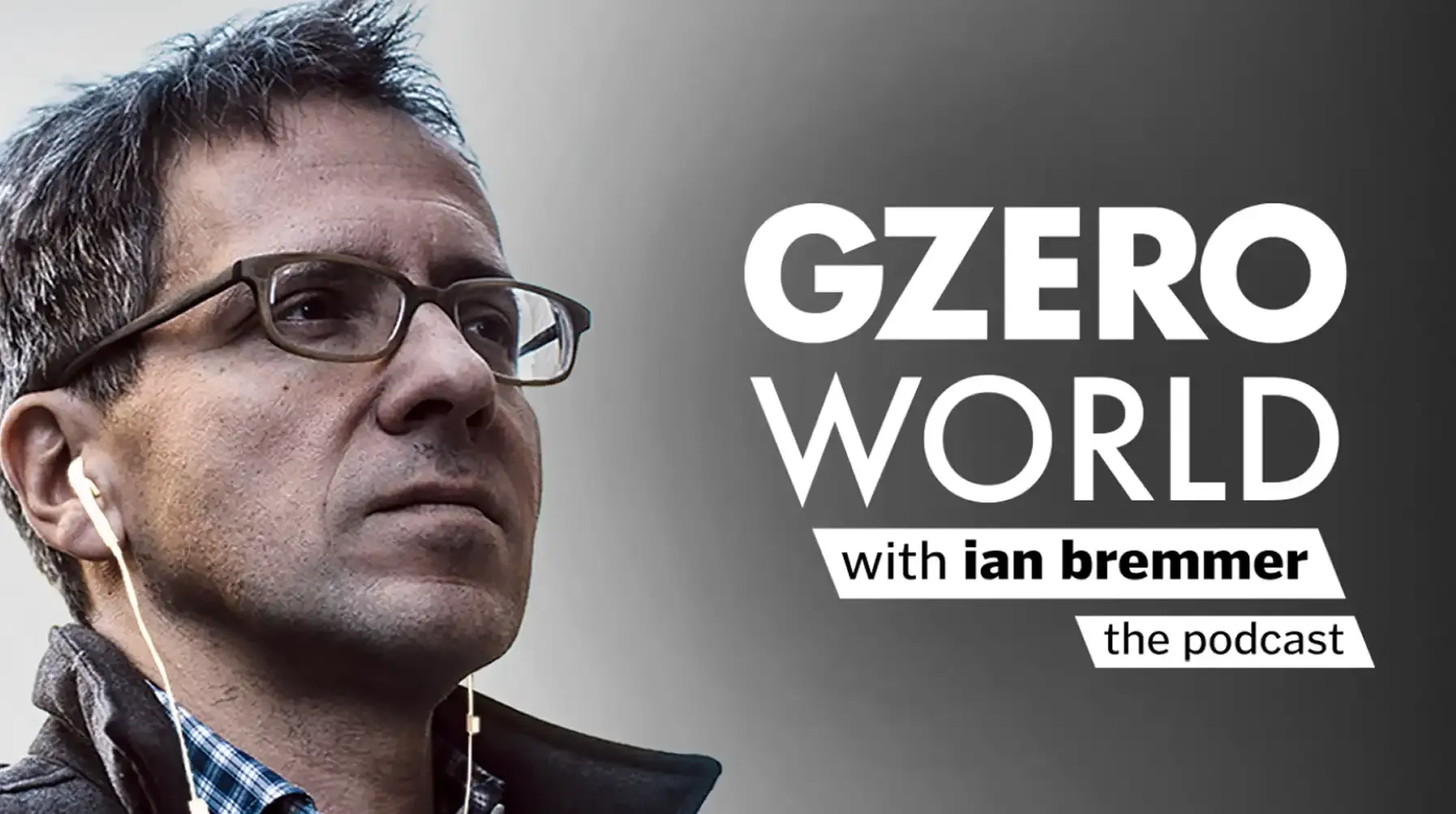
Listen: This week Ian interviews Ehud Barak, the former Prime Minister of Israel and the most highly decorated soldier in the country’s history. Given the news out of that part of the Middle East this week, his timing could not be better.
TRANSCRIPT: Former Israeli Prime Minister Ehud Barak
Ehud Barak:
The Middle East is nothing like the Midwest. It's a really tough neighborhood. No mercy for the weak. No second opportunity for those who cannot defend themselves. We are fully sober about it and we are under permanent sweat.
Ian Bremmer:
Hi, I'm Ian Bremmer and welcome to the GZERO World Podcast. I'm host of the weekly show GZERO World on Facebook watch. In this podcast, we share extended versions of the big interviews from that show. Let's get to it.
Announcer:
The GZERO World is brought to you by our founding sponsor, First Republic. First Republic, a private bank and wealth management company. Imagine a bank without teller lines, where your banker knows your name, and its most prized currency is extraordinary client service. Hear directly from First Republic's clients by visiting firstrepublic.com.
Ian Bremmer:
And I'm here in New York City with former Israeli Prime Minister Ehud Barak. New book, My Country My Life, fighting for Israel, searching for Peace. What a great time to be able to talk with you here today, Ehud. Thank you.
Ehud Barak:
Thank you for having me.
Ian Bremmer:
Start with the big Iran story. You opposed the Americans leaving the deal, you wanted them to work with the Europeans, try to work with the Russians. But it sounds like you believe that the implications of the United States withdrawing, and this great pressure, is potentially a win for the United States.
Ehud Barak:
Yeah, for in the short term, between, you don't know what will happen, what will follow. There is a power and magic in boldness. And there is clearly boldness here. But it's not clear to what extent it's calculated steps. And at certain point over boldness ends up with severe mistakes. We hope it won't happen. We hope that the long-term consequences of the same steps will not backfire at us. For example, the tension the Middle East is higher now, and we are a notch or two notches closer to possibility, probability. It's still low one, but somewhat worrying probability of ending up with a much wider scale of-
Ian Bremmer:
In the next five years, what are you more worried about from Iran? Is it war or is it revolution and regime implosion?
Ehud Barak:
I do not worry about implosion from within. I would be happy to see it, but I don't believe that I can influence it. War as a result of the clashes with the Iranians in the Golan Heights is something that I believe we do not need.
Ian Bremmer:
Golan Heights, territory held by Israel, close to Syria, quite contentious these days.
Ehud Barak:
Israel, it was Ben-Gurion, the founding father who was the first to formulate the assymetry between Israel and its neighbors. He said we have to win each and every war. They have to win only once. So this assymetry creates our thought that we develop, we advance, we strengthen ourself during those intervals between wars. So we do not need preemptive war, unless it is against, enable developing nuclear weapons.
Ian Bremmer:
Does Netanyahu agree with that formulation?
Ehud Barak:
Yeah, he probably intellectually used to agree, but his behavior in the recent several months show that, at least proforma, he wants to project the feeling that we will go whatever it takes. I don't like the hyper talking in Israel. We usually adapted the Western movies kind of rule of, if you have to shoot, shoot, don't talk. Recently we talk a little bit too much. It sometimes creates the feeling that we are heading toward the war. I don't believe that that would be what Netanyahu really wants. He's basically a risk avert. He's very cautious person. And I say to his compliment.
Ian Bremmer:
It was Bibi Netanyahu that helped juice the pot a little bit, when he decided to give that presentation, show and tell, Iran lied, big Mossad operation. Yet again able to grab enormous amounts of information. Pretty surprising move, right? What did you think about that?
Ehud Barak:
There was nothing new in it. Nothing. Not a single element which was not known, and nothing which went beyond the date of 2015 where the-
Ian Bremmer:
When it was signed.
Ehud Barak:
So in a way it created great opportunity for these presentations that was impressive. It attracted a lot of attention, but not really smoking gun.
Ian Bremmer:
So, for our listeners and our viewers out there, tell us a little bit about why you believe that Mossad Israel's intelligence operations have been so effective.
Ehud Barak:
I think necessity in a way the model of invention. And we need these kinds of capabilities to survive. The Middle East is nothing like the Midwest. It's a really tough neighborhood. No mercy for the weak. No second opportunity for those who cannot defend themselves. We are fully sober about it, and we are under permanent sweat. I think that it's because what we have went through, we have no choice. We would not have survived if we would not have been able to know and to take risk, and to go through these vicious cycle of trying, daring to execute operations. Trying to learn from mistakes even during operation, which failed. I think that I go through it in my book many times, because I spent my formative years in our special forces. The units like your American SEAL team six or Delta forces long before these units ever came to exist. And we experience it. You have to be there with the best people, investing the best in them in order to create those capabilities.
Ian Bremmer:
So, another thing going on of course right now, the Palestinians. And the border with Gaza, we've seen big demonstrations, a lot of violence, some of that unprecedented from the Palestinian side. Do you think the Israeli response so far has been appropriate? How worried are you about where this is heading?
Ehud Barak:
Every human life is, especially if it's not a terrorist, but an innocent civilian, it's something that should be regretted. Better that it would not have happened. But we have no choice. We do not dilute ourselves, especially those among us who promote the idea that we have to disengage ourself from the Palestinian to build a barrier within which we'll have our strategic needs, most of the settlers, but mainly solely Jewish majority for generations to come.
Ehud Barak:
And on the other side, the place for the Palestinian state, once they are ripe for it and ready for it. But those who believe that we have to disengage and build those Robert Frost famous good fences, make good neighbors. And you have to bear in mind that respecting the border is a main pillar of stability. We cannot afford let thousands of people cross it just by moving toward it with some demonstration. So we had a rich variety of means to block a demonstration from 10 yards, but not as much to block a demonstration from 500 yards. So that was the cause of some of the loss of life, the beginning. And we do our best to do it. But people in the world should understand, there is no way but to face it. With the means we have we cannot afford the border being not respected and just coast.
Ian Bremmer:
Now you're an Israeli patriot. You're one of the most decorated former soldiers in the history of the country. But you've also said that if you were Palestinian you could see joining a terrorist organization.
Ehud Barak:
I didn't say anything about the Palestinian cause. I said something about the relationship between the circumstances under which you are born. So I didn't say that I am the Israeli patriot would joint Palestinian terror. I said that if I were born Palestinian, so I was with the same genes, but with Palestinian identity, I probably would've ended up to one of these terrorist organizations. I try to say basically, that you cannot fight effectively your enemy if you are blood or blinded by blind hatred. You better understand. You don't have to accept of course his policies or his intentions, but you better understand what they're doing. It's make the fighting more effective, and for sure it makes the searching for ways to deal with the root causes of the conflict in more effective way without missing opportunity. We always used to blame the Palestinians. Our legendary foreign minister, Abba Eban used to say the Palestinians never missed an opportunity to miss an opportunity.
Ehud Barak:
We have to be careful not to find ourself after 50 or 120 years of conflict ending up at the same place. We cannot afford losing or missing opportunities to make the situation more relaxed, more tranquil. Because ultimately that's the way to... We will always in the Middle East will have to have our sword kind of on our side, or probably I will have our finger very close to the trigger ready to pull it. But it's better if it's done when the whole situation is in peace and just backed by your military capacity to defeat enemies. Probably the Palestinians are not ripe for it at this stage. But we should not do or take steps which close the door on the option for breakthrough towards peace the moment the other side is ready.
Ian Bremmer:
And do you think the Israelis have moved farther from that? I mean, obviously it feels more secure today. There's no imminent threat of an Intifada. Are you worried that the ability of the Israelis to think of the Palestinians as equally human, to be able to accept? If I were Palestinian, here's what I would be thinking. Is that going away?
Ehud Barak:
I'm optimist. I don't believe. I visited and looked very closely at Belfast. And I visited Bosnia and Serbia. You see places where human communities were bleeding into each other hands for hundreds of years. And a moment came where it became clear that instead of looking into the abyss, both communities, that the only element we change is that I once put it to Arafat.
Ian Bremmer:
Yasser Arafat, former leader to the Palestinian Liberation Organization.
Ehud Barak:
Won't be solved in heaven. We human beings have to solve it. If we do not solve it, our successors will have to deal with it. Nothing will be changed.
Ian Bremmer:
We've always said, this choice, it has to... If you don't do a two-state solution, it's non-democratic or it's non-Jewish. We're moving into a world where non-democratic is becoming more embraced by a lot of people and a lot of countries. Do you think that this is becoming, do you fear that this is becoming a more attractive outcome for the Israelis over time?
Ehud Barak:
Yeah, in a way I'm worried when you look at the present situation in a way, but I'm optimistic when I look in the longer term. Israel is the most successful national project of the 20th century. Even if you look just in the last 70 years, it started from zero. Within 70 years we became the most powerful player, thousand miles around. Jews are, not just militarily, strategically, technologically, even economically. We're not the biggest economic, but by far the most vibrant and innovative one. And we have a good people, noisy and with a strong tendency to quarrel with each other. But proud of our achievement, and most importantly ready to unite and sacrifice when a moment of truth comes.
Ian Bremmer:
Finally, let me just ask you about the moving the embassy to Jerusalem. You had Guatemala, the Honduras, central Americans, not very exciting. But now you've got the United States as well. Big announcement, big move. How do you feel about that?
Ehud Barak:
I feel very happy and proud. I think that every Israeli feels that something that had to be done 70 years ago finally had been done by probably the 10th or 12th president since we were established in a state. And in this regard, I should compliment President Trump. He does what he says. And at least in the Middle East, he basically said something which is disturbing a little bit. Put on the shelf all these nation building, all these democracies, human rights.
Ehud Barak:
Let's focus on the realities, fighting against terror put Iran at the bay with their germanic and nuclear intentions and deal with the real issues. He even promised to try to solve it. In this regard, his step to move does not exclude anything for the Palestinian. I know it's to alienate the Palestinians. It would be a call for a lot of condemnations or whatever. But basically, it's a natural step. Jerusalem is the capital of Israel. You put your embassy there. It does not even exclude the possibility that once a Palestinian state will be established, they can have their embassies. And then some Arab heavily habitat enabled in Jerusalem, which might be part of their capital. So, I think that certain things are so natural and justifiable, Israel are happy with it.
Ian Bremmer:
Now you said Trump gets credit for that. I assume you think Netanyahu gets credit for that as well?
Ehud Barak:
Yeah. I think that the last several months, for sure several weeks, are the best Netanyahu had in all his political career. The fact that he resonated always, almost rhymes with what we hear from Trump. And it not just verbal, it's also in actions, make Israel feel more confident when we are navigating our own role in the area. Of course, I hope that it'll not turn into complacency, into sitting on the lower and start developing certain hubris.
Ian Bremmer:
You and I haven't even mentioned the corruption scandals. Where if we were talking about Netanyahu a month ago-
Ehud Barak:
Here or there.
Ian Bremmer:
There. There, or here a different story. No, they still talk about him here. But in Israel, right? I mean, now you've got so much other news that he's taking credit for. Do you think that this means that the corruption scandals go away?
Ehud Barak:
No. I think that for the next last week no one mentioned it and probably for the next two weeks no one will mention it. But it takes... Go like, how you call it, steam roller, the kind of this machine to move very slowly, but it pushes everything. I don't believe that you can stop corruption investigation. Israel already had the president and former Prime Minister and Minister of Finance and several other ministers. Somehow we are not clean of corruption. But for sure the law enforcement system and the justice system is still alive and kicking Israel, in spite of very deliberate efforts along the last year or two years by Netanyahu government to suppress, to correct the authority of the Supreme Court, to weaken the civil society, to shut up the most critical outlets of the media. And even to question the ethical code of the IDF.
Ehud Barak:
So Israel, under a direct attack on our basic pillars of democracy. But once again, I believe that there is enough energy when it comes to the very, very close to breaking what is so precious for all of us. I believe that you will show the energy erupt and put an end to it.
Ian Bremmer:
Ehud Barak, thank you very much.
Ehud Barak:
Optimist note.
Ian Bremmer:
That's it for our show this week. Next week I'm actually off taking a little break, everyone deserves one. But come back the week after that and I'm going to bring you one of the world's top experts on populism and democracy. Princeton's own Jan Muller. See you then.
Announcer:
The GZERO World is brought to you by our founding sponsor, First Republic. First Republic, a private bank and wealth management company. Imagine a bank without teller lines, where your banker knows your name, and its most prized currency is extraordinary client service. Hear directly from First Republic's clients by visiting firstrepublic.com.