Hard Numbers: Over half a century of summits, Gen-Z brings positivity, Thousands of troops, A pricey lunch

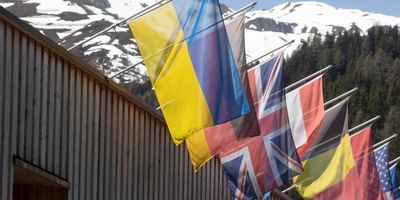
The national flag of Ukraine flies along with other countries' flags at the congress center for the 2022 edition of the World Economic Forum.

The national flag of Ukraine flies along with other countries' flags at the congress center for the 2022 edition of the World Economic Forum.

REUTERS/Arnd Wiegmann

54: Happy 54th birthday to the World Economic Forum. For over half a century, the global elite has traveled to the Alpine town of Davos – with its population of just 11,000 – to discuss the biggest challenges facing the world. It started back in 1971 as the European Management Symposium and was rebranded as the WEF in 1987.

60: Is Davos just an opportunity to hobnob and ski? Not for Gen-Z! A poll from Salesforce found that 60% of Gen-Z is hopeful about the ability of leaders at Davos to make the world a better place – making it more optimistic than any other generation about the summit’s potential.

5,000: With some of the world’s most powerful people gathering in Davos at the same time, security is going to be tight. The Swiss legislature authorized the deployment of roughly 5,000 armed forces to support the summit. Security costs are estimated to be around $10.5 million (9 million Swiss francs).

42: Going to Davos ain’t cheap. It famously costs tens of thousands of dollars to attend the annual WEF meeting, but even the food is expensive. At the Steigenberger Grandhotel Belvédère, which hosts guests in town for the summit, a cheeseburger on the “snack menu” costs roughly $42 (36 Swiss francs).
More from GZERO Media

In this new episode of Tools and Weapons, Microsoft Vice Chair and President Brad Smith sits down with Ted Sarandos to discuss how bold leadership and a culture of innovation keep Netflix ahead, not just as a media company, but as a force shaping both industries and audiences. Ted shares how intuition and data combine to turn daring ideas into practical solutions, from scaling storytelling across 190 countries to relentlessly creating content that gets under the skin of viewers and makes them feel deeply connected to the stories they watch. Subscribe and find new episodes monthly, wherever you listen to podcasts.

Russian President Vladimir Putin chairs a meeting with members of the Security Council via video link at the Kremlin in Moscow, Russia, on October 24, 2025.
Sputnik/Alexey Babushkin/Pool via REUTERS

The US president imposed sanctions on the two largest Russian oil firms. The effectiveness of this strategy depends on whether it forces China and India to stop buying Russian crude.

- YouTube

The real US-China AI race isn’t about who builds the most powerful technology, but who applies and governs it in ways that strengthen—rather than undermine—society, Tristan Harris tells Ian Bremmer on GZERO World.