The Graphic Truth: Where will the next megacities be?
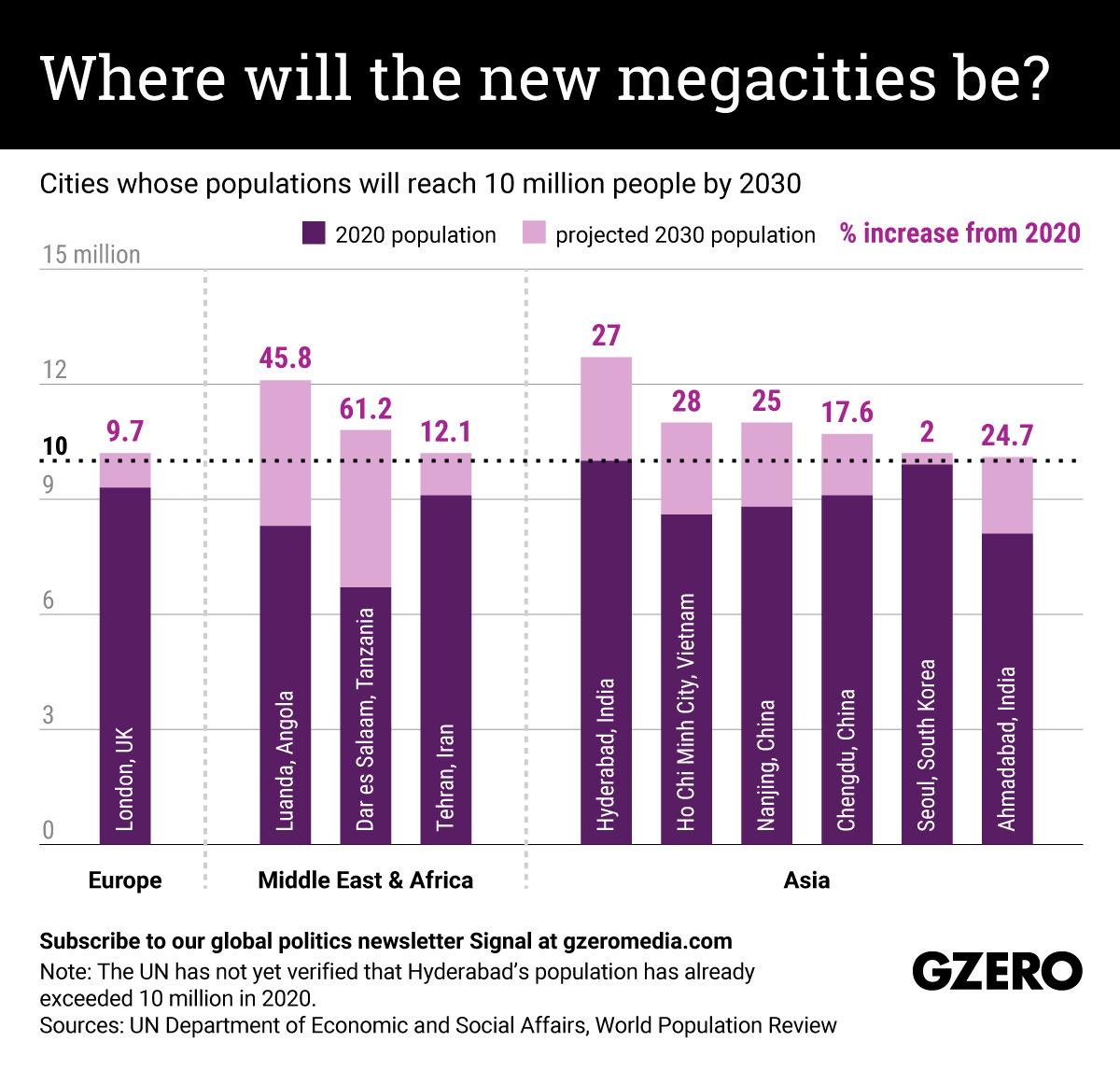
By 2030, ten urban areas are projected to attain "megacity" status, a population of more than 10 million people. Six will be in Asia, where more than half of the population will be living in cities at the end of the decade. But the fastest growing megacities will be in Africa — including new megacities in Dar es Salaam (Tanzania) and Luanda (Angola). Can urban planners and governments in Africa keep pace with this rapid urban growth? We look at the world's upcoming megacities, comparing their current and future estimated populations, to get a sense of how crowded each megalopolis will be in 2030.
South Sudan is accusing neighboring Sudan of launching a drone strike that killed at least 73 people at a market in Abyei, a disputed, oil-rich region of roughly 4,000 square miles claimed by both countries.
In this Quick Take, Ian Bremmer says President Donald Trump's approach to the war in Ukraine is putting more pressure on President Volodymyr Zelensky and raising concerns among European allies about the future of NATO.
Ongoing student protests in France descended into looting and riots over the weekend as more than half a million people took to the streets across the country.
After his father was killed in a plane crash in 2023, Pavel was tapped to lead Wagner.