News

Was Rubiales’ kiss sexual assault?

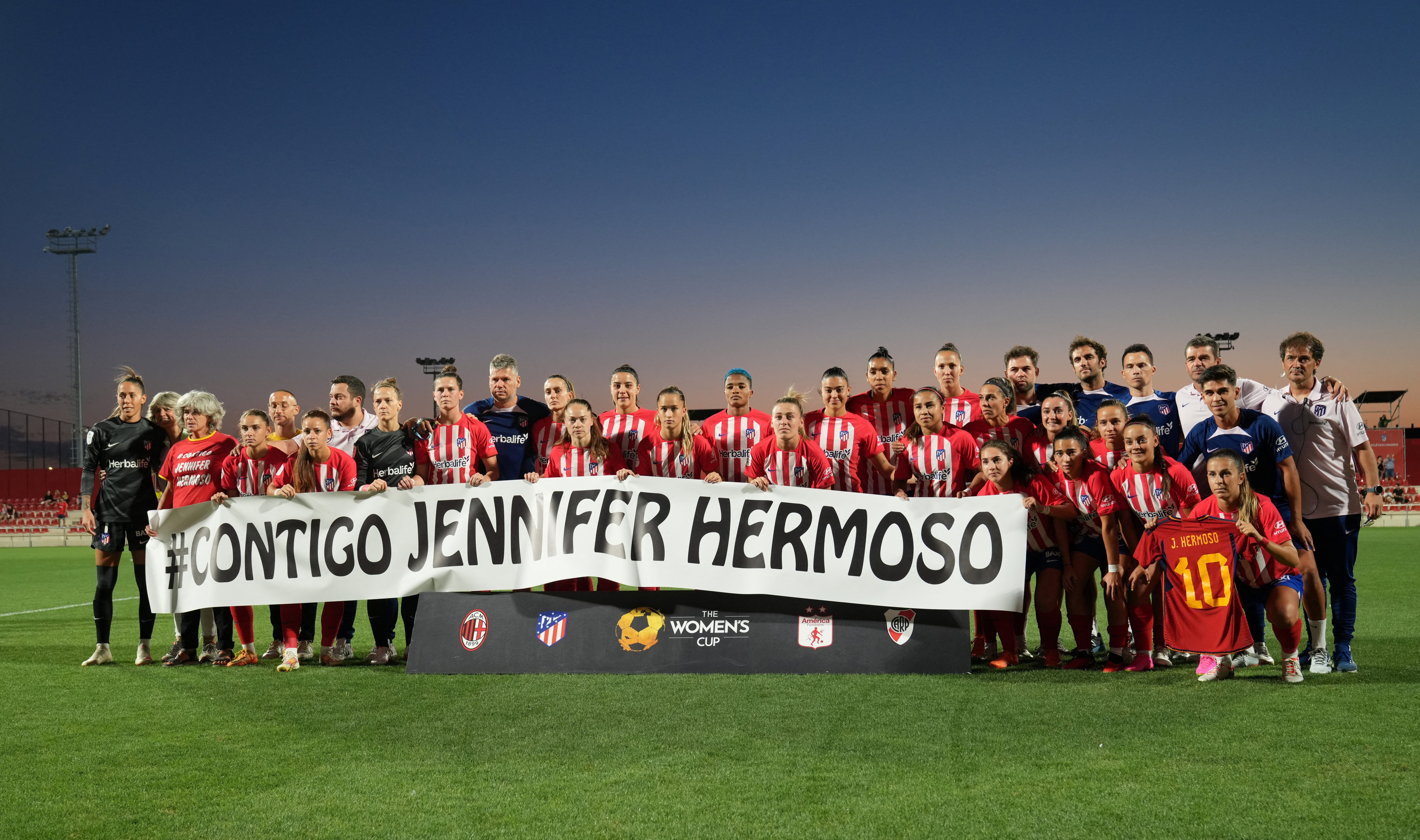
Atletico Madrid players and staff hold a banner in support of Spain's Jennifer Hermoso before the match as FIFA suspend President of the Royal Spanish Football Federation Luis Rubiales after the Women's World Cup Final.
Reuters

The scandal involving Spanish football federation president Luis Rubiales continues to deepen. More than a week after he planted a kiss on the lips of star forward Jenni Hermoso following Spain’s World Cup win over England, federal prosecutors have launched an investigation into whether the kiss constituted sexual assault.

Since Spain's victory, Rubiales has claimed that it was simply a “peck between two friends celebrating something,” before changing his tune and saying it was “probably a mistake.” Then, on Friday, Rubiales again defended his actions, and the RFEF, Spain’s soccer governing body, issued a statement supporting him and accusing Hermoso of distorting reality.

Rubiales has been suspended for 90 days by Fifa, pending a disciplinary committee probe. Nearly a dozen Spanish coaches have quit, and some of Spain’s players are refusing to play. Meanwhile, Rubiales’ mom, distraught by the allegations against her son, has locked herself in a church and launched a hunger strike amid growing demands that her son be fired.
More For You

A man holds up a Venezuelan flag while taking part in a march calling for amnesty for political prisoners and to mark Youth Day, in Caracas, Venezuela, February 12, 2026.
REUTERS/Maxwell Briceno

US-backed negotiations are opening a possible path to democratic elections in Venezuela – even as the country’s most popular opposition leader remains outside the room.

A laborer works at the Congolese state mining company Gecamines' copper concentrator at its Kambove operation in the southern province of Katanga on January 31, 2013.
REUTERS/Jonny Hogg

The Democratic Republic of Congo has reportedly banned exports of copper and cobalt concentrates – the goal is to force more processing at home and capture a larger share of profits generated from its natural resources.