We’ve reached the end of the week, and the beginning of a big weekend for sports and elections. Today, we explore how geopolitics has once again fused into the Olympics, detail a trio of elections taking place this weekend, and test whether you’ve been keeping up with the news with our weekly quiz.
- The Daily crew
Is the tide turning on Russia’s sports exile?
Raniero Corbelletti/AFLO
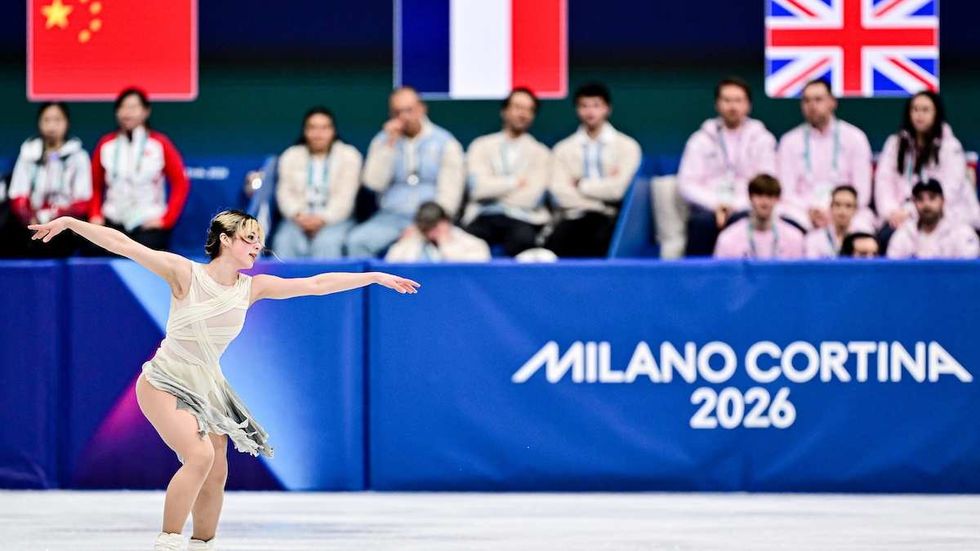
Brazilian skiers, American ICE agents, Israeli bobsledders – this is just a smattering of the fascinating characters that will be present at this year’s Winter Olympics, which formally kick off today in Northern Italy.
Yet it will be the omission of one particular country, long a dominant force at the Olympic Games, that once again garners more attention. That country is Russia.
For the fifth Olympics running, Russian athletes will not be able to compete under their flag. This began at the 2018 Winter Olympics in PyeongChang, South Korea, where they had to compete as “Olympic Athletes from Russia” due to the state-backed doping scandal in prior years. The same scandal forced them to compete as the “Russian Olympic Committee” at the 2020 and 2022 Games. Still, hundreds of Russian athletes were able to compete.
That’s no longer the case. Russia’s invasion of Ukraine means its athletes must now participate as “Individual Neutral Athletes.” They cannot compete as a team – only individuals can attend – and they must not have shown support for the Kremlin’s war effort. Only 13 athletes from Russia will compete at these Games.
And yet, the tide appears to be turning.
First off, some of the 13 athletes have been linked to activities supporting the war effort. One liked pro-military content on social media, another trained in Russian-occupied Crimea, while a third worked closely with a publicly pro-Kremlin trainer. Yet the International Olympic Committee authorized their entry amid questions about the leanings of one member of their three-person eligibility panel regarding Russia.
FIFA President Gianni Infantino, who oversees the separate but more widely watched soccer World Cup, went a step further on Monday, saying that FIFA should also lift its ban on Russia.
“This ban has not achieved anything,” Infantino, who is also an IOC member, told Sky News. “It has just created more frustration and hatred.” The 55-year-old’s comments come after the IOC said in December that Russian youth athletes should be able to compete under their national flag and anthem at this year’s Youth Olympics in Dakar, Senegal.
Infantino’s comments incurred the wrath of Kyiv’s top brass: Ukraine’s foreign minister called the FIFA president a “moral degenerate.”
The shifts from the IOC and FIFA hint at something else: Is interest in the Russia-Ukraine war, now approaching the four-year mark, going downhill? The amount of online searches regarding the war has plummeted. No longer is the war top of the US foreign policy agenda, as other regions like Latin America and the Middle East fill greater space. Polls even show more willingness among Ukrainians to kowtow to Russian territorial demands if it means ending the war.
A chequered history. Russia – and the Soviet Union – have a sordid past when it comes to major sporting tournaments like the Olympics and the World Cup, stretching back decades. It has been involved in several doping scandals. The Soviets even faced accusations of forcing female athletes to get pregnant and then have an abortion, with the aim of boosting red blood cell count. More recently, the US Justice Department found that Russia bribed FIFA officials in order to become the host of the 2018 World Cup.
Yet it was only after the most recent doping scandal and international condemnation for the invasion of Ukraine that the IOC and FIFA decided to ban Russian teams.
Both these organizations appear to be rethinking that decision, possibly because it hurt certain Russian athletes and forced the organizers to take positions on other conflicts, like the Israel-Hamas war and the Sudan civil war. Is this the right move? The Winter Olympics are filled with intrigue of their own – sliding headfirst down a concrete track on what is ostensibly a tea tray (otherwise known as a “skeleton”) is always bound to garner interest. However, this potential U-turn from both the IOC and FIFA provides an unwelcome distraction. Yet again, geopolitics are at play in the sporting world.
What We’re Watching
The Yomiuri Shimbun
Three elections, one weekend
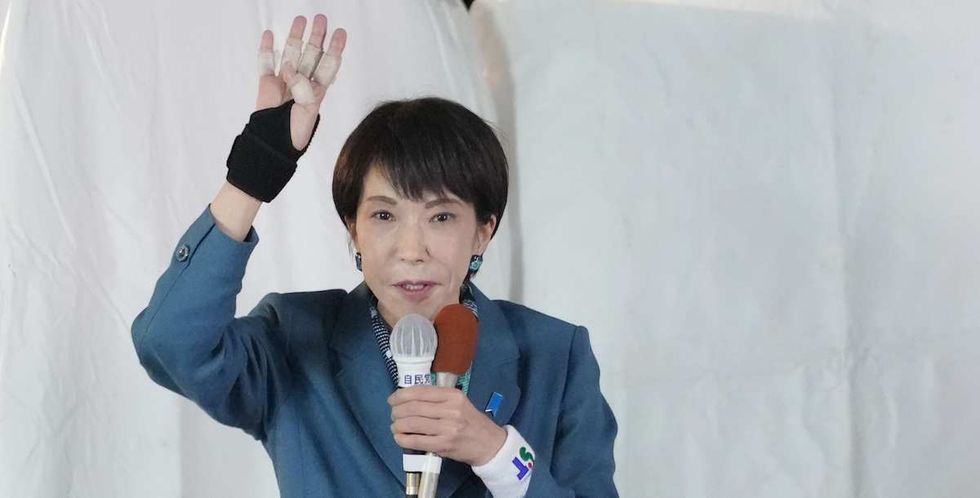
Japanese voters head to the polls on Sunday in a snap election for the national legislature’s lower house, called just three months into Prime Minister Sanae Takaichi’s tenure. She’s betting that her personal popularity could deliver an outright majority for her new ruling coalition.
Over in Southeast Asia, Thailand is holding an election after border clashes with Cambodia in December ignited a wave of nationalism. Prime Minister Anutin Charnvirakul’s ruling Bhumjaithai party is facing stiff competition from the progressive People’s Party and the populist Pheu Thai Party. Polls show the People’s Party ahead, but the race is expected to be tight with no outright winner.
Portugal is also heading to a runoff vote for president, with the Socialist candidate, António José Seguro, leading with 67% in the polls against his far-right opponent, André Ventura. The country has seen only one runoff in the five decades since the end of authoritarian rule.
The US and China pick their friends
Argentina and the United States signed a sprawling trade agreement on Thursday, a political win for President Javier Milei as he pushes to pry open Argentina’s long-protected economy. The deal eliminates tariffs on 1,600 Argentine products and 200 US exports, while signaling Washington’s intent to deepen ties with South America’s third-largest economy. Meanwhile, another trade deal is in the works between a middle power and a superpower: China is nearing an agreement that would offer South Africa duty-free access to a wide range of goods. It’s a move that underscores Beijing's growing economic pull as Pretoria navigates a delicate balancing act between the US and China. Tensions with Washington flared last month after the BRICS member held naval drills with China and Iran, and for now, at least, South Africa appears to be leaning more decisively toward Beijing.
Violence in Pakistan spreads to its capital
A suicide bombing killed 31 people and injured 169 others at a Shiite mosque on the outskirts of Islamabad during Friday prayers, the most important Muslim prayer session of the week. No groups have claimed responsibility, although Pakistan’s defense minister said the attacker had been “coming and going” from Afghanistan. He also blamed Indian proxies. The attack is the latest in a string of violence that has rocked the South Asian country of 245 million people in the last year, and comes less than a week after a clash at the Afghan border between the Pakistani military and Balochistan separatists. Pakistan’s problems are mounting, and fast.
Trump slaloms into the Olympics
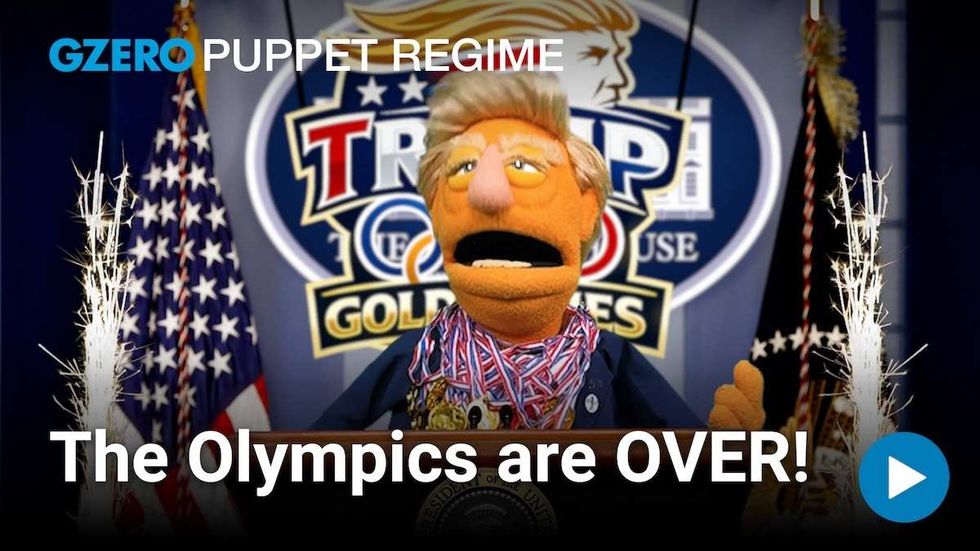
The Winter Olympics get started today, but how does the US president feel about them? And what changes would he like to see? Check out the latest episode of the Regime on Instagram here, or on Youtube here.
You vs. the News: A Weekly News Quiz

In January, India imported approximately 1.2 million barrels of ____ every day, equivalent of 76 Olympic-sized swimming pools?
Take the quiz to see if you guessed correctly!
Hard Numbers: American halftime show con política, African countries agree to UK migrant returns, US-Iran talks, Alibaba pays people to use AI app
Kirby Lee-Imagn Images
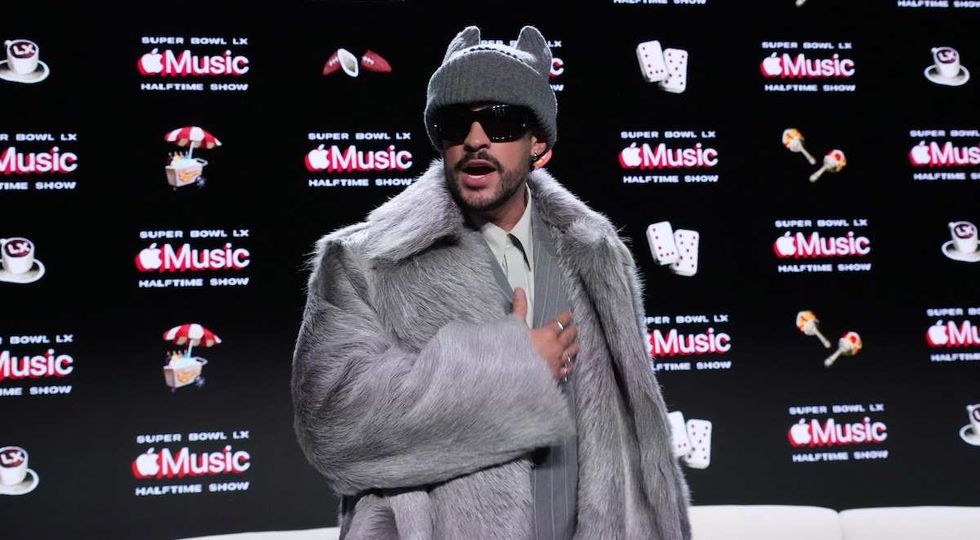
100 million: The number of people expected to watch the Super Bowl halftime performance with Bad Bunny, the Puerto Rican superstar and newly minted Album of the Year winner at the Grammys. It’s already sparked a lot of political buzz, with the singer’s criticism of ICE. The conservative group Turning Point USA said it will host a counter-halftime show featuring Kid Rock.
3: The number of African countries that have agreed to take back migrants from the United Kingdom accused of crimes and entering the country illegally. Namibia, Angola, and the Democratic Republic of the Congo signed on after the UK Home Secretary, Shabana Mahmood, threatened to stop issuing visas to people from those countries if they didn’t cooperate.
880 pounds: The amount of enriched uranium that the US is calling for Iran to transfer out of the country as the two countries meet in Oman. Iran said talks were off to a “good start,” but the threat of US military action is still on the table.
3 billion: The amount of yuan (equivalent to $431 million) that Chinese e-commerce giant Alibaba is spending to attract users to its Qwen AI app, giving incentives for eating out, entertainment, and leisure, as well as distributing large red envelopes, ostensibly full of cash.
This edition of GZERO Daily was produced by Zac Weisz, Riley Callanan, and Natalie Johnson.