

Skip to content
Search

Latest Stories

Puppet Regime is up for a Webby Award!   VOTE HERE

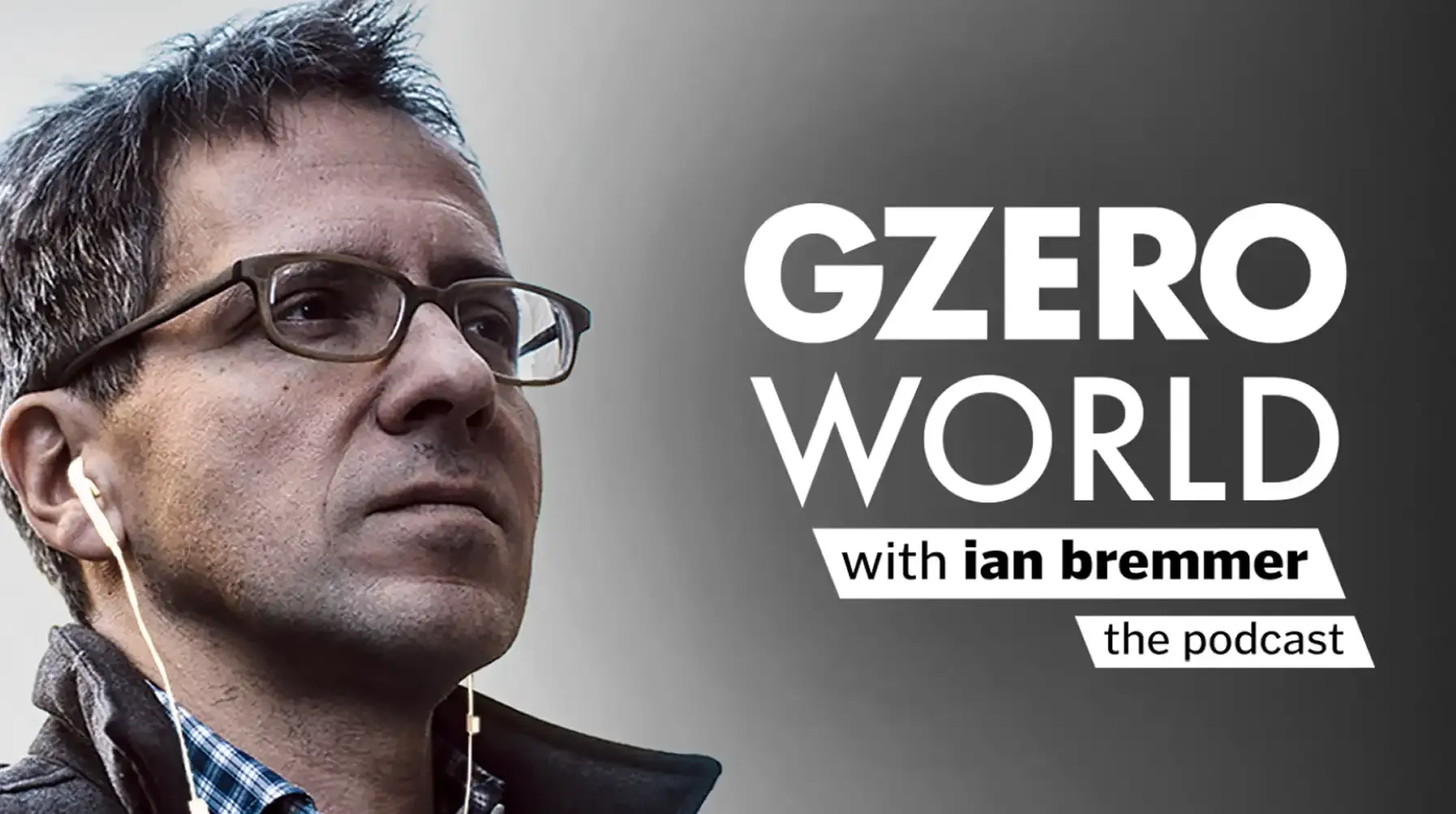
The United States will no longer play global policeman, and no one else wants the job. This is not a G-7 or a G-20 world. Welcome to the GZERO, a world made volatile by an intensifying international battle for power and influence. Every week on this podcast, Ian Bremmer will interview the world leaders and the thought leaders shaping our GZERO World.

Presented by

photo of a young girl with black hair and a flowery t-shirt getting swabbed for a COVID test by someone wearing white gloves

Podcast: How crisis can help us fix broken systems: from Ukraine to COVID

Listen: To fix our broken international political system, we need a crisis. For instance, a pandemic, climate catastrophe, Big Tech having too much power, or a Russian invasion of Ukraine. But it must be a crisis that's so destructive it forces us to respond fast, and together — like World War II. That's the crisis that created the international system we have today, and kept the peace until now. On GZERO World, Ian Bremmer talks to Anne-Marie Slaughter, former US State Department official and now CEO of New America, and political scientist and Harvard professor Stephen Walt about the war and other crises.

Transcript

Listen: To fix our broken international political system, we need a crisis. For instance, a pandemic, climate catastrophe, Big Tech having too much power, or a Russian invasion of Ukraine. But it must be a crisis that's so destructive it forces us to respond fast, and together — like World War II. That's the crisis that created the international system we have today, and kept the peace until now. On GZERO World, Ian Bremmer talks to Anne-Marie Slaughter, former US State Department official and now CEO of New America, and political scientist and Harvard professor Stephen Walt about the war and other crises.


Slaughter and Walt debate key issues such as the tough choices NATO faces on expanding to more countries but not Ukraine or other former Soviet republics, what we learned from the pandemic, and whether there are still reasons for hope in our current gloomy political environment. "If you're going to use a crisis effectively for change, you have to be able to have the right time horizon, the right group of countries, and a very specific set of goals," says Slaughter, who thinks we do have the ability to address many of the problems affecting the Global South: the most powerful countries are now all over the world. Many voices of people who need to be at the table — civic groups, CEOs, women, people of color — are not being heard.

This interview comes from the weekly show on global politics, GZERO World with Ian Bremmer, which is available to view on US public television stations. Check local listings to watch.

Subscribe to the GZERO World Podcast on Apple Podcasts, Spotify, Stitcher, or your preferred podcast platform, to receive new episodes as soon as they're published.
Next Page

More from GZERO World Podcast

Viktor Orbán's last stand, and the future of Europe's far right with Ivan Krastev

For sixteen years, Viktor Orbán has dominated Hungarian politics, rewriting rules, consolidating power, and positioning himself as Europe's leading nationalist and Donald Trump's closest ally on the continent. But with parliamentary elections approaching on April 12th, his aura of invincibility is finally cracking. Opposition candidate Péter Magyar, a conservative former Orbán insider, is polling ahead by double digits, and the Trump administration is scrambling to help keep its favorite European in office.

Keep reading... Show less

Ian Bremmer sits down with Ivan Krastev, Chairman of the Centre for Liberal Strategies and political scientist, to discuss Hungary's consequential upcoming election and what it means for the far... More >

Rahm Emanuel on Trump's Iran war “of choice” and Midterm implications

Listen: Ian Bremmer and Rahm Emanuel discuss the deepening conflict in the Middle East, US foreign policy under Trump, and the upcoming midterms.

Emanuel argues that this is a war of choice, one President Trump made himself, not one driven by external pressures like Israel’s influence. While Benjamin Netanyahu has long pushed for military action, Emanuel stresses that the responsibility for war ultimately lies with the US president, not foreign actors. He also highlights how America’s fractured political system has complicated decision-making, making it harder for the US to act with a unified voice on the world stage.

Emanuel argues that Trump’s actions have eroded relationships with critical allies, particularly in Europe and the Gulf. “The price of belittling your allies is now coming home to roost,” Emanuel warns, pointing to the growing isolation the US faces at a time when global cooperation is needed most. He also discusses the broader implications of US military deployments in the region and the rising threat of Iran's growing influence.

Emanuel also addresses the internal division within the US, explaining how China is carefully watching America’s internal dysfunction. “Nothing China does scares me,” he says. “It’s what we don’t do here at home that scares me.”


🔔 Subscribe to the GZERO World Podcast on Apple Podcasts, Spotify, or your preferred podcast platform, to receive new episodes as soon as they're published

Ian Bremmer and Rahm Emanuel discuss the deepening conflict in the Middle East, US foreign policy under Trump, and the upcoming midterms.... More >

Unpacking Iran’s competing endgames with Brookings Institution’s Thomas Wright

Listen: Ian Bremmer sits down with Thomas Wright, Brookings Institution fellow and former Senior Director at the US National Security Council, to unpack the deepening war in Iran and the divergent strategies shaping it.

What are the possible outcomes for the widening conflict in Iran? What began as a dramatic opening strike has evolved into a far more complex war, with Washington, Jerusalem, and Tehran all pursuing different aims. Wright argues this isn’t simply about degrading military capability; it’s about competing endgames that may pull the region in unpredictable directions.

Keep reading... Show less

Ian Bremmer sits down with Thomas Wright, Brookings Institution fellow and former Senior Director at the US National Security Council, to unpack the deepening war in Iran and the divergent strategies... More >

Tariffs: what comes next with Paul Krugman and Scott Lincicome

Listen: While Washington has become more hostile to free trade, Americans continue to buy foreign goods in record numbers. Lincicome notes that economic nationalism is “about an inch deep,” with support collapsing when Americans face higher prices for domestic products.

Keep reading... Show less

The Supreme Court curbs Trump’s trade agenda, but the administration is undeterred. So, what's next? Ian Bremmer sits down with economists Scott Lincicome of the Cato Institute and Paul Krugman to... More >

GZERO Podcasts

Ian Bremmer sits down with Ivan Krastev, Chairman of the Centre for Liberal Strategies and political scientist, to discuss Hungary's consequential upcoming election and what it means for the far... More >

Listen: What does global energy transition look like in a time of major geopolitical change, including rebalancing of trade? In this special episode of "Energized: The Future of Energy,” host JJ... More >

Creating artificial human retinas in zero gravity. Mining rare minerals on the moon. There seems to be no limit to what could be possible if we continue to take our more important industries to... More >

For sixteen years, Prime Minister Viktor Orban has won every fight: four consecutive parliamentary supermajorities for his party, Fidesz; a constitution rewritten to his specifications; courts,... More >

In this episode of The Ripple Effect: Investing in Life Sciences, host Dan Riskin speaks with Patrick Horber, President of Novartis International, and David Gluckman, Vice Chairman of Investment... More >