
Podcast: A tale of two Koreas with veteran Korea journalist Jean Lee
Listen: From K-Pop supergroup BTS to Oscar-winner Parasite to Netflix global sensation Squid Game, South Korea seems to be churning out one massive cultural hit after another. And North Korea is taking notice. This week, a tale of two very different Koreas. Jean Lee, former AP Pyongyang bureau chief and veteran Korea correspondent, speaks with Ian Bremmer on GZERO World.
TRANSCRIPT: A tale of two Koreas with veteran Korea journalist Jean Lee
Jean Lee:
Everything that we see in the US now, we were seeing 10, 15 years ago in South Korea. So I always see it as being now that kind of cutting-edge, post-modern place where you see the intersection of culture and technology in the same way that we used to see in Japan years ago.
Ian Bremmer:
Hello, and welcome to the GZERO World podcast. This is where you'll find extended versions of my interviews on Public Television. I'm Ian Bremmer, and today we are talking about everyone's favorite K-pop band, BTS, of course, the only one I know, and the explosive success in South Korean cinema, not to mention the 10th anniversary of Kim Jong-un's totalitarian rule over the North. How has South Korea become such a dominant soft power force on the global stage so quickly? And as this newfound fame angers its neighbors to the North, will there ever be peace between Pyongyang and Seoul? I speak to journalist Jean Lee, who led Korea coverage for the Associated Press from 2008 to 2013. She even served as their Pyongyang Bureau Chief for a time. Let's get to it.
Announcer:
The GZERO World Podcast is brought to you by our founding sponsor, First Republic. First Republic, a private bank and wealth management company, places clients' needs first by providing responsive, relevant, and customized solutions. Visit firstrepublic.com to learn more.
Ian Bremmer:
Jean Lee, thank you so much for joining me on GZERO World.
Jean Lee:
Great to join you.
Ian Bremmer:
So much to talk about on Korea. I want to talk to you, not just about Kim Jong-un and nuclear proliferation. I kind of feel like the bigger story these days is South Korea. How does that make you feel?
Jean Lee:
Oh, my gosh, I struggled for so many years to get South Korea on the news agenda, because it was always about North Korea. So it's amazing that South Korea's getting its moment.
Ian Bremmer:
Now, I mean, since you were based in Pyongyang for a bit, I mean, we will get there eventually, but we have to start ... I mean, Squid Game, of course. The extraordinary, deeply disturbing Parasite for the first time wins Best Foreign Film. I mean, there are so many stories, K-pop, I mean. And this year the single biggest story coming out of the United Nations General Assembly was ... a boy band that I had never heard of from South Korea, but I was the only one. How is this happening? Why is South Korea such a soft power globally right now?
Jean Lee:
I just got an email today from a friend who tells me that his stepkid in Cuba is a huge BTS fan, and I just thought that was so amazing, because it shows the potential power that South Korea's cultural exports can play in its soft power diplomacy. I mean, Cuba, traditionally an ally of North Korea, and you've got Cuban kids in love with South Korean pop stars? I think that this is such an interesting moment.
There are a couple things. I mean, South Korea, we have to remember that this is a country that has evolved so much from the time I was a kid. Now, I'm Korean American. I'm second generation Korean American, but I was raised going to South Korea in the '70s and '80s, and it went from being this very poor country in a very kind of authoritarian society into becoming a young and vibrant democracy. And I think about how the generation that came of age in the late '80s and early '90s, that's my generation in South Korea. They've been exposed to the world, post-Seoul Olympics 1988, with the explosion of the internet that has allowed them to access the rest of the world as well. And they've grown up in a democracy. All of these things together have meant that we've seen South Korea just blossom into this really vibrant country, both politically and culturally.
I'm absolutely excited because as a Korean American, nobody knew where South Korea was. I mean, they vaguely had heard about the Korean War, but they didn't know where it was. And so suddenly, to have these bands and these movies be such a household name, and for people to be looking for Korean restaurants, asking me about Korean dramas, asking me for advice about where to visit South Korea, there's definitely a sense of Korean pride. And it's such a change from the way that I grew up in post-Vietnam War America where being Asian was something that was difficult at times, to be honest. And now it's just hip to be Korean. It's amazing.
Ian Bremmer:
Now, 20 years ago, even 10 years ago, you'd have a lot of these conversations about Japan and Japanese rock and fashion-forward and whisky and you name it ... What's different about it?
Jean Lee:
I think we have to acknowledge that South Korea, in a sense, is building on everything that they learned from Japan as well. Because even in South Korea, there was so much that was inherited from the Japanese, not only because of a colonial period where the Japanese occupied Korea from 1910 to 1945, but also more in recent decades, they did look to Japan as a country that was able to engage internationally and export its culture.
Where have they taken it since then? South Koreans are not only good at emulating, but they are really good at innovating, and they've proven that. I think there was a lot of question for years about whether South Koreans were just copying technology, but I think they've proven in the last 10, 15, 20 years that they can innovate as well. I mean, you go to, and I know you've probably been to South Korea.
Ian Bremmer:
Many times, yes.
Jean Lee:
You go there and it feels like this postmodern place now where it's so wired. Everything is so high-tech. Everything that we see in the US now, we were seeing 10, 15 years ago in South Korea. So, I always see it as being now that kind of cutting-edge, post-modern place where you see the intersection of culture and technology in the same way that we used to see in Japan years ago.
Ian Bremmer:
And also South Korea, the historic sense, very conservative society, a very gender-segregated society. And I mean clearly, with the way South Korea is portraying itself on the global stage, those things also seem to be changing very quickly as well. Does it feel like society is moving that quickly in terms of really integrating the whole society?
Jean Lee:
On that point, I would say that South Korea is still in a period where they have some growing pains when it comes to making sure that all sectors of society are developing at the same warp speed that their economy is developing. It's still very difficult for women. They are not where they need to be when it comes to gender parity. If you look at the charts produced by the OECD, for example, when it comes to the gap in pay between genders, South Korea, unfortunately, is at the very bottom. And then there's also the inclusion of the diverse parts of South Korea society that they still need to work on. This is a country with a really low birth rate, so they do need to think about how to incorporate people from other countries as well as women in the workplace so that they can maintain the economy, maintain the lifestyle, support the future economy.
And this is something that they're grappling with, because it's always a question of culture when it comes down to it. The South Koreans, they've developed and changed so much and evolved so much, so quickly, and they're still grappling with, what is Korean that we need to hold onto? What's traditional? What is our culture? And what do we need to give up in order to be a first world country, a donor nation, an international globalized country? And I don't think they're quite there yet, but I think that they're making the baby steps toward becoming a more globalized, inclusive society, but they have a long way to go.
Ian Bremmer:
When you think about areas that South Korea will be seen as a global leader, taking aside the advances in soft power, where do you think South Korea is going to be making a true mark, that around the world you'll see people saying, "Wow, South Korean leadership really made a difference"? How do you think that's going to change?
Jean Lee:
I do think that South Korea still has room to capitalize on the potential that that soft power can play. It does remind me a little bit of England in the sense that I think South Korea does punch way above its weight, and in the same way that I think England does in terms of its cultural exports. England has really shaped culture in the Western world in such a significant way for such a small country. And I think South Korea has the potential to do that, not only in Asia (it has already been doing that across Southeast Asia for many years), but internationally as well.
Ian Bremmer:
Maybe one other thing I want to touch on is China. Because, of course, the South Koreans are in many ways in an uneasy balance between their relationship with the United States with a significant military presence that persists today, and China, the largest economy in the region, and an economy that increasingly represents most of the trade and investment in South Korea. So, how does this country going forward think about its relationship with China, with the United States?
Jean Lee:
With South Korea, I had a lot of conversations throughout 2018, 2019, and through up until the present with the South Koreans. I would say particularly during the Trump years, they were very concerned about the growing competition, strategic competition between the United States and China. And the refrain was always, "Listen, we can't choose. We live next to China. We have lived next to China for millennia, but we are a staunch US ally." I think there's no question that their loyalty lies with the United States, but it's very clear as well that so much of their financial future lies with China as well, and so they're constantly trying to navigate this.
It's interesting because you will often hear the phrase "shrimp among whales." This is a traditional Korean adage, and in a way, Korea, the Korean Peninsula, is this tiny little country wedged between superpowers in the region. So traditionally, it would've been China and Japan, but I would say that the United States is certainly part of the broader regional hierarchy. And so they've always had to think about, how do they maintain their relevance, their existence, when you've got these countries where if they are jockeying, Korea could easily be a casualty? And so, this is something that they've been thinking about for thousands of years.
Now, I do think that South Korea is very staunchly with the United States. But as you point out, China is their biggest trading partner. And so, one of the challenges for the South Korean government, present and future government, is to try to figure out how they're going to define that relationship, and also perhaps pull away from their dependence on China a little bit so that they aren't subject to the kind of retaliatory measures that China has taken in the past, when they haven't been happy with South Korea's political decisions. So it's been a tough learning lessons for the South Koreans, who first looked at China as this potential for so much of their financial future. And now we're starting to see that it comes with strings attached, it doesn't come unconditionally, and are trying to figure out how to maintain that relationship, but also build new financial relationships so that they're not completely dependent on China.
Ian Bremmer:
Seoul, of course, is sort of eyesight distance from North Korea, and all of this extraordinary expansion of soft power and disruptive nature of changing society is happening next to the world's most closed totalitarian system. And I remember hearing stories about the North Koreans banning certain haircuts, because the South Koreans were wearing them, and that was unacceptable, barring South Korean soap operas, because ... I mean, in the context of everything we're talking about today, I mean, you lived in Pyongyang, how is that being taken in North Korea?
Jean Lee:
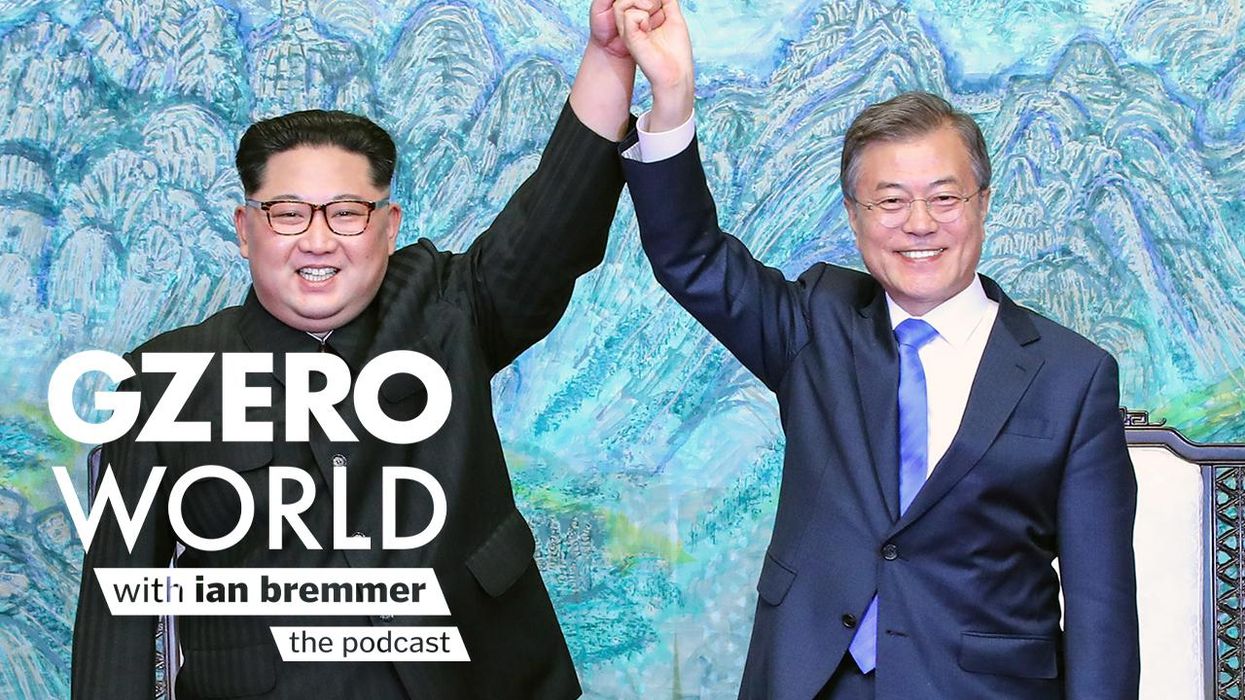
I'd like to think that deep down, the North Koreans are secretly proud of BTS and of these Koreans who've made it to the top of the pop cultural world, but officially, South Korean content is prohibited. It does go back and forth, I should say, because we had this amazing moment in 2018, that moment of diplomacy, when Kim Jong-un did step out onto the world stage and he met with then-President Trump, he met with President Moon Jae-in, and President Moon Jae-in of South Korea brought K-pop stars to Pyongyang. So I imagine there was a period where it was okay, but this type of thing goes back and forth, and we are back to a period where it is totally taboo.
And I'll explain why it's so risky. The North Koreans spend so much time trying to control the flow of information and stop their people from seeing how Koreans on the other side of the DMZ are living. If they could see how influential South Koreans are, how well they're living, then it could raise that question of, what are we doing here in North Korea? So I would say that the North Koreans do go to extreme lengths to try to control and shape the narrative about South Korea inside North Korea.
But for a period, we had so many North Koreans crossing the border, so every plane that I took was packed with North Korean students, athletes, business people, government officials going to China and seeing what the rest of the world was like. And then you have all those people at the border who were crossing on foot, in trucks, and doing a lot of trade across the border. This was all before they shut the borders, sealed the borders in January of 2020. But before then, for a good period, there was a lot of traffic across the border, not only of goods and people, but of ideas and little USB drives that were loaded with South Korean dramas. And the North Koreans have told me that if they want to watch something in the outside world, the first thing they're curious about is South Korean content. They are incredibly curious to see how South Koreans are living.
And I have to tell you, as an ethnic Korean who spent time in Pyongyang, you can't help but look at the people of North Korea and think, "Okay, who would I have been if I had grown up in this regime?" I try to remind South Koreans and Korean Americans that it's just a fluke of fate that we ended up on one side or the other. And so that was an interesting thing for me, as an American, to be in North Korea and recognize that I could have been one of those people, and who would I have been? And I think North Koreans feel the same way. This content allows them to think about who they might be outside of those restrictive confines of North Korean society and culture.
Ian Bremmer:
After 2018, and of course, I mean, the joint Olympic team, which raised such hopes and was really one of the most optimistic moments of the decade globally, does it feel a little bit less dangerous? I mean, because the leaders have seen each other face-to-face, because there was at least one chance? Even if it didn't lead anywhere, so far at least, did it create a little bit less of that deep-seated, my God, we could be one moment away from Armageddon with all of those nukes and conventional warheads pointed right at you?
Jean Lee:
I don't think I ever felt safe or comfortable, because I knew that behind all the theater and drama of the summits of 2018, the North Koreans were still working on the nuclear program. I never for a minute thought that they were hitting the pause button on that development. And what I was concerned about all this time is, are they fooling us into thinking that we're going to be a bit safer, when all along, they are working just as hard as ever on that arsenal?
And I think that that's the case, and that is the case I've been making all along, is that even as we reach out to the North Koreans and try to engage them, which is something that I do encourage, we have to ... It doesn't mean that we give up our sense of distrust or sense of skepticism. I think we need to hold onto that and be very realistic that these nuclear weapons are incredibly important to them, and that they will continue, because they don't trust us either. They will continue to build this arsenal even as they reach out diplomatically. I will be honest, I feel much more under threat today than I did when I was there, because Kim Jong-un has used the time effectively to expand that arsenal to a degree where it is a verifiable threat, not only to the region, but I would say to the world and to the Korean people. So I think that I don't have any sense of safety, even after the diplomacy of 2018.
Ian Bremmer:
The South Koreans, of course, have done an absolutely spectacular job in response to COVID. I mean, really, among larger countries, you'd probably give them the top marks in the world leading with science, everyone paying attention, just kind of moving on, moving on. North Korea, we literally have no idea. Do you have any sense of what's happening with COVID in North Korea?
Jean Lee:
What I can tell you is that it's hard to imagine that there was no COVID in a country that shares a long border with China where you had people crossing the border every day. But I can also tell you, having spent so much time in North Korean hospitals and clinics, that they simply do not have the capacity to deal with an epidemic. I mean, most of the hospitals that I went to didn't have running water, and all of the signs on the walls were about preventative measures, because they didn't have medicine. We do know that they took extremely restrictive measures, the most restrictive in the world. They sealed the borders, and that means not just preventing people from coming in, but preventing goods from coming in as well.
And they do report testing to the WHO, and I still do it on a regular basis, I go to the WHO COVID-19 dashboard, just for the heck of it, and look at the dashboard. And at the very bottom, zero positive cases is North Korea, along with a couple Pacific Island nations. Really hard to believe, although I think technically, possibly, they are testing a certain population. And I think that for North Korea's propaganda, Kim Jong-un wants to tell his people, "Look, I've protected you from this outside threat. Look, we have zero cases." Whether or not that's true is highly debatable. It's really hard for me to imagine.
I think there's more to the border closures than just the pandemic, to be absolutely honest. He's trying to control that flow of information. He's trying to stop these people from going back and forth because not only do these people bring things from the outside world, they bring movies, they bring content, they bring ideas, they bring information. And I think what we're seeing is North Korea in the middle of a complete clampdown on information from the outside, and the pandemic provides an opportunity to really close ranks and regain control over the people.
Ian Bremmer:
And you've also done a lot of work around cyber. How active are the North Koreans right now, in terms of malware attacks and other sorts of cyber efforts internationally?
Jean Lee:
During the years that I was in North Korea, I was seeing this incredible emphasis on computers, on science and technology, and it was all associated with Kim Jong-un. So, it was really about creating this mythology about this young man who was their new leader, who was really modern. They called him "a computer genius." And I was thinking, "Great, I would love to see North Korea open up, access the internet, join the global community the same way that South Korea has."
But this wasn't happening. The North Korean people were not allowed, for the most part, to access the internet. And yet I was also looking at this wondering, "Is there another purpose? Is there an ulterior motive? Is there a nefarious purpose for developing all this science and technology?" And so that was really where I started with thinking about cyber as well, because we know that the North Koreans are always thinking strategically. We know that they're facing a lot of sanctions that are preventing them from getting the money into the country to build the nuclear program, and also to keep the elites happy. So, what is better than cyber, than not only covering their tracks, being surreptitious, getting around sanctions, getting around border closures? Sanctions and border closures won't matter if you're adept at cyber.
The other thing is that they fly under the radar, because you're thinking, "This is a country where most people can't connect to the internet, so how are they building one of the world's most aggressive cyber armies?" And that's what I explore in my podcast, The Lazarus Heist, for the BBC World Service, is how does a country where most people can't connect to the internet, where they don't have electricity, build this cadre, this group of cyber soldiers, who really are some of the most aggressive in the world?
And I think we have to worry about it, not only because they are targeting us and trying to emulate and learn how we live our lives and how vulnerable we are because we rely on the internet, but that money that they're able to get back goes toward their nuclear weapons program. And so, it has a consequence with huge ramifications in terms of global security. I think it flies under the radar, A, because cyber is hard for us to understand, B, it's so hard to trace, and C, we just underestimate the North Koreans. But what I try to say is that you're talking about people who have every motivation in the world to invest strategically in cyber to get around all the challenges they have to bringing in the money that they need to build those weapons, and to keep that elite class loyal to Kim Jong-un.
Ian Bremmer:
Jean Lee, thank you very much.
Jean Lee:
Thanks so much for having me. It's fun to talk to you.
Ian Bremmer:
That's it for today's edition of the GZERO World Podcast. Like what you heard? Come check us out at gzeromedia.com and sign up for our newsletter, Signal.
Announcer:
The GZERO World Podcast is brought to you by our founding sponsor, First Republic. First Republic, a private bank and wealth management company, places clients' needs first by providing responsive, relevant, and customized solutions. Visit firstrepublic.com to learn more.
Subscribe to the GZERO World Podcast on Apple Podcasts, Spotify, Stitcher, or your preferred podcast platform to receive new episodes as soon as they're published.