
Podcast: The Ukraine war is crippling the world's food supply, says food security expert Ertharin Cousin
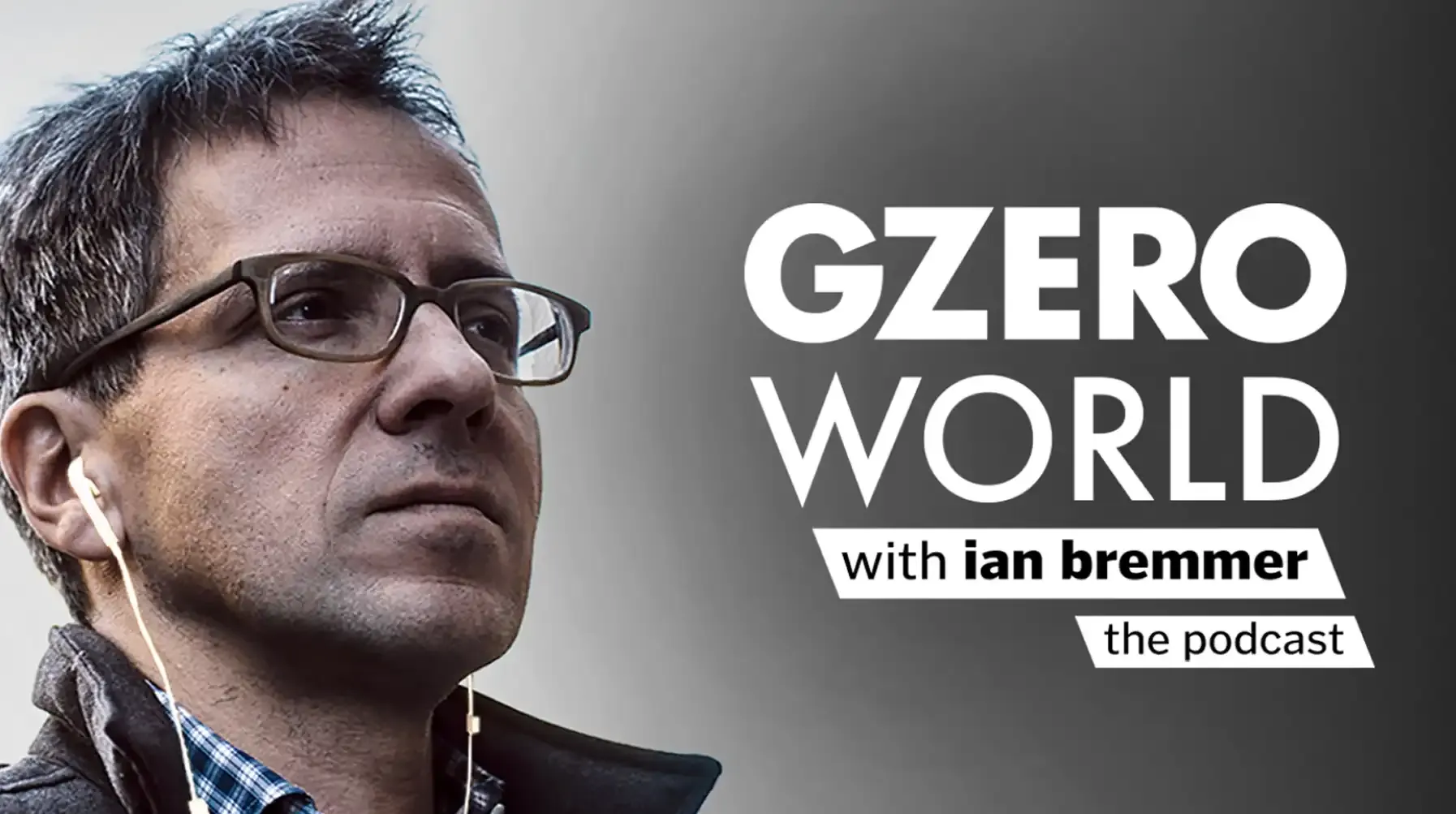
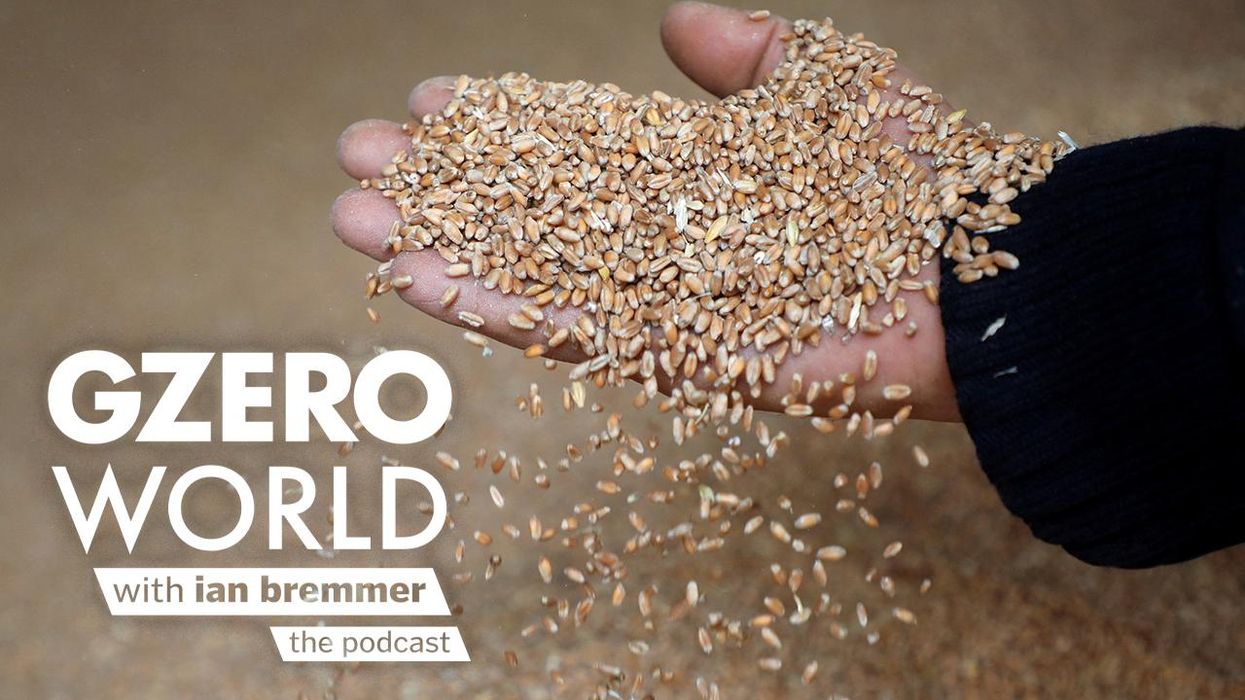
Listen: The Ukraine war and sanctions against Russia have created a perfect storm that will lead to a global food supply crisis, Ertharin Cousin, former head of the UN World Food Programme, tells Ian Bremmer on the GZERO World podcast. Russia and Ukraine account for almost a third of the world's wheat exports. All nations could be affected since these are global commodities, but developing countries that rely on those imports are most at risk. The disruptions could double the amount of people that went hungry during the pandemic, and since agriculture is a seasonal business, the worst may be yet to come.
TRANSCRIPT: The Ukraine war is crippling the world's food supply, says food security expert Ertharin Cousin
Ertharin Cousin:
There's been a significant amount of work on the relationship between hunger and unrest conflict riots, but here's the question that we as a community of global actors must ask: yes, we need the food, but should the Russian government benefit from the purchase of that food?
Ian Bremmer:
Hello and welcome to the GZERO World Podcast. This is where you'll find extended interviews with the newsmakers I talk to each week on my public television show. I'm Ian Bremmer, and today, Russia's war in Ukraine is already having a rippling impact around the world. It's disrupting supply chains, driving up energy prices, and perhaps most alarming, it's causing food shortages at a critical time for developing nations. The pandemic had already taken a toll on the world's poorest, and now as many as 47 million more people face acute hunger as wheat and barley exports take a massive hit.
Russia and Ukraine combined produce 30% of the world's wheat, so today we're talking about what happens when the global bread basket is shut down. And I'm talking with a global expert on food security, Ertharin Cousin. She's former executive director of the UN Food Programme. Let's get to it.
Announcer:
The GZERO World Podcast is brought to you by our founding sponsor, First Republic. First Republic, a private bank and wealth management company, places clients needs first by providing responsive, relevant, and customized solutions. Visit firstrepublic.com to learn more.
Challenge yourself to change the world. On season three of Course Correction, a podcast from Doha Debates in partnership with the UN HCR Refugee Agency, host Nelufar Hedayat takes listeners on the journey of a refugee. From the moment of displacement to mental health risks to integration and assimilation, learn about the issues affecting displaced persons around the world and what you can do to solve them. Follow and listen to Course Correction wherever you get your podcasts.
Ian Bremmer:
Ambassador Ertharin Cousin, thank you so much for joining us today.
Ertharin Cousin:
Well, thank you for this opportunity to talk about this very important subject.
Ian Bremmer:
Now, you have said, speaking of very important subject, that this is now a perfect storm in terms of global food insecurity. Why don't we open up with you just explaining a little bit of what you mean by that?
Ertharin Cousin:
Well, having served as US Ambassador to the Food and Agriculture Organizations in the aftermath to the 2007-08 food crisis, as well as during the 2011 high price food crisis, we know that there are certain indicators that led directly into that crisis, and those indicators included high commodity future prices. We're seeing that now with both wheat and corn prices doubling and continuing to escalate. Also, another indicator was high fuel prices. I need not to tell your audience about the challenges of high fuel prices, and everyone who's going to the pump recognizes how high our fuel prices are now, but that has a direct impact on the cost of food because of transport costs and when there is an escalation in fuel.
We also know that there's the issue of biofuels and the increase in production of biofuels in 2008 and 2011. We are now seeing, as fuel prices increase, increases in the production of biofuels. And finally, the fertilizer challenge. The fertilizer challenge began even before the start of this year where the International Fertilizer Association was suggesting that there would be approximately a 30% reduction in the amount of fertilizer that was available in Sub-Saharan Africa in particular, and that 30% could affect the access to food for about 100 million people.
Those factors came online even before the Russian invasion into Ukraine. And so with all of those factors online and the Russian invasion, that's the perfect storm because we know that approximately 30% of all the global wheat that is produced is produced in Russia and Ukraine combined. We know that over 75% of the essential oils, particularly sunflower oil is produced in those countries.
Ian Bremmer:
Sunflower oil, yes.
Ertharin Cousin:
And many would argue that loss in production and distribution and transport of those commodities should only affect or would only affect those who import directly from Ukraine and Russia. But in reality, yes, it does affect those countries, but because of less availability on the market of stocks, it affects the entire global community because it raises the prices.
Ian Bremmer:
Yeah, those countries, we're talking mostly Eastern Europe, North Africa, direct imports from Russia and Ukraine of larger scale. But these are global markets.
Ertharin Cousin:
These are global markets.
Ian Bremmer:
So I mean, the prices are going up. Prices are going up for everyone. If supply chain's a problem, it's a problem for everyone.
Ertharin Cousin:
Exactly, and that is exactly what we're witnessing. And the challenge is that agriculture is a seasonal business, and so we are seeing this with the spring wheat, and now we know that the Ukrainians are not in the field planting, and so we have the challenge of summer and winter wheats now. And so that means that we're not talking about a short-term problem here. This is a much longer-term potential food challenge.
Ian Bremmer:
Now explain to me, I mean, 30% reduction in availability of fertilizer. I know prices went up on food and on energy around the world in part because of supply chain challenges with the pandemic and suddenly demand just explodes and you don't have ships in place. There's massive fiscal stimulus. But what was behind the sudden lack of availability in fertilizers?
Ertharin Cousin:
Well, the component parts of fertilizer also include gas as well as potash, urea, potassium, all of those component parts and the availability of those component parts affected the production and it resulted in higher costs as well as less availability of fertilizer.
Ian Bremmer:
Okay, so this is just connected to the same problem of all the rest, really.
Ertharin Cousin:
It's connected to the same problem of all the rest.
Ian Bremmer:
Okay. So now we've got to turn to Russia and Ukraine.
Ertharin Cousin:
But now exacerbated by Russia and Ukraine.
Ian Bremmer:
Absolutely. So let me ask because this is in terms of not only direct exports and also in terms of fertilizer, Ukraine is a huge piece because they're at war. So physically, they don't occupy some of the land that they would need to be able to produce. A lot of the people that would be working the land are now refugees or they're fighting. You've got seed issues, distribution, supply issues. I mean, how much of that is already, in a sense, baked in? And does it matter much that Kyiv was being attacked and now isn't? Would it matter enormously if you were able to constrain or confine most of the fighting, as increasingly seems to be the case, in the southeast and south?
Ertharin Cousin:
Well, here's reality. Southeast and south, you're talking farmland. You're talking the places where this is the bread basket. When we talk about where the food comes from, that's exactly where. Many have argued that the Russian bombing has been very strategic in bombing that farmland as well as storage facilities, limiting not only the access of farmers to the land, but the availability of any stocks that were being held for shipment or for exports from the south or the southeast.
And so yes, there is the impact on Kyiv, but when you are bombing in rural areas, that has a direct impact on production.
Ian Bremmer:
And how long is this likely to play out for in the sense that even... Let's imagine that you were able to stop fighting in May. They announce on Victory Day, "We've won," and we freeze the conflict. Is this a one-year, a two-year minimum disruption in terms of just crop rotation and what's necessary to rebuild or is it longer than that?
Ertharin Cousin:
The potential is that it's longer than that because you're missing a planting season right now, so we know it's longer than May. We know it goes beyond the next harvest because we're missing the planning season for that harvest.
We also know that the production of fertilizer that is affected by the potassium and urea as well as potash that comes from Belarus and Russia will have a direct effect on the ability to begin production, increase production of fertilizer. We also know that even if the bombing stops tomorrow or in May, that doesn't affect the price of fuel. And so the cost for movement of product, even once the seeds are in the ground, the harvest occurs, unless we also address the issues related to fuel and that fertilizer challenge, you still have those other problems looming out there that are affecting the broader food systems outside of Ukraine and Russia.
So the reality of it is that this disruption in the agricultural production system, both from a micro level in Russia and Ukraine, but in the more macro level of the effect on the entire global food system, combined with the other factors I've identified, make this a challenge that will probably exceed this year and well into 2023.
Ian Bremmer:
I see.
Ertharin Cousin:
That's saying that the bomb stop in May.
Ian Bremmer:
Oh, I get you. I get you. And let's face it, the World Bank has said that they expect a 45% contraction of the Ukrainian economy just in 2022. So I mean, devastation is an understatement for what we're talking about for this economy.
Now I want to turn to Russia. Largest grain producer in the world. So much of the conversation in the United States is, "We got to cut off their oil, we got to cut off their gas, we got to cut off their coal. We can't give them that money." I don't see anybody saying, "We got to cut off their food" because we need their food. I don't mean the Americans, but poor people all over the world who are relying on food production.
What do you do when the country that's engaged in the war crimes is also absolutely essential to the supply chain for the poor people's food on the planet?
Ertharin Cousin:
Well indeed, the Food and Agriculture Organization, the Director General has asked for an exemption for Russian commodities from the sanction with that exact thought process in mind that they have such a significant effect on the availability of food for hungry people around the world, that that should be recognized by the global community and we should allow those commodities into the global food chain.
But here's the question that we as a community of global actors must ask: yes, we need the food, but should the Russian government benefit from the purchase of that food?
Ian Bremmer:
And how would you stop that since they're the ones that are responsible for allowing or not allowing the export?
Ertharin Cousin:
That's the challenge. That's the challenge. It's the true conundrum of should I allow the most vulnerable, particularly because that's who's affected with high food prices, should I allow them to go hungry because I don't want to financially benefit the Russian government? And that's the question that leaders of the Security Council must make in making that final determination about the access to Russian food because here's reality. If the Security Council says no, the non-aligned countries whose support you need to ensure the continuance of a global order that prohibits this type of behavior, you can't ask for their support for political issue when their people are starving.
Ian Bremmer:
And you certainly can't do it when the Europeans are much wealthier and they're actually paying the Russians to get their energy.
Ertharin Cousin:
That is, as they say, the elephant in the room. How do you say that it's okay to exempt the gas for Europe, but not the food for the Global South?
Ian Bremmer:
Whether we're talking about the pandemic or whether we're talking about climate change and now we're talking about food, these global crises, and we kind of know who's taking it on the chin, it's the poorest countries in the world and countries that, through 50 years of globalization, had hoped that they were going to be doing better over time. Now, it feels like it's crisis after crisis after crisis. How is the United States, how are the wealthy countries going to maintain any level of trust and alignment with these poorer developing countries through the kind of crisis that we are talking about right now?
Ertharin Cousin:
Well, that's a really thorny but vitally important question. The reality of it is the countries in the Global South are watching the decisions that are made to allow Russia to continue to sell oil and gas into Europe so that their prices don't go up and that they have access to the gas that they need, while at the same time, we are suggesting that they sacrifice their access to food when we do not allow for an exemption from the sanctions for Russia to sell food to those countries when their people cannot afford the higher priced food. And many of these countries are continuing to reel financially from the investments that they made in supporting their people during COVID. So their debt levels are quite high, their finances are quite low, and now they cannot subsidize and support the cost of food.
And so it becomes critically important that we move beyond platitudes in how we respond to, address, and discuss with the countries of the Global South, and begin to make the financial investments that are necessary that will allow these countries to mitigate, if not avoid, this high food price crisis, the high fuel crisis, and their challenges with debt if we want to continue to maintain working relationships with them, with those countries, particularly when China continues to lead with an outstretched hand to many of these countries, both from a financial standpoint as well as from a capacity development standpoint.
So we need to realize we're not the only game in town that is in conversation with the leadership of countries that have historically been good partners and friends with the United States and the Western world, but they live in the reality of needing to meet the immediate needs of their own people.
Ian Bremmer:
In most of these countries, of course, their leading trade partners today are actually China, and China's perspective on the Russia issue, of course, is virtually diametrically opposed to that of the United States and American allies in Europe.
I want to ask you, last year, I guess there were 9 million people that we lost on this planet because of hunger, because of starvation. When you look at what we are facing, this perfect storm over the next one, two years, do you have any assessment of what that number might look like? And I'm saying leaving aside some extraordinary effort and program, and I'll ask you what that might look like in a second, but what do you think we might be looking at this year, next year, as a consequence of that?
Ertharin Cousin:
Well, we saw the increases, as you've just mentioned, in the number of those who lost lives, and we've seen the increases into some 275 million who are acutely hungry now as a result of the COVID epidemic and that number increased by 100 million people between 2020 and 2021. This crisis, if nothing is done, we could witness between 200 and 300 million additional acutely hungry people.
Ian Bremmer:
So doubling it, basically.
Ertharin Cousin:
And that's not unusual. The number of food insecure increased to a billion with the 2008 food crisis. And so those are not numbers taken from the air. They are numbers that reflect the populations that are what we call hotspots, potentially affected, the number of people who are in the category of vulnerable, and their lack of access to food would then total that number that I've just articulated.
Ian Bremmer:
Now, when I think about massive food stress in the world today, I think about Afghanistan, I think about Yemen, I think about Bangladesh. I'm wondering what you would add to that list, places we might not think about as much that are potentially going to slip hard over the next year or two.
Ertharin Cousin:
Yeah. Well, I'd start with those places like the ones that you've just listed, Afghanistan, et cetera, but also Somalia, Yemen, northeast Nigeria, Ethiopia, places where we see very high numbers of acutely hungry today because we know that those populations are directly dependent upon the World Food Program's ability to access enough food to provide for the assistance that they need in order to meet their food assistance requirements because they're in conflict.
I would also include countries like Haiti, Burkina Faso, Mali, Bangladesh, and we can go through a long list, Guatemala, places where you have populations that are vulnerable because the incomes are so limited and you don't have governments with the capacity to subsidize higher priced foods. And as a result, you'd have more people slipping into a position where food may be available, but inaccessible because they cannot afford it.
Ian Bremmer:
So Ertharin, you've been devoting your career to this, and I want to say at least, before we close, I want to give you a chance to talk about what you think can credibly be done by the United States. And I'm not just asking for, "We need to put more money," I mean what are the programs, where are the places that we are falling down, the United States and our allies around the world, that you think a real difference can be made?
Ertharin Cousin:
Well, of course I must begin with the importance of ensuring that we provide the financial and food resources to the World Food Program and the other humanitarian organizations that meet the needs of those who are most vulnerable, who have no other way of accessing food. But I also think this is an opportunity for us to not build back better, but move forward better. And that is we, as a global community, committed to a $100 billion per year for adaptation for climate as a result of the Paris Agreement. The community has yet to meet that commitment.
This is an opportunity for us to begin to provide to the 500 million small holder farmers out there, the seeds, the tools, the fertilizer, as well as the technology and capacity that will allow them to increase the quality and quantity of their yields with less fertilizer and less water, but what we call the intensive, more intensive agricultural production that would give them the ability to begin to feed themselves in a much more resilient manner.
What we also realized during COVID was the need for infrastructure, whether it is trucking, the refrigeration storage that will allow for the reduction in loss of food. 40% of food in the Global South that is produced is lost, not wasted, lost, between the time from the farm gate to the consumer because of lack of infrastructure. And so if we want to talk about how to address this challenge differently to ensure that the next time we are in this situation, it is a completely different context that we are addressing, we must invest in infrastructure as well as in the capacity to support the increased production by those 500 million small holder farmers.
Because remember, while we talk about a global food system, the 500 million small holder farmers feed 80% of the people in their countries. And so if we could increase not just their productivity, but how much of that actually is received by the consumer, we can begin to address this challenge in a very different way.
Ian Bremmer:
Ertharin Cousin, thanks for joining me today.
Ertharin Cousin:
Thank you for having me.
Ian Bremmer:
That's it for today's edition of the GZERO World Podcast. Like what you've heard? Come check us out at gzeromedia.com and sign up for our newsletter, Signal.
Announcer:
The GZERO World Podcast is brought to you by our founding sponsor, First Republic. First Republic, a private bank and wealth management company, places clients' needs first by providing responsive, relevant, and customized solutions. Visit firstrepublic.com to learn more.
Challenge yourself to change the world. On season three of Course Correction, a podcast from Doha Debates in partnership with the UN HCR Refugee Agency, host Nelufar Hedayat, takes listeners on the journey of a refugee. From the moment of displacement to mental health risks to integration and assimilation, learn about the issues affecting displaced persons around the world and what you can do to solve them. Follow and listen to Course Correction wherever you get your podcasts.
Subscribe to the GZERO World Podcast on Apple Podcasts, Spotify, Stitcher, or your preferred podcast platform, to receive new episodes as soon as they're published.