
Skip to content
Search

Latest Stories

banner

Next Giant Leap is a podcast series exploring how the competition for success in space drives innovation, business, science, and economic growth here on Earth.

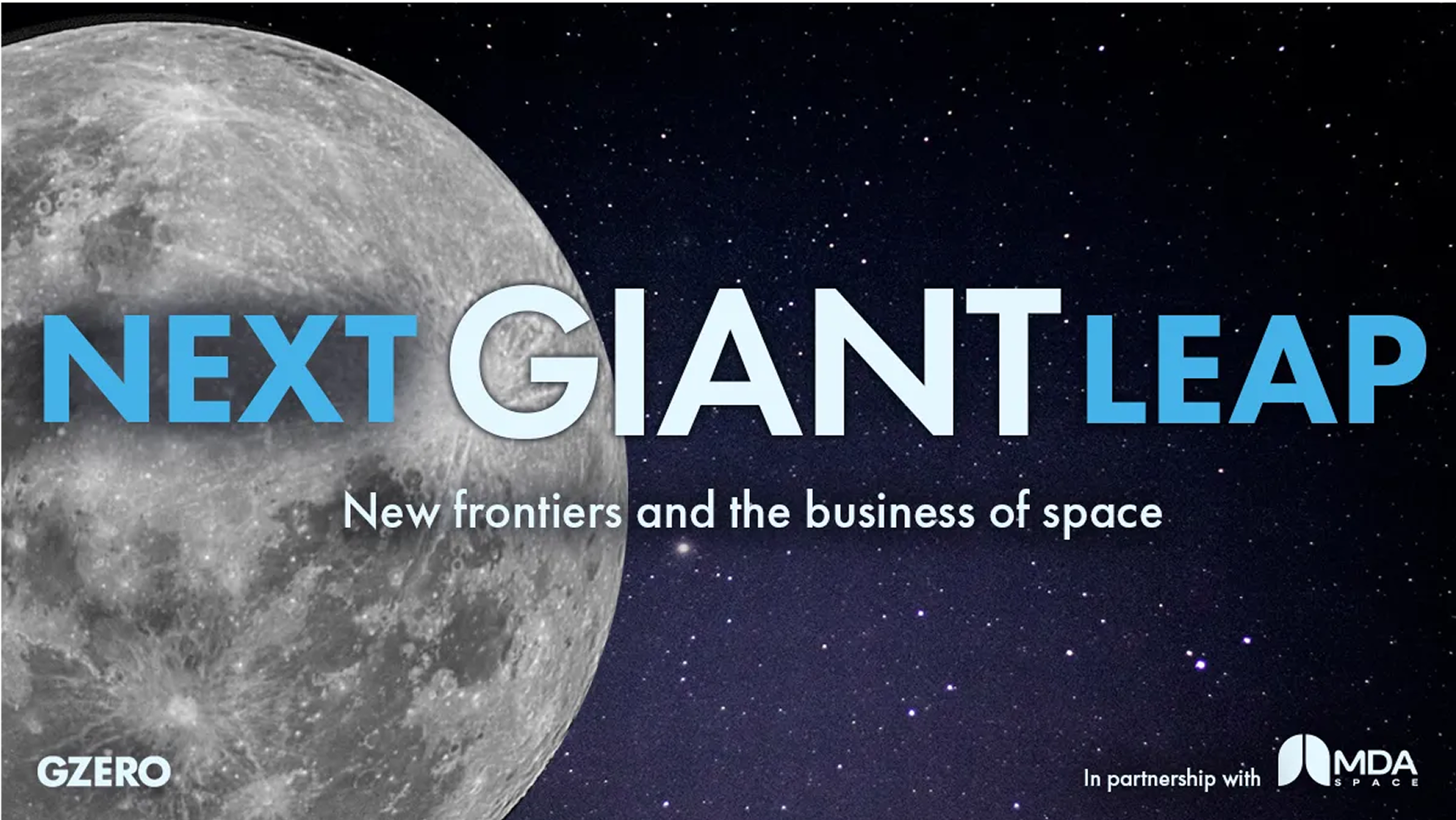
Next Giant Leap podcast | Artermis and the lunar economy |  GZERO - In partnership with MDA Space | image of the moon in space

Artemis and the lunar economy

Listen: There is a big difference between NASA’s current Artemis program and its Apollo program of five decades ago. This time, there is a long-term plan for humans on the moon. In the latest episode of the podcast series Next Giant Leap, NASA astronaut Raja Chari tells host Kevin Fong that the most valuable known resource on the moon is water ice, which could be used to sustain life in lunar bases.

Transcript

Listen: There is a big difference between NASA’s current Artemis program and its Apollo program of five decades ago. This time, there is a long-term plan for humans on the moon. “We don't want to just touch it and come back and say we're done. We want to go there and stay there,” says NASA astronaut Raja Chari. He adds, “To do that, we need to go where there's resources.”

In the latest episode of Next Giant Leap, a podcast produced in partnership between GZERO and Canadian space company MDA Space, Raja Chari tells host Kevin Fong that the most valuable known resource on the moon is water ice, which could be used to sustain life in lunar bases. Water ice is most abundant in craters around the moon’s south pole. NASA is enlisting commercial companies such as SpaceX, Astrobotic Technology, and MDA to help get its astronauts to the polar region and in a position to ‘live off the land’ there.


One of MDA’s chief contributions to the Artemis program will be the robotic arm on a space station called the Gateway, which will orbit around the moon. The Gateway will be a transfer point for crew and cargo traveling to and from the lunar surface. MDA’s Holly Johnson is confident that the commercial space sector will be an essential enabler of the vision of a sustained human presence on the moon.

For a deeper dive into the private space industry’s part in the return to the moon, Kevin talks to Chad Anderson of venture capital firm SpaceCapital. Anderson explains why people are now talking about the rise of a ‘lunar economy’. He says, “Who controls the early infrastructure is set to control things and make a lot of money.”
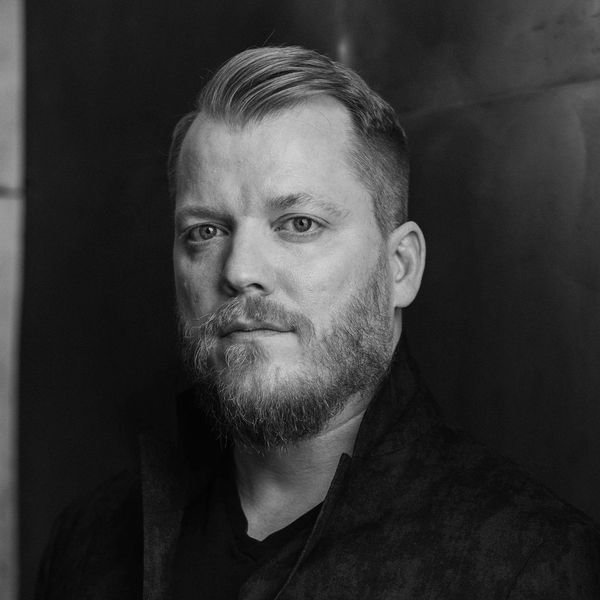

Chad Anderson

Chad Anderson. Credit: David Noles

Chad Anderson

Founder and managing partner of SpaceCapital

Chad Anderson is the founder and managing partner of Space Capital. Space Capital is a seed-stage venture capital firm which invests in companies developing new space technologies. He is author of The Space Economy: Capitalize on the Greatest Business Opportunity of our Lifetime. Prior to founding Space Capital, Anderson led a successful career at JP Morgan Chase, where he managed a $50-billion real estate portfolio through the Great Recession. He has an MBA with a focus on entrepreneurship and innovation from the University of Oxford.
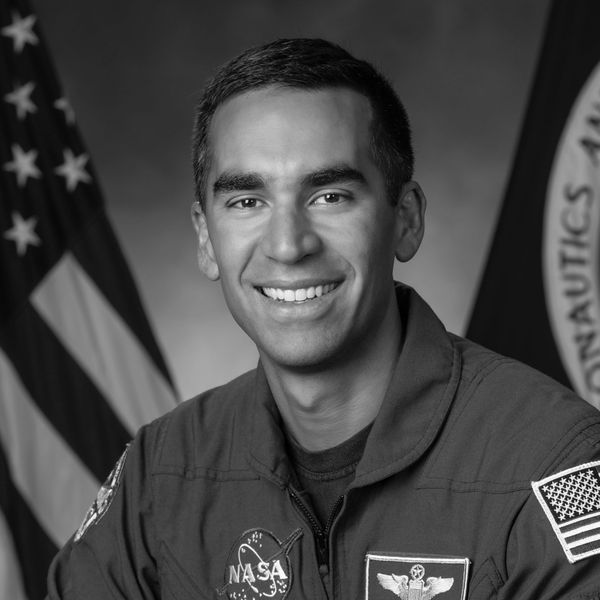
Raja Chari

Raja Chari. Credit: NASA

Raja Chari

NASA Astronaut

Raja Chari was selected as a NASA astronaut in 2017. Prior to joining the space agency, he was a colonel and a fighter pilot in the United States Air Force. In 2021, Raja Chari made his first flight into space. He commanded the mission of a SpaceX Dragon capsule to the International Space Station. Raja Chari then spent almost six months aboard the space station as a mission specialist, which included two space walks. His next mission could well be an Artemis moon landing.

Holly Johnson

Holly Johnson. Credit: MDA Space

Holly Johnson

Vice President of Robotics and Space Operations, MDA Space

Holly Johnson was appointed vice president for robotics and space operations at the Canadian space company MDA Space in 2022. She is a trained mechanical engineer who has occupied engineering, business development, and corporate operations roles in her 15-year career at the Canadian company.

Kevin Fong

Kevin Fong. Credit: Anthony Cullen

Dr. Kevin Fong (host)

Professor, Department of Science, Technology, Education and Public Policy (STEaPP) at University College London

Kevin Fong is a senior emergency care physician and anesthesiologist in the UK’s National Health Service. He is also an expert in space medicine and has worked as a researcher in NASA’s human spaceflight program in Houston. He is also a broadcaster who has hosted many radio and television shows, and podcasts on space flight and exploration. They include the BBC hit podcast ‘13 Minutes to the Moon’.


Next Page

More from Next Giant Leap

Could the future of industry lie among the stars?

Listen: Creating artificial human retinas in zero gravity. Mining rare minerals on the moon. There seems to be no limit to what could be possible if we continue to take our more important industries to space. Join Mike Massimino and Mike Greenley on this episode of Next Giant Leap as they explore the industrialization of space. Dr. Joan Saary sheds light on the potential of designing medical treatments in microgravity and treating astronauts in orbit, and Dr. Gordon Osinski explains the exciting future of resource extraction on other planetary objects.

Keep reading...Show less

Listen: Creating artificial human retinas in zero gravity. Mining rare minerals on the moon. There seems to be no limit to what could be possible if [...]

More >

The two trillion dollar opportunity

Listen: You might not know it, but you interact with space technology countless times on a daily basis. In fact, the space economy has become so ubiquitous that some estimate that its value could reach as high as $1.8 trillion by 2035. On this episode of Next Giant Leap, hosts Mike Massimino and Mike Greenley are joined by Alex MacDonald, former Chief Economist at NASA. They discuss the surprising history of private investment in the space industry, the many reasons for the current boom, and how you might get a job in the space world.

Keep reading...Show less

Listen: You might not know it, but you interact with space technology countless times on a daily basis. In fact, the space economy has become so [...]

More >

A new era of space defense

Listen: For many of us, the idea of a space-based arm of the military calls to mind images from science fiction. But the real-life world of space defense has become increasingly integral to military operations on land, at sea, and in the air. In this episode of Next Giant Leap, hosts Mike Massimino and Mike Greenley explore the world of space military technology. Guests Major General (Ret.) Kim Crider formerly of the United States Space Force, and Brigadier-General Chris Horner of the Canadian Space Division walk us through the many innovations in this fascinating arena, and attempt to answer one crucial question: how do you secure a domain with no borders?

Keep reading...Show less

Listen: For many of us, the idea of a space-based arm of the military calls to mind images from science fiction. But the real-life world of space [...]

More >

The new Sputnik moment

Listen: Over the last decade, the world of space exploration and innovation has exploded. On this episode of Next Giant Leap, season 2 hosts Mike Greenley, CEO of MDA Space, and Mike Massimino, Columbia Engineering professor and former NASA astronaut, take a look at the new space race with former Congresswoman Jane Harman and China expert Dean Cheng. They discuss the role of space in national security, the potential for space-based conflict, and the role of private space companies in this new era.

Keep reading...Show less

Listen: Over the last decade, the world of space exploration and innovation has exploded. On this episode of Next Giant Leap, season 2 hosts Mike [...]

More >

GZERO Podcasts

Computer scientist and Nobel laureate Geoffrey Hinton joins Ian Bremmer on the GZERO World podcast to talk about artificial intelligence, the [...]

More >

Listen: What does global energy transition look like in a time of major geopolitical change, including rebalancing of trade? In this special episode [...]

More >

Listen: Creating artificial human retinas in zero gravity. Mining rare minerals on the moon. There seems to be no limit to what could be possible if [...]

More >

In this episode of "ask ian," Ian Bremmer breaks down Notre Dame football. [...]

More >

Transcript Listen: “The equivalent of what we spent in World War II was spent in the course of a year and a half to support the US economy, and that [...]

More >

Listen: Investing in health and science research isn’t just about curing diseases. It has huge impacts across society, from creating jobs to driving [...]

More >

Listen: As populations grow and communities evolve, transportation authorities and urban infrastructure are seeking ways to modernize.In this episode [...]

More >