Graphic Truth
Graphic Truth: Netanyahu’s strategic window in Iran
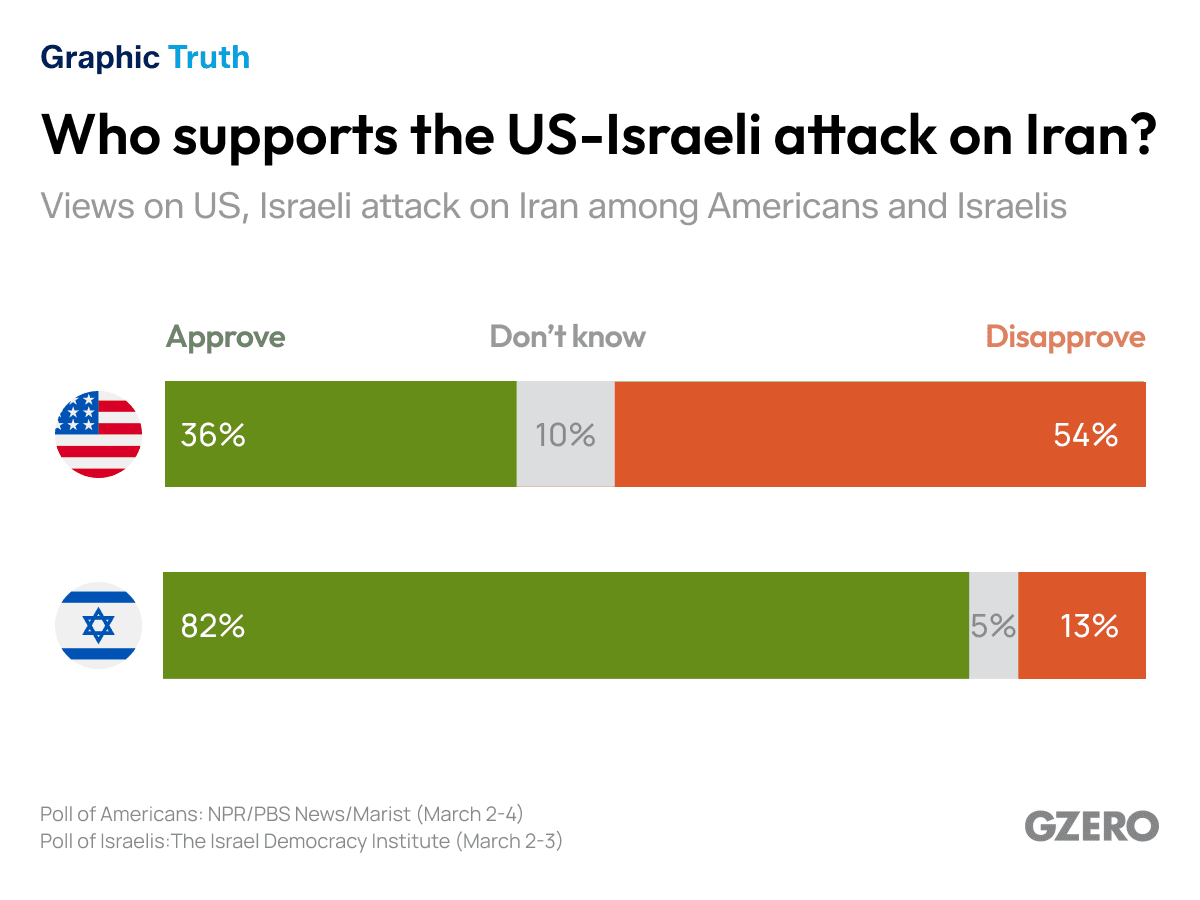
Opinion polling on views on Iran war.
Natalie Johnson
If the American public remains opposed to this war, that will apply pressure on US President Donald Trump to avoid a drawn-out conflict, especially if it begins to undermine Republican support ahead the midterm elections. Wars generally becomeless popular over time, and the economic and inflationary impacts of this conflict could be severe, at least in the short-term.
What’s more, there are already possible signs of distance between Trump and Netanyahu on Iran, as Israeli strikes over the weekend on dozens of Iranian fuel depots went beyond what the Trump administration reportedly expected. The strikes, combined with the de facto closure of the Strait of Hormuz, have also sent oil prices skyrocketing. This is something the US president, who likes having low gas prices, won’t be willing to tolerate for long. If Trump sours on the war, it could increase pressure on Netanyahu to rein his military campaign, perhaps earlier than he’d like, given that US support is critical for his strategy.
Can Washington turn military pressure into a diplomatic strategy? Brett McGurk joins Ian Bremmer on the GZERO World podcast to discuss the Iran war, Houthi attacks, and how elections in Israel and the US could reshape the region.
Think you know what's going on around the world? Here's your chance to prove it.
Canadian Prime Minister Mark Carney is in Turkey on Thursday for talks with President Recep Tayyip Erdogan - the visit is the first by a Canadian prime minister.