December 15, 2017
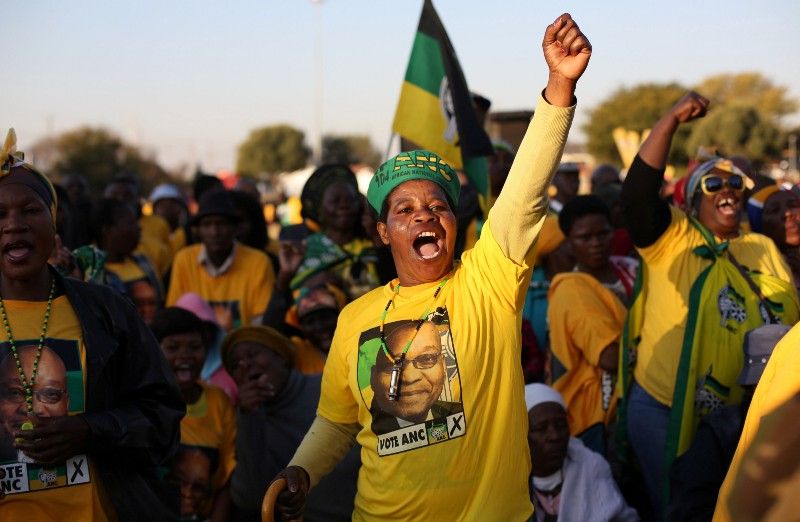
South Africa reaches a crossroads this weekend as the ruling African National Congress elects a new party leader. This is the person who will lead the ruling ANC into the next presidential election in 2019.
A quarter century from the end of apartheid, this country is in rough shape.
- More than one-third of South Africans aged 15–35 are unemployed.
- Unemployment is four times higher for black youth (40 percent) than for white youth (11 percent).
- Just 30 percent of South African households qualify as “middle income.”
- The average annual number of violent protests climbed from 21 between 2004 and 2008 to 164 from 2014 to 2016.
Why has this happened? Falling global demand for the gold, platinum, diamonds, and coal the country produces leaves its government with less money to invest in development, exacerbating problems created by the physical legacy of apartheid: the distance between the townships and rural areas where many black South Africans still live, on the one hand, and the schools and jobs that could help them escape poverty on the other. But the ANC must accept blame for corruption and lousy leadership. Jacob Zuma, president since 2009, faces 783 charges of corruption and racketeering.
ANC delegates will vote this weekend. The contenders are Deputy President Cyril Ramaphosa and Nkosazana Dlamini-Zuma. Ramaphosa is a former trade unionist turned successful businessman. He leads an ANC faction that recognizes the need to balance moves to transfer more of the country’s economy and land into black hands with a consistent effort to maintain investor confidence. Dlamini-Zuma is former chair of the African Union Commission, former health minister, former foreign minister, and Zuma’s former wife. She heads a faction of the ANC that wants to protect its privileges and keep Jacob Zuma out of jail.
Keep in mind that South Africans under 30 are too young to remember apartheid. For them, the ANC is not the party of liberation but the party of power. It’s not the party that brought change; it’s the party that resists change. That’s part of why it’s not clear that either candidate can lead the ANC to victory in 2019, leaving the Democratic Alliance in position to lead the first non-ANC government since the end of apartheid.
The ANC’s credibility and future are on the line this weekend. The vote will be close. By Monday, we should know who won.
More For You
U.S. President Donald Trump and Chinese President Xi Jinping talk as they leave after a bilateral meeting at Gimhae International Airport, on the sidelines of the Asia-Pacific Economic Cooperation (APEC) summit, in Busan, South Korea, October 30, 2025.
REUTERS/Evelyn Hockstein
China has defied Western sanctions for years and buys as much as 90% of Iran’s oil exports.
Most Popular
Sponsored posts
Show your undying devotion to The Regime
Sponsored posts
Invested in America’s curiosity
Think you know what's going on around the world? Here's your chance to prove it.
President Bola Tinubu faces strong headwinds in his bid for a second term.
Ukraine's Minister of Defence Mykhailo Fedorov speaks at a joint press conference with his Swedish counterpart Pal Jonson (not pictured), amid Russia's attack on Ukraine, in Kyiv, Ukraine, July 1, 2026.
REUTERS/Alina Smutko
Critics have said that Zelensky – now in his seventh year in office – has been in power for too long.
© 2025 GZERO Media. All Rights Reserved | A Eurasia Group media company.