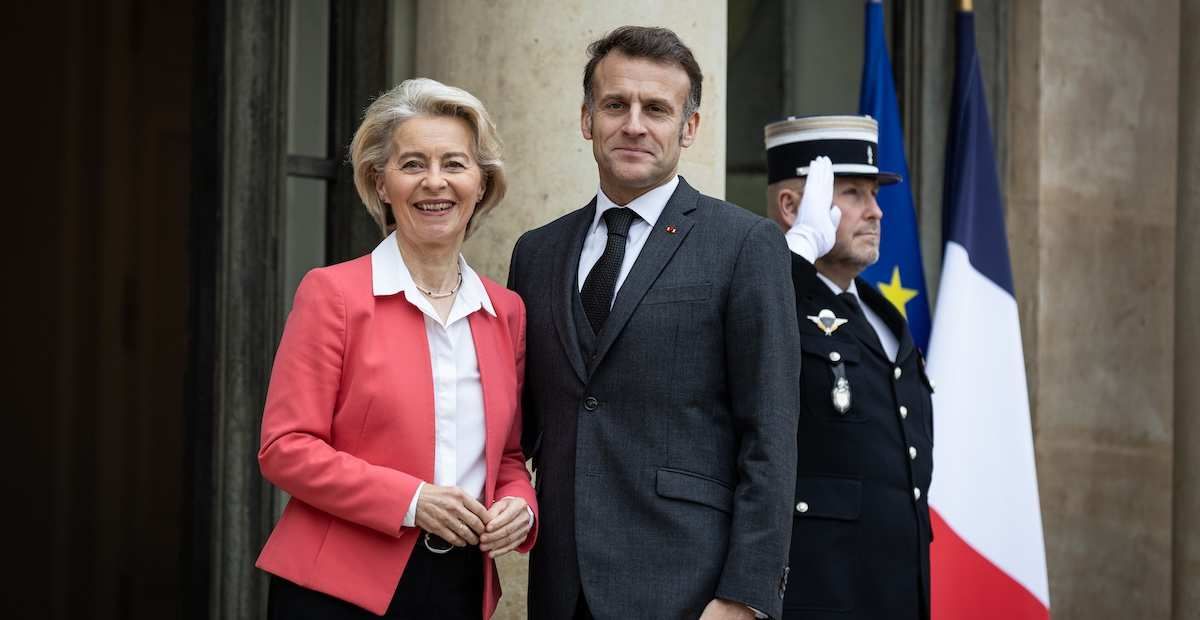
In a bid to de-risk, Europe turns inward
European Union leaders agreed to move ahead with “Buy European” policies as part of a broader push to de-risk from the US and boost competitiveness amid China’s industrial prowess. Meeting in Belgium on Thursday, the bloc’s 27 leaders discussed protecting strategic sectors such as defense, clean tech, AI, and quantum to reduce reliance on Chinese subsidies and shield against US trade volatility. European Commission President Ursula von der Leyen advocated a once-taboo policy of European preference, which would favor European companies in certain sectors, such as clean tech. French President Emmanuel Macron backed a proposal to require governments to prioritize European industries. German Chancellor Friedrich Merz, on the other hand, warned that the approach should be about cutting red tape, strengthening the single market, and diversifying trade.
Kurdish militia’s demise in Syria forces prisoner transfer
As part of last month’s ceasefire deal between US-backed Kurdish forces and the Syrian army, Damascus would take control of many Kurdish-held areas of the country. There was just one problem: the Kurds had run detention camps and prisons there that held suspected Islamic State militants. The US feared that the Kurdish militants’ demise could undermine prison security, so they started transferring roughly 5,700 prisoners to Iraq – the US military said Friday that it had completed this mission. The prisoners won’t necessarily stay there: Iraq wants to repatriate some of the prisoners, leaving Europe concerned that this will lead to a faster release for the prisoners.
Russia is upset about Washington’s nuclear plans for Armenia
The Kremlin is not happy about the new plans the US announced on Monday to build a nuclear plant in Armenia. The tiny South Caucasus nation, once part of the USSR, has long been a key Russian ally and security partner, but Moscow’s influence hasrecently been slipping. The Kremlin failed to stop neighboring Azerbaijan from overrunning Armenian-backed forces in the disputed Nagorno-Karabakh region in 2020, and Russian President Vladimir Putin played second fiddle to US President Donald Trump in brokering a peace settlement there. Since then, the Kremlin has watched the US — along with other players like Turkey and the European Union — steadily increase their influence in both countries. So, although Russian officials are publicly saying that US nuclear power companies are dangerously unfamiliar with the geology of earthquake-prone Armenia, their real concerns are about a different kind of tectonic shift entirely.