This is it: the second and final batch of questions (lightly edited for clarity) before Moose and I go dark for a few weeks. As always, thanks to everyone who sent one in. See you after Labor Day!
How credible is the risk that the confrontation between Tehran and Washington could lead to horizontal escalation and open a second, interconnected front in Yemen, merging the US-Iran conflict with the long-standing confrontation between Saudi Arabia and the Houthis?
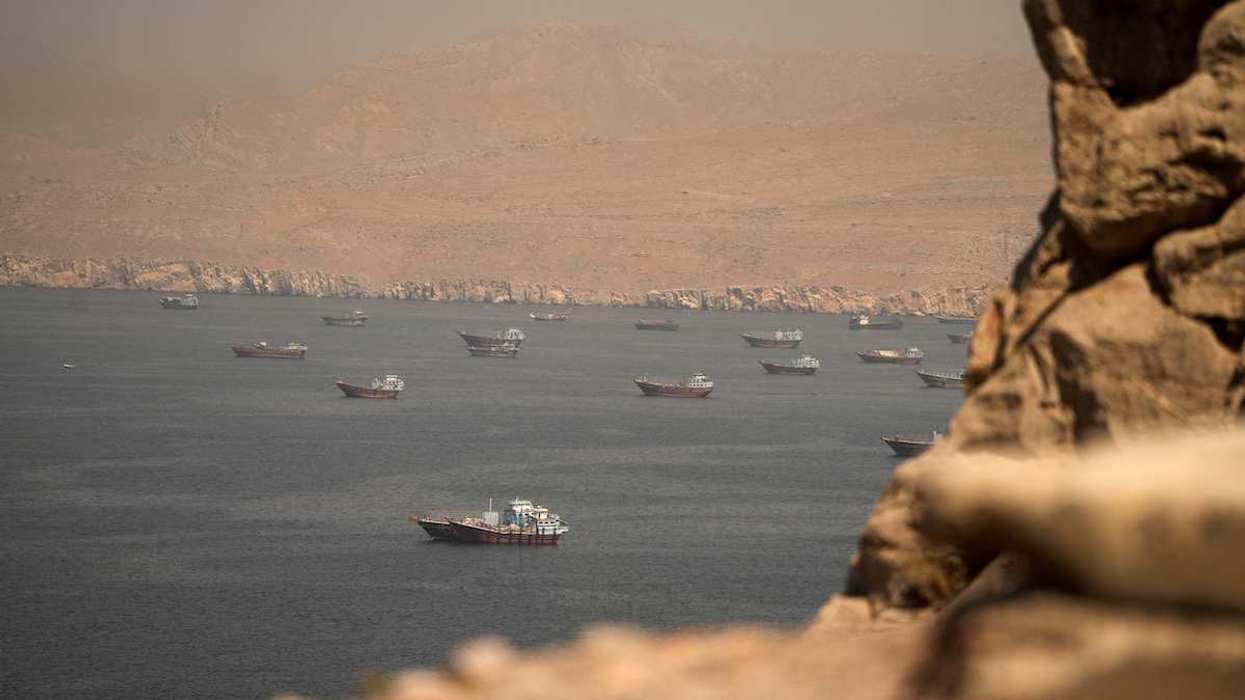
I’m a bit more sanguine on this one, as I explained in my Quick Take this week. The Houthis have disrupted traffic through the Bab al-Mandeb Strait since their declaration of a blockade of Saudi Arabia last week, but the waterway is not shut off like Hormuz is shut off. They haven’t hit non-Saudi oil tankers, and they’ve even allowed some Chinese vessels carrying Saudi oil to transit without incident.
The thing to understand is that the Houthis don’t just exist to do Iran’s bidding; they’re an independent actor with their own motivations and strategic interests (even if often aligned with, and instrumental to, Tehran’s). For them, this escalation is a bilateral negotiation with the Saudis, taking advantage of the Hormuz closure to extract more money from them “or else.” Riyadh had been paying tens of thousands of salaries of public sector workers in Houthi-controlled Yemeni areas for months, but the Houthis are now demanding a lump-sum $10 billion “reparations” payoff to stand down. While the Saudis are likely prepared to continue to pay them off, they’re balking at giving them a big payout that the Houthis could easily try to demand again in three, six, or twelve months’ time, and are conducting airstrikes in Houthi-held territory for the first time in years.
The Houthis will keep the pressure up hoping that Riyadh caves soon. The rise in oil prices will give Tehran more leverage over the United States in the meantime. But the Houthis will stop short of provoking a major Saudi retaliation or fully closing the Red Sea and drawing Washington in. In that sense, the escalatory ceiling for this conflict is much lower than for the Hormuz front.
What is the likelihood of Trump interfering in Brazil's presidential election in October?
Quite low, if by that you mean the likelihood of decisive (or even effective) interference. Trump will surely make a direct endorsement of Flavio Bolsonaro, which is now an all-too-normalized type of intervention in domestic politics. But it’s not likely to matter much to the Brazilian electorate – and to the extent it does, it’s more likely to marginally hurt than help Bolsonaro. After all, the big Trump administration moves on Brazil thus far – including last year’s tariffs, the sanctions on the judge presiding over Jair Bolsonaro’s coup trial, the designation of the PCC and CV crime syndicates as terrorist organizations, and the new 25% tariffs – have allowed Lula to cast himself as defender of Brazilian sovereignty and repeatedly boosted his standing. The Bolsonaro camp is aware and increasingly wary of this backlash, to the point where they’ve begun to distance themselves from some of Washington’s actions. Trump also knows he needs to secure Brazilian critical minerals to derisk from China rare-earth supply chains, which limits how far he can take his interference without risking a full break with the Lula government that’d be unacceptably costly for the US.
The bigger question is whether a third candidate proves viable enough to make the runoff given the high disapproval and serious weakness of both Lula and Bolsonaro (on corruption, security, and the economy) in this race …
Do you believe an accidental military confrontation between China and the Philippines in the South China Sea is more likely than a Taiwan contingency in the coming years? And if such a confrontation were to cross the threshold into an armed conflict, would the United States realistically honor its commitments under the US-Philippines Mutual Defense Treaty?
Yes, because the stakes are lower and it can happen more easily without the United States getting involved. Taiwan requires a deliberate Chinese decision with massive, irreversible consequences; Beijing has to choose that. The South China Sea is different: you’ve got ongoing, routine physical contact between Chinese and Philippine forces in a contested space where accidents happen and neither side is fully in control of escalation. And with Beijing now putting navy destroyers on the frontline rather than just coast guard vessels or maritime militia, the risk of miscalculation has gone up.
The presumption is that the US would honor its treaty commitments, but with a lot less certainty than a decade ago. The threshold for what even constitutes an “armed attack” under the MDT remains unresolved, and the Trump administration is clearly prioritizing bilateral stability with China over regional defense commitments. Secretary Hegseth’s assurances at Shangri-La earlier this year did very little to reassure allies in the region. Which is precisely what makes the South China Sea more dangerous right now: when Beijing senses ambiguity, the incentive to probe is higher.
How concerned should Eastern European countries (the Baltics and Poland, in particular) be about Russia in the months and years to come?
More concerned than Greenlanders should be about US annexation. A few weeks ago I wrote that Trump’s impact on global risk had peaked. I can’t say the same about Vladimir Putin, who is in the tightest spot of his 25 years in power: aging, isolated, and increasingly cornered by a war that’s turned embarrassing – and potentially dangerous – for him. Russia may not be on the verge of losing, but it’s definitely not winning. Momentum has shifted decisively toward Ukraine. Russian casualties keep mounting at an astounding rate and now outnumber new recruits, while Moscow controls roughly the same share of Ukrainian territory it did three years ago. Ukrainian drones strike deep inside Russian territory every day, battering the country’s energy infrastructure and bringing the war home to ordinary Russians. Crimea, Putin’s crown jewel, is under siege, and even his war economy is starting to show cracks.
None of that means Putin is about to face domestic uprising – there’s no real threat or alternative to his rule. But as the scale of his failure catches up with him, how much escalation risk might an ill-advised, unconstrained Putin be willing to take? I’m skeptical he sends tanks into the Baltics when Russia can’t even break through the Donbas. More likely: bolder, more frequent hybrid provocations against NATO members to weaken Western support for Ukraine and divide the alliance, raising the risk of confrontation but stopping short of open war. If Russia starts losing more visibly, or if Putin ever concludes his own survival is genuinely at stake, that’s when the more unhinged escalation scenarios become far more thinkable. It’s not my baseline, but it’s the biggest geopolitical wildcard out there.
Do you think Mark Carney is on his way to achieving the goal of bringing middle powers together to pick up the ball that the US has dropped?
No, because there exists no coherent geopolitical grouping of “middle powers” with the interest alignment, collective resources, leadership, and capacity to coordinate policy. In most areas, the most viable response is “variable geometry” – ad hoc coalitions of the willing and cooperation based on shared interests rather than new formal institutions and architecture. This is already a reality: from the EU-Mercosur trade agreement, Canada’s expanded trade ties with India and security ties with Europe, the Saudi-Pakistan defense pact, and dozens more moves around the world like them, there’s a great deal of trade and security derisking from the United States among countries that worry about the predictability and dependability of the Americans. All directionally useful, to be sure, but only an incremental solution to the range and scale of risks posed by the G-Zero.
Do you believe that Trump will oversee a return of democracy to Venezuela?
It’s increasingly plausible. The US has enormous leverage here (sanctions, oil licenses, the pace and terms of any debt restructuring, now earthquake recovery and reconstruction), and Interim President Delcy Rodriguez knows it. Her handling of the disaster was underwhelming, shaking her government’s already weak legitimacy. With popular frustration building, she is desperate for US help and needs to start showing some movement toward a transition just to buy herself breathing room. Formal talks between the opposition’s 2015 assembly and the Chavista-controlled assembly are scheduled to begin this weekend with US support, and Secretary Rubio has signaled that Maria Corina Machado – the opposition leader with the most popular legitimacy, until now actively sidelined by the Trump administration – could eventually be part of the process.
None of that means fully free and fair elections with Machado on the ballot anytime soon. Delcy has drawn a hard line there, conditioning any engagement with her on a full sanctions lifting, which isn’t going to happen overnight. And the opposition itself is divided in ways that complicate things. But we could get a decent way there over the next two years: some kind of negotiated process, probably leading to elections under imperfect but not entirely fraudulent conditions. The key question is whether Trump stays focused long enough to see it through.
To what degree do you think the US Supreme Court's partisanship can be checked?
I think what's critical is that Supreme Court justices are independent and believe in the rule of law. Agree or disagree with their decisions, they don't put their personal interests above what they believe are the country's interests. Yes, they have ideological preferences and biases, as do all of us. The Court has not been immune to the growing politicization and polarization that’s afflicted the rest of the country. Its decades-long conservative bent (undeniable since Trump cemented a 6-3 supermajority in 2020) has led to some excesses – particularly in allowing dark money to become a greater force in politics, for example – and historically low public trust. But none of that has threatened the institution’s independence, its authority, or the fundamentals of the US republic.
I am thinking of subscribing to Trump's Truth Social insider-trading program. Do you think it's worth $100,000 per month?
That depends. Are you a high-frequency trader for whom nanoseconds are the difference between profit and loss? If so, you might find it worthwhile (disclaimer: not investment advice). I’m just glad we finally have an answer to the problem of only connected insiders being able to profit from privileged information; now, merely-rich outsiders can get a piece of the action, too. Who said the American Dream is dead?
What advice should I give my grandchildren about what type of education to pursue to help them succeed in the workforce of the future?
Learn how to use AI (and relearn that constantly), but young people don’t need to be told – or taught – that. And given the current and expected pace of technological change, I won’t even try to guess what occupations and degrees will command a premium in five, ten, or twenty years. What I can say with moderate confidence is that white-collar work will be much more “meta” and reward emotional intelligence and higher-order macro thinking more than today. Tacit knowledge, creativity, craft, and soft skills will become far more important than “hard” and technical skills, most of which are codifiable and therefore automatable. That includes engaging with people (and technology), networking effectively, navigating complex organizations, knowing when to manage up vs. down vs. sideways, acquiring new skill sets … Combine all that with critical thinking, intellectual flexibility, and curiosity, and I think your grandchildren will be in a pretty good spot (provided work is still necessary and available by then).
You’ve dropped hints in your commentary that you like sci-fi novels. Why, and which book or series is your favorite?
Iain Banks, across the board. Nobody imagined a society transformed by mind-bending technology as fully as he did. Useful skill set for the coming decade.
_________
🔔 Be sure to subscribe to GZERO Daily to get the world’s best global politics newsletter every day on top of my weekly email. Did I mention it’s free?