Today, we examine the history of the Voting Rights Act after US Supreme Court struck down a congressional map, assess how long the US could continue its own blockade of the Strait of Hormuz, and attempt to identify which war the King was referencing in one of his jokes yesterday.
- The Daily Crew
US Supreme Court guts pillar of Voting Rights Act
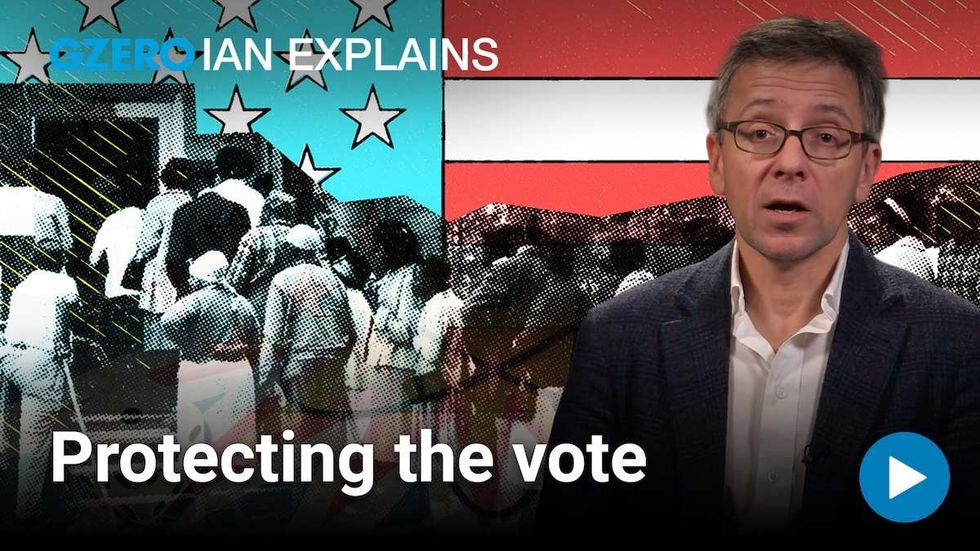
On Wednesday morning, the US Supreme Court tossed out a congressional map in Louisiana that had been drawn to shore up the voting power of the state’s Black residents, a decision that weakens the 1965 Voting Rights Act (VRA) and could have huge ramifications for the upcoming midterm elections.
Under Section 2 of the VRA, which broadly outlawed discrimination on the basis of race, lawmakers have for decades drawn congressional maps with a certain number of majority-minority districts in states with large minority populations, ensuring that certain groups of voters can have representation in the US Congress. The court’s decision today narrows the scope of how courts can interpret the provision widely seen as the cornerstone of the 61-year-old law.
The court had already weakened many aspects of the Voting Rights Act, but, until now, Section 2 had remained.
The decision could also create future opportunities for Republicans to pick up congressional seats in the American South, where politics largely fall along racial lines. A few states are trying to redraw congressional maps before the midterms, but may face legal hurdles in doing so. Hours after the court’s decision, Florida’s state House approved a new map that could give Republicans four additional seats in Congress (the Legislature had already planned on the vote prior to the SCOTUS decision this morning). With this decision, though, more states could also take up redistricting votes.
It’s worth taking a step back. How did the Voting Rights Act – regarded as the crown jewel of the civil rights era – come to be? In this episode of “ian explains” from 2022, Ian Bremmer takes us through the history.
Watch the video here.
What We’re Watching
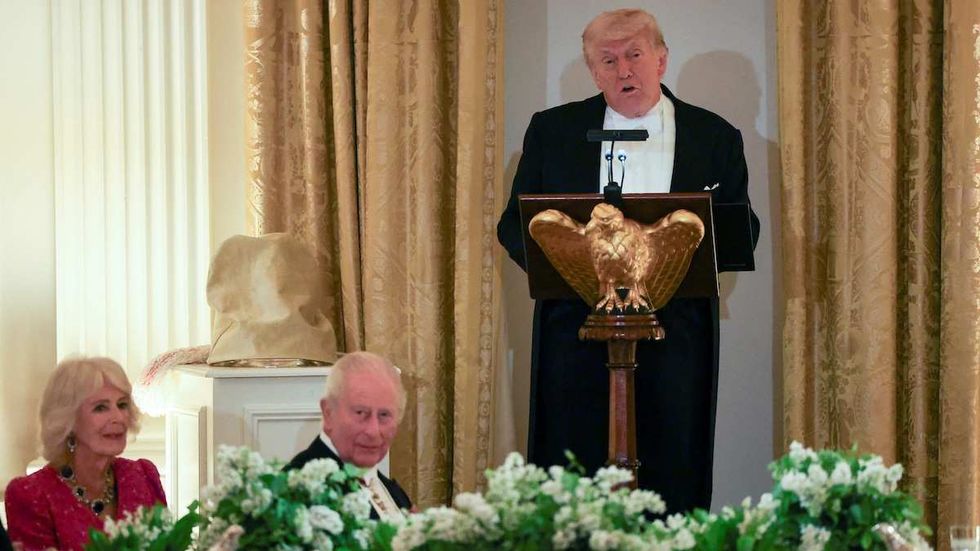
REUTERS/Suzanne Plunkett
Trump preparing for extended Hormuz blockade, per report
US President Donald Trump reportedly told his aides this week to prepare for a longer blockade of Iranian-linked ships passing through the Strait of Hormuz, in the hopes that the Islamic Republic kowtows to his demand to dismantle its nuclear program. He appears to prefer this option to restarting a bombing campaign or exiting the conflict altogether. The US blockade appears to be hurting Iran: Tehran is scrambling to find new ways to store the oil that it can’t export and its currency is plunging. But how long would an extended blockade be? After all, high energy prices isn’t a political winner at home for Trump (no wonder he met with oil executives yesterday to discuss the issue). With the midterms coming in November, there could be a cap on how long this “extended” blockade can be.
The fraught familial battle in the Philippines simmers on
The Marcos-Duterte feud continues to roil Philippine politics, as a House panel unanimously found on Wednesday that there was “probable cause” to impeach Vice President Sara Duterte over allegations that she misused funds and threatened the family of President Ferdinand “Bongbong” Marcos Jr. Duterte denies wrongdoing. The vote advances a process that could imperil her 2028 presidential bid – if she’s convicted in a future trial, she’ll be removed and banned from holding public office. Duterte and Marcos Jr. set aside familial differences to run on the same ticket back in 2022, but the goodwill didn’t last long, as the VP resigned from the Cabinet in June 2024 (yet kept her role as Bongbong’s deputy). A strong midterm election for Duterte’s party last year had appeared to give her a reprieve, but this vote suggests that might only be short-lived.
Incoming Hungarian leader heads to Brussels
Hungarian Prime Minister-elect Peter Magyar is looking to patch up his country’s ties with the European Union before he formally takes office next month. At stake is about $21 billion worth of EU funds frozen during the reign of outgoing PM Viktor Orbán, who proudly ran afoul of the bloc’s rules on judicial independence and media freedom. Magyar has pledged to root out corruption, roll back the offending laws, and revamp the country’s relationship with the EU. Also on the agenda is Ukraine: Kremlin-pal Orbán famously opposed EU efforts to arm Kyiv and sanction Russia. Magyar is OK with supporting Ukraine, but also said that any efforts to fast-track Kyiv’s EU membership must be put to a referendum.
Advancing sustainability through packaging innovation

Microsoft is advancing its efforts to eliminate single-use plastics across its global packaging portfolio through material innovation and design changes across products like Surface and Xbox.
By rethinking how packaging works—from cushioning to coatings and structural components—the company is reducing waste and demonstrating how design decisions at scale can deliver meaningful sustainability impact.
Last week, Microsoft marked a key milestone in reducing single-use plastic in its packaging to just 0.07%, reflecting significant progress toward its broader commitment to become a zero-waste company by 2030.
Read the full story here.
Hard number: Trouble in wine country
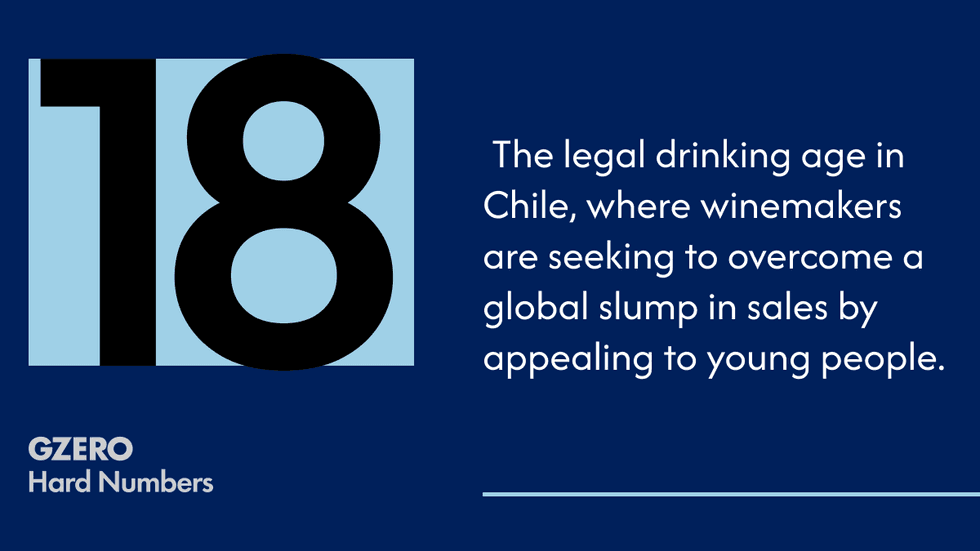
Chilean winemakers are betting they can boost sales by targeting young people. Think social media campaigns encouraging young wine lovers to “switch off their phones” and enjoy a glass of vino, as one ad campaign is framing it. It may be tough for these young sommeliers to turn this trend around, though. Alcohol consumption has been declining across the globe in recent years, in part because younger generations appear to be drinking less out of health concerns.
Quote of the Day
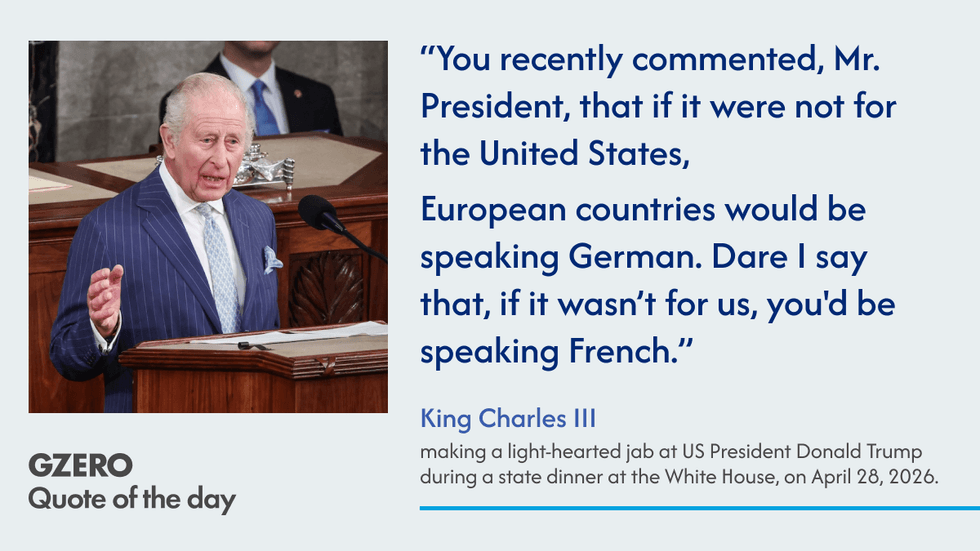
In a bid to stabilize the US-UK relationship, Charles used plenty of humor in both his address to the US Congress and his speech at the White House state dinner yesterday. But to which war was he referring with this joke? After all, the French actually helped the US defeat the British in the Revolutionary War. Charles may have been actually referencing the 18th-century French and Indian War which took place before the US declared independence, when Great Britain defeated France and took control of the land east of the Mississippi River. GZERO has made a formal inquiry to Buckingham Palace to clarify Charles’ jive. As of publication, the Palace hasn’t responded.
Which war do you think Charles was referring? Let us know by responding to this email or writing to us.
Speaking of Charles’ visit to the United States, the King heads to New York City today where he will visit the 9/11 memorial and meet with Mayor Zohran Mamdani. The democratic socialist doesn’t plan to roll out the red carpet for the royals, though.
What’s Good Wednesdays™, April 29, 2026
Read: “The House in the Cerulean Sea.” Is the son of Satan doomed to follow in his father’s footsteps? Pick up this charming novel about found family, unlikely heroes, and just enough fantasy weirdness to keep things interesting. And yes, cerulean. As Miranda Priestly (Meryl Streep) put it in “The Devil Wears Prada,” that “blue” sweater wasn’t just blue. With the sequel arriving Friday, consider this your sign: lean into the color and the vibe. – Nolan
Visit: Train Jazz makes MTA sound far better than it usually feels. The interactive website turns live New York subway traffic into a breezy, ever-shifting jazz composition, with each train contributing a note to the mix. Part art project, part data experiment, it creates a lively portrait of the city in motion. – Natalie W.
Read: “The Indifferent Stars Above” restores dignity to the Donner Party – the sons and daughters of Revolutionary War heroes who embraced a (deeply problematic) call to Manifest Destiny and suffered dearly for it – telling a story as much about hope and strength as it is about nature’s brutality and…people eating. – Alex G.
This edition of GZERO Daily was produced by Natalie Johnson, Zac Weisz, and Alex Kliment.