Trending Now
We have updated our Privacy Policy and Terms of Use for Eurasia Group and its affiliates, including GZERO Media, to clarify the types of data we collect, how we collect it, how we use data and with whom we share data. By using our website you consent to our Terms and Conditions and Privacy Policy, including the transfer of your personal data to the United States from your country of residence, and our use of cookies described in our Cookie Policy.
{{ subpage.title }}
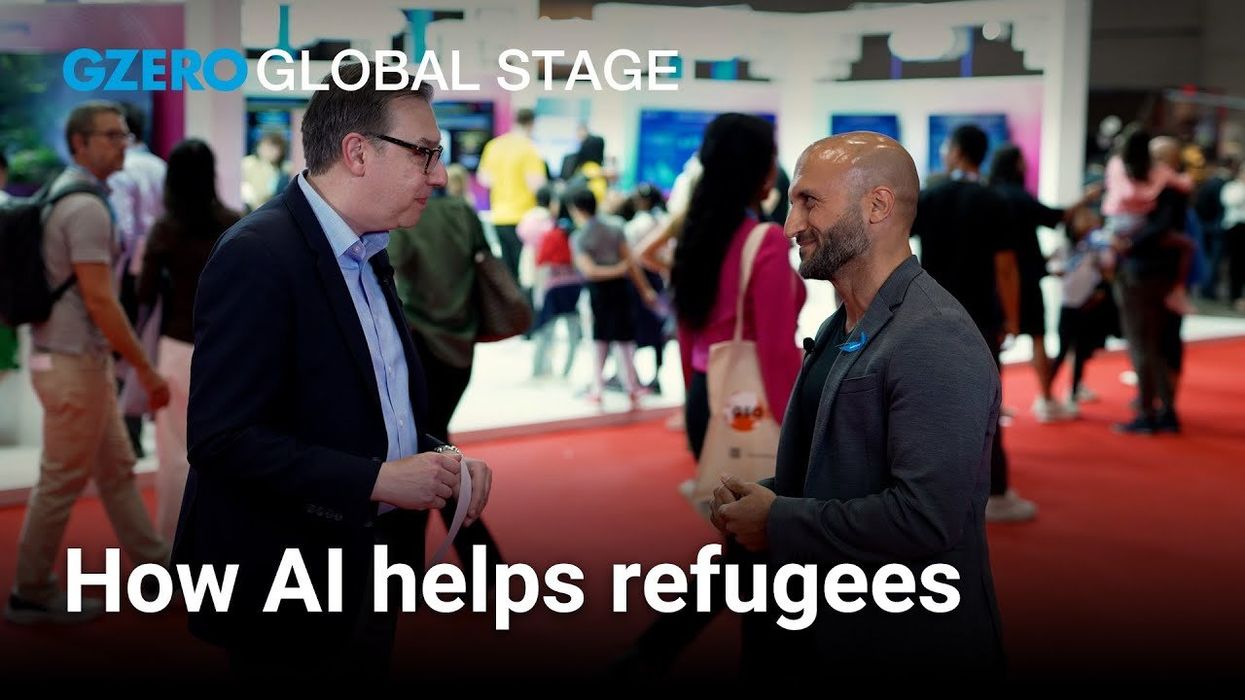
AI innovations that tackle the global refugee crisis
“Tech is a means to an end, not the end itself,” says Hovig Etyemezian, head of UNHCR’s Innovation Service.
Speaking to GZERO's Tony Maciulis at the 2025 AI for Good Summit in Geneva, Etyemezian explains how technology is helping address one of the world’s most urgent challenges: the record number of forcibly displaced people. As conflicts rise and resources shrink, UNHCR is using data, AI, and digital tools to improve services and empower refugee communities, but only when designed with those communities, not for them.
From funding refugee-led innovation to expanding digital literacy and connectivity, the agency is bridging analog proximity with digital solutions. But risks remain. “We never test technologies on people. We design solutions with people,” he says, emphasizing ethics, consent, and inclusion at every step.
This conversation is presented by GZERO in partnership with Microsoft, from the 2025 AI for Good Summit in Geneva, Switzerland. The Global Stage series convenes global leaders for critical conversations on the geopolitical and technological trends shaping our world.
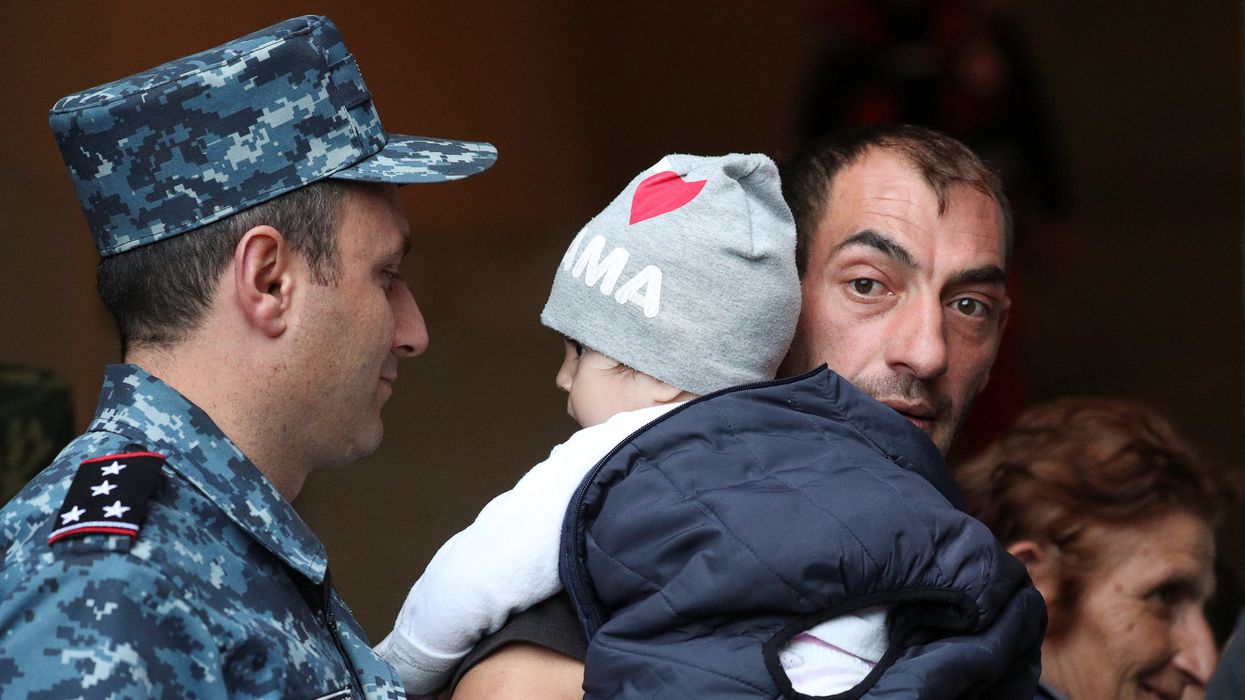
Refugees from Nagorno-Karabakh region arrive at a temporary accommodation centre in the town of Goris, Armenia, September 24, 2023.
Armenia faces Karabakh refugee crisis
Just days after Azerbaijan forced the surrender of ethnic Armenian forces in Nagorno-Karabakh, a wave of thousands of refugees from the region is streaming toward the Armenian border.
For 30 years, Nagorno-Karabakh lived as a de facto independent state with an Armenian majority, despite being officially part of Azerbaijan. But with Baku now fully back in control, there are fears that Azeri forces may engage in ethnic cleansing of the region. Both sides have committed grave human rights abuses over the course of decades of conflict.
The numbers are daunting. There are officially about 150,000 ethnic Armenians in Karabakh — if many of them were to seek safety in Armenia, the small country of 2.7 million could quickly be overwhelmed. (For comparison, imagine if 5 million people suddenly arrived in Germany, or 18 million in the US).
A burgeoning refugee crisis is adding to the pressures on Armenian PM Nikol Pashinyan, who has not only recently fallen out with Armenia’s long-time security partner, Russia, but is also facing protests in Yerevan by those who say he mishandled the Karabakh crisis and allowed the region to slip away.
A blast at a Karabakh fuel depot late Monday killed 20 and injured nearly 300, many of whom are in critical condition. Gas stations in the region have been overwhelmed by the thousands of ethnic Armenians trying to flee.
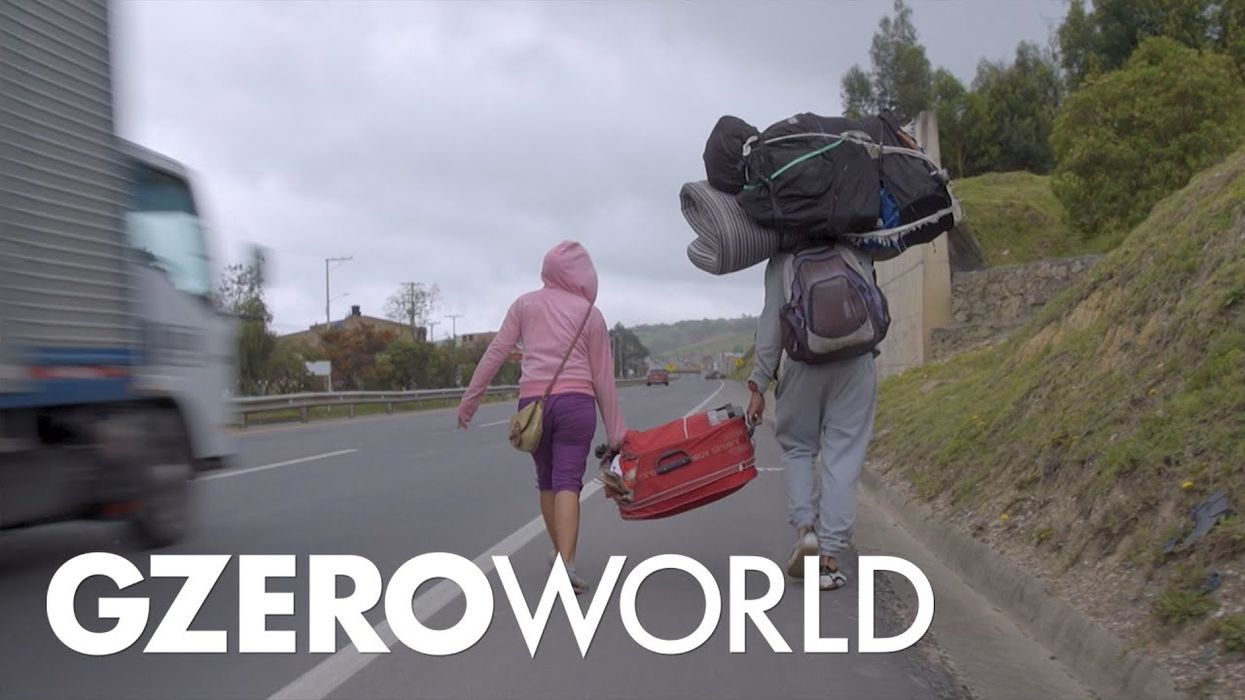
COVID lockdowns in Colombia forcing refugees to return to Venezuela
GZERO World takes viewers to Colombia as Venezuelan refugees risk everything once again—this time to cross back into their home country. As pandemic lockdowns and economic downturn threaten jobs and livelihood in Colombia, many are left with no choice but to return to Venezuela and an uncertain future.
Kendry Fernando tells his story as he walks hundreds of miles with his family, looking for work, and considering a return home to repressive conditions in Maduro's Venezuela.