November 25, 2019
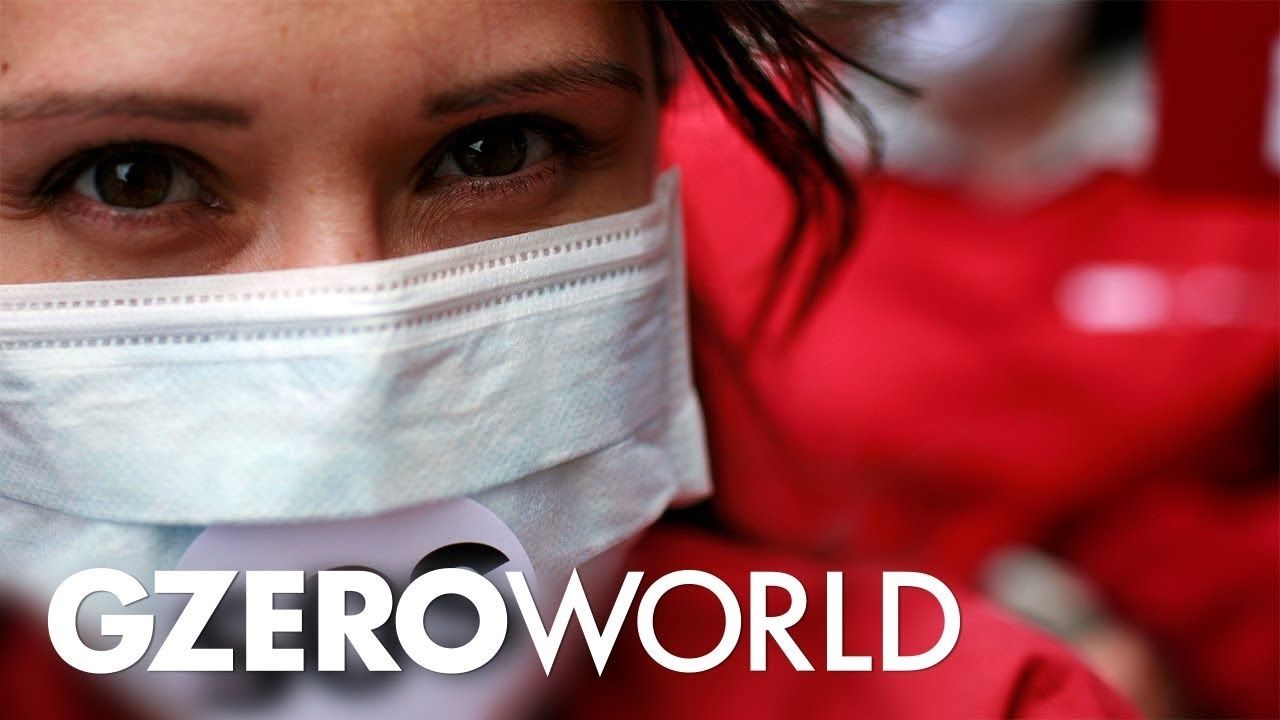
The "Spanish flu" virus of 1918 killed an estimated 50 million people, more than all the deaths in World War I combined. While global public health efforts have greatly improved mortality rates in more modern outbreaks, experts say the next pandemic is a matter of "when," not "if." In this episode, Ian Bremmer takes a look how diseases spread and become global. His guest, Dr. Anthony Fauci, is a leading epidemiologist and director of the National Institute of Allergy and Infectious Diseases at the NIH.
Dr. Fauci breaks down some of the biggest health threats facing the world today: HIV/AIDS, Ebola, malaria, tuberculosis, influenza, and the recent rise in cases of measles brought on by the misguided anti-vaccine movement.
Also on the show: Five years after his Ebola diagnosis made international news, NYC's Dr. Craig Spencer tells GZERO Media what he learned from the experience and what his life is like today.
More For You
The Supreme Court is facing some of the biggest legal and political questions of the Trump era. Emily Bazelon joins Ian Bremmer to break down the rulings that could reshape executive power, voting rights, and public trust in America's highest court.
Most Popular
Think you know what's going on around the world? Here's your chance to prove it.
Smoke billows from southern Lebanon, following Israeli strikes, as seen from Nabatieh, Lebanon, June 4, 2026.
REUTERS/Stringer
Lebanon and Israel signed a ceasefire, but Hezbollah didn't, and that is a problem. With Netanyahu under pressure to escalate, Trump searching for a face-saving exit, and Iran unmoved by US muscle-flexing, the deadlock shows no signs of breaking.
US President Donald Trump listens to a question from a reporter prior to signing an executive order on AI next to Sriram Krishnan, Senior White House Policy Advisor on Artificial Intelligence, US Sen. Ted Cruz (R-TX), US Commerce Secretary Howard Lutnick, and David Sacks, chair of the President's Council of Advisors on Science and Technology, in the Oval Office at the White House in Washington, D.C., USA, on December 11, 2025.
REUTERS/Al Drago
Artificial intelligence and Donald Trump's foreign policy are creating huge tail risks for markets.
© 2025 GZERO Media. All Rights Reserved | A Eurasia Group media company.