The Lebanon ceasefire that isn’t
Lebanon and Israel agreed to a new ceasefire on Wednesday, but there’s just one (ongoing) problem: Israel isn’t fighting “Lebanon.” Rather, it’s fighting the Iran-backed Lebanese militants of Hezbollah, who are beyond the Lebanese military’s control and who have rejected the ceasefire because it would require them to evacuate much of south Lebanon. This directly undermines prospects for a US-Iran accord, because Tehran has made a complete Israel-Hezbollah ceasefire a requirement of any wider agreement with Washington. US President Donald Trump, for his part, has lowered the bar for what a ceasefire entails “in that part of the world,” but the basic deadlock remains: Iran is uncowed by US military power, Trump wants a face-saving way out of an increasingly unpopular war, while Israeli PM Benjamin Netanyahu is under domestic pressure to widen his campaign against Hezbollah, which continues to threaten large swaths of Northern Israel with rocket and drone strikes.
Republicans vote to check Trump’s Iran war powers
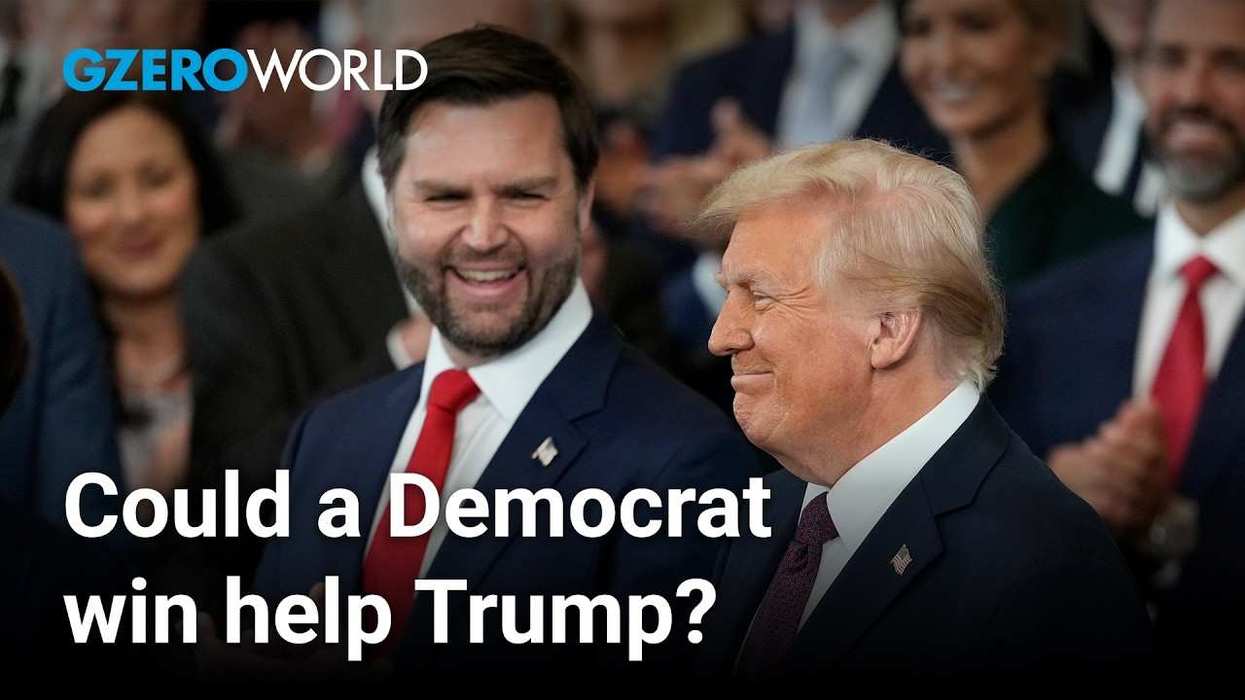
The US House on Wednesday voted to block President Donald Trump from ordering more strikes on Iran, after four Republicans joined Democrats in approving the measure. The vote marks the first time lawmakers have passed legislation on an unpopular war in Iran that they didn’t authorize. But the vote is largely symbolic, since Trump would almost certainly veto any final version of the measure that lands on his desk. Still, the rare Republican defection is notable. Among them was Rep. Thomas Massie, who lost his primary to a Trump-backed challenger after repeatedly criticizing the president. The vote may offer a glimpse of what’s to come if Republicans lose control of Congress in the midterms — an outcome that looks increasingly likely — and view Trump as a lame-duck president with waning influence over the party.
Africa’s basketball boom
Sure, we’re thrilled about the Knicks’ win last night, but the championship game that really had us buzzing here at GZERO is Rwanda’s victory over Angola at the Basketball Africa League Championship over the weekend. The NBA‑backed league, founded in 2019, drew record viewership this season as basketball continues to surge across the continent. This year, a record 17 players in the NBA were born in African countries, and that number jumps to 55, when you include players with one parent from Africa, roughly 10% of the league. That growth isn’t accidental. The United States has increasingly treated sports as a tool for global engagement, especially as it prepares to host the World Cup, the Summer Olympics, and the Winter Olympics over the next decade.