This year’s World Cup is the biggest in history. Forty-eight teams qualified from FIFA’s 211 member associations.
Yet the second-most populous country, which has over 1.4 billion people and a booming economy, isn’t among them. It didn’t even come close.
China made it to the third of five qualifying rounds among the Asian Football Confederation before losing out to Saudi Arabia and Indonesia – neither of which is a footballing giant. Instead, Chinese fans have resorted to supporting a Chinese referee this year. The country has only made the World Cup once before, in 2002, when it played three matches, lost three matches, scored zero goals and conceded nine.
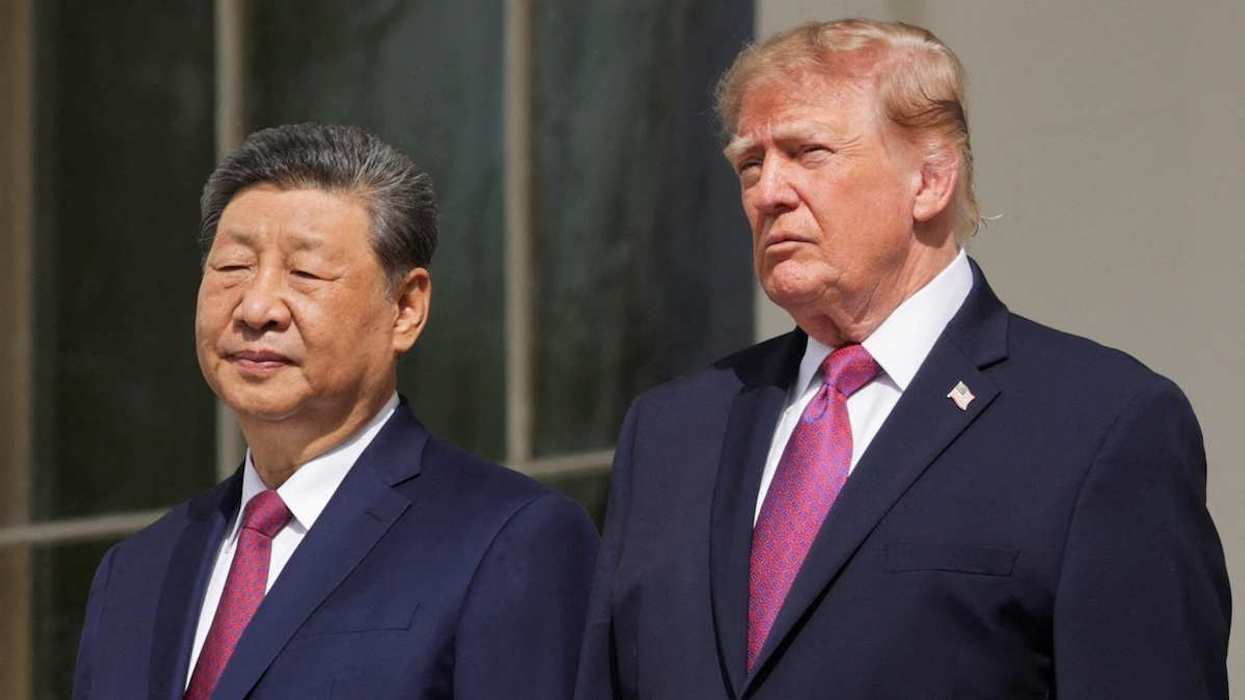
China’s failure to qualify this year isn’t for lack of trying. In 2011, then-Vice President Xi Jinping declared that he wanted to host, qualify for, and win the World Cup. Four years later, the country put forward a 50-point plan to boost local Chinese football, investing vast sums to attract foreign talent (including the Brazilian footballers Oscar, Paulinho, and Hulk) who could raise the standard of local players.
Instead, the plan failed under the weight of corruption, political interference (the Chinese Football Association once hired the leader of China’s water sports federation to be its president even though he had no football experience), and match-fixing. The fall of Guangzhou Evergrande, which had been the most successful football club not only in China but across Asia, encapsulates the country’s footballing struggles.
“As the Chinese economy grew, a lot of real estate developers poured money into professional football clubs. Those developers saw buying a professional club as an effective way to promote their own publicity,” said Mingda Qiu, a senior China analyst at Eurasia Group. “However, Guangzhou Evergrande is [now] nowhere to be found in China’s professional league because the developer Evergrande is in deep financial trouble following the downturn of the property sector and its founder was detained by the Chinese authorities.”
By 2023, Xi – now president – was privately admitting to the Thai prime minister that he “doesn’t have confidence” in China’s football team.
The secret sauce. China’s World Cup absence is, on its face, puzzling. The country has the money, infrastructure, ambition, and – of course – the population to succeed. It has been successful in other sports, especially Olympic events like diving, gymnastics, and weightlifting. Even its women’s football team has had some success, regularly qualifying for the World Cup and finishing second in 1999.
So why has the men’s football team been an exception?
Beyond the issues over corruption and match-fixing, there’s a structural problem. China adopts a top-down, one-size-fits-all approach to sports development, akin to how it develops electric cars at scale. This logic applies nicely to Olympic sports like diving and gymnastics, as competitors must meet a fixed set of criteria to receive high scores from the judges. However, it doesn’t fit well with football, a sport that is inherently about subversion. If the defender goes one way, you go the other. Players trick the referee to win a foul. The most successful penalty technique? You guessed it: shoot straight down the middle.
To be sure, teams that have played under authoritarian regimes can do well. Brazil’s legendary teams of the 1960s and 1970s played under a military dictatorship. The best Czechoslovakian and Hungarian teams were in the post-war period, when communist leaders ran those countries.
But China’s system asserts a greater level of control over the development of its athletes than those countries, leaving less room for the kind of organic growth that facilitates footballing talent. Lionel Messi and Diego Maradona first honed their crafts on the streets of Argentina, Zinedine Zidane in the tough suburbs of the French city of Marseille, and Brazilian legend Romário in the favelas of Rio de Janeiro.
This is something that is difficult to engineer from above. All to say: Xi may be waiting a long time for his World Cup dreams to come true.