Artificial intelligence is becoming an increasingly powerful tool for disaster preparedness and emergency response.
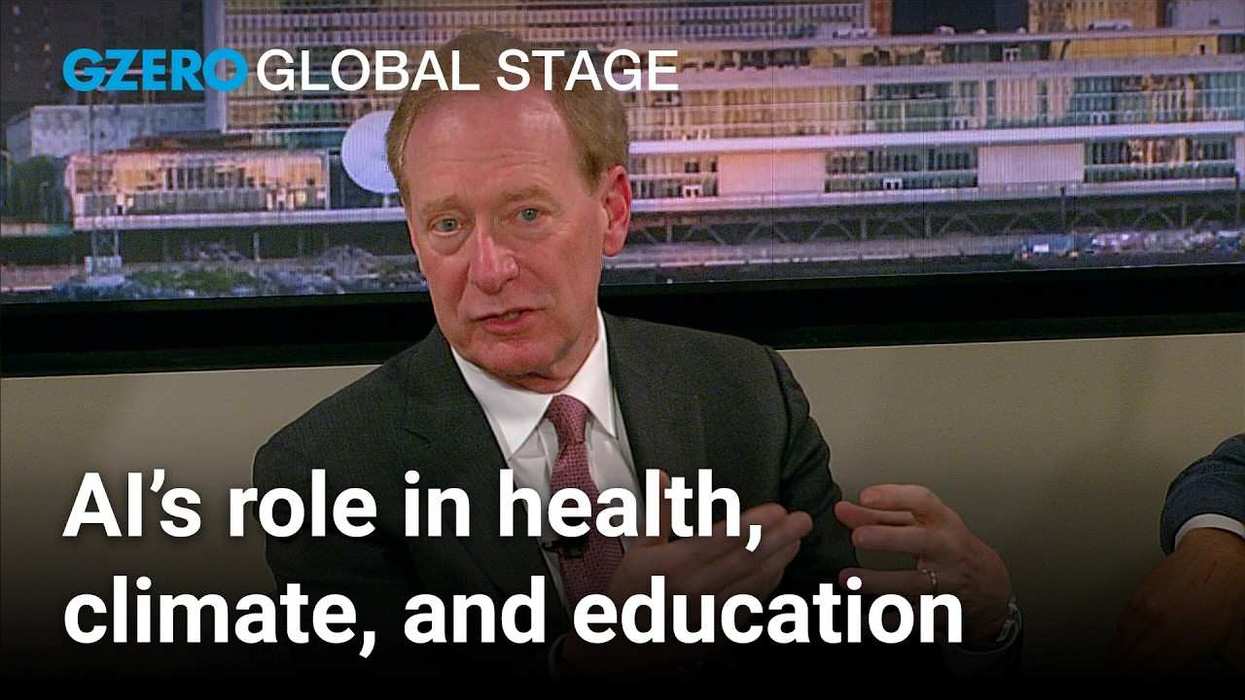
Speaking at the 2026 AI for Good Global Summit in Geneva, Microsoft Vice Chair and President Brad Smith explains how AI combines predictive modeling, satellite imagery, and public data to help governments identify vulnerable communities before disasters strike and respond more quickly when they do.
Rather than relying on a single AI system, Smith argues that effective disaster response depends on bringing together multiple technologies, from mapping connectivity gaps in flood-prone regions to rapidly analyzing satellite images after earthquakes, hurricanes, and wildfires. What once took emergency responders days can now often be accomplished in just a few hours, helping direct rescue teams to those who need them most.
This conversation is presented by GZERO Media in partnership with Microsoft. The Global Stage series convenes global leaders for critical conversations on the geopolitical forces reshaping our world.