Search
AI-powered search, human-powered content.
scroll to top arrow or icon

How Saudi Arabia is building its AI future

At the 2026 AI for Good Global Summit in Geneva, HRH Princess Lamia bint Majed Al Saud says Saudi Arabia’s investments in technology and innovation are creating new opportunities for the next generation.

Speaking with GZERO’s Tony Maciulis, HRH Princess Lamia discusses the Kingdom’s expanding AI ecosystem, including efforts to train young people, support entrepreneurs, and expand women’s participation in the technology sector.


While Saudi Arabia ranked 132nd out of 148 economies in the World Economic Forum’s 2025 Global Gender Gap Report, Princess Lamia says the country is making progress in creating new pathways for women in tech. She points to investments in education, training, and entrepreneurship that are helping more women pursue careers in innovation.

Through Alwaleed Philanthropies, HRH Princess Lamia also discusses efforts to create sustainable impact around the world, including providing legal assistance to women and training female lawyers. She explains that the organization’s work across 190 countries relies on partnerships with local organizations, governments, and international institutions to ensure lasting results.

Discussing AI’s broader potential, HRH Princess Lamia says technology’s impact will depend on human choices. “It’s upon us,” she says, emphasizing that people must guide innovation toward solutions that improve lives.

She also addresses reforms affecting women’s rights in Saudi Arabia, noting that women can now travel, work, and make many personal decisions independently, while rights groups point to remaining areas of debate, including aspects of marriage and family law.

This conversation is presented by GZERO Media in partnership with Microsoft. The Global Stage series convenes global leaders for critical conversations on the geopolitical forces reshaping our world.
More from Global Stage

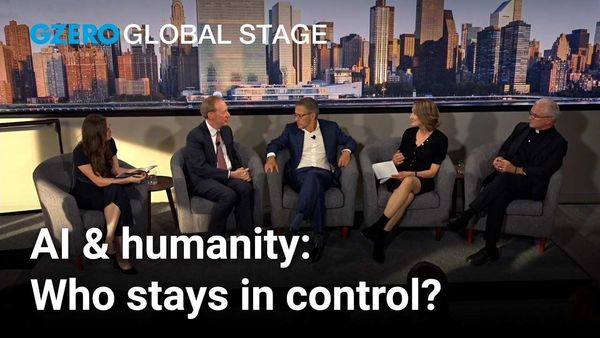
Can we use AI to secure the world's digital future?

How do we ensure AI is safe, available to everyone, and enhancing productivity? It’s a big topic at this year’s UN General Assembly. That’s why GZERO’s Global Stage livestream brought together leading experts at the heart of the action for “Live from the United Nations: Securing our Digital Future,” an event produced in partnership between the Complex Risk Analytics Fund, or CRAF’d, and GZERO Media’s Global Stage series, sponsored by Microsoft.

Is the Europe-US rift leaving us all vulnerable?

As the tense and politically charged 2025 Munich Security Conference draws to a close, GZERO’s Global Stage series presents a conversation about strained relationships between the US and Europe, Ukraine's path ahead, and rising threats in cyberspace.

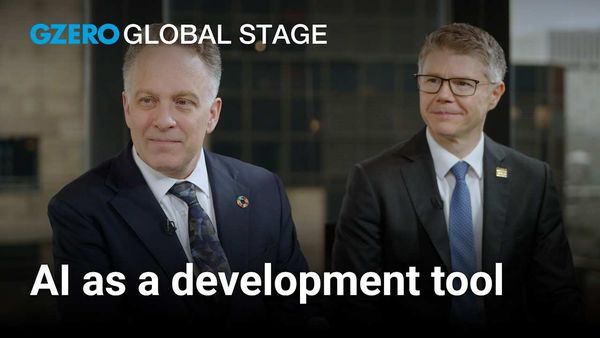
As development funding shrinks, can AI fill the gap?

At the 2026 AI for Good Global Summit in Geneva, Robert Opp, Chief Digital Officer at the United Nations Development Programme (UNDP), explores whether artificial intelligence can help countries make progress amid growing development challenges and shrinking resources.

Live Premiere | Global Stage: : Live from the AI for Good Summit | Thursday, July 9 | 11 am ET5 pm CEST | gzeromedia.com/globalstage

Watch our Global Stage live premiere from the AI for Good Summit on Thursday

At this year's AI for Good Global Summit in Geneva, Switzerland, our Global Stage panel discussion focuses on how AI can help humanitarian institutions serve people at greater scale — and what stands in the way. Join us on Thursday, July 9th at 11am ET/5 pm CEST to watch the live premiere.

Empowering local communities using AI

At the 2026 AI for Good Global Summit in Geneva, Switzerland, Frederic Werner, AI for Good co-creator and chief of strategic engagement at ITU, explains why optimism about artificial intelligence is growing across many developing countries even as skepticism rises in Europe and North America.

The mental health impact of a world at war

Global humanitarian needs are rising sharply – right as the systems designed to respond to them are facing the deepest funding cuts in years. At a recent UN event focused on the wellness of aid workers, GZERO’s Tony Maciulis spoke to experts, including Rajabi and Michel Saad, a deputy director at the UN’s Office for the Coordination of Humanitarian Affairs, who leads efforts in the Middle East and North Africa.