The European Union is having a moment right now, as a number of countries that once rejected membership are suddenly flirting with the idea. After decades of keeping the bloc at arm’s length, for example, Norway and Iceland are both considering joining. Canada, an ocean away, has forged closer ties to the EU recently. And even the government of the UK, which shocked the bloc — and the world — by voting to leave the EU 10 years ago this month is now reassessing that move.
For a bloc long-wracked by upheavals – the global financial crisis, the debt crisis, the immigration crisis, the Brexit crisis – that eroded support and stoked euroskeptic parties on both the left and the right, the current moment of widening appeal feels like a very different world. It’s a “crazy world,” as Norway’s foreign minister recently put it.
But in recent years, two big things have changed.
First, was Russia’s 2022 full scale invasion of Ukraine. The bloc’s response was resounding: it united against the war against their neighbor and invested heavily in its long-dormant military.
“The war against Ukraine … reminded every European that war was something that could materialize on European land,” Grégoire Roos, Europe director of the London-based think tank Chatham House, told GZERO. Roos said that the war revived some of the “trauma” that Europeans have held since World War II, encouraging the continent to stick together rather than fall apart.
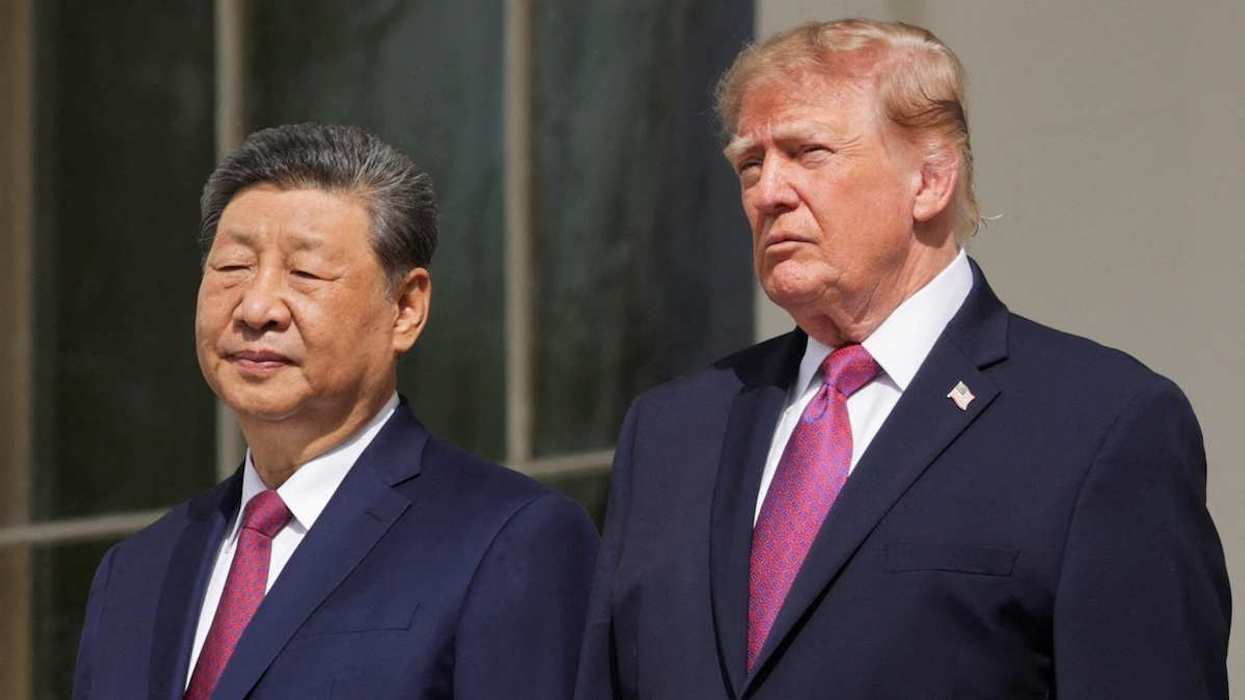
Then, US President Donald Trump returned to office with an agenda that felt hostile to Europe. He imposed tariffs on US trade partners and threatened to seize Greenland, inadvertently boosting the bloc's attractiveness — both for trade and defense purposes — while also halting new US support for Ukraine. China, meanwhile, has emerged as an increasingly stout economic competitor.
Why are countries eyeing EU membership? For some, economic incentives are key. Norway has long opposed EU membership in order to shield its lucrative fishing sector from Brussels bureaucrats. But because the country is part of the European common market, it finds itself in the awkward position of suddenly being subject to fraught EU trade relationships with major partners like the US and China, without having any direct say in them. Being a full member would give Oslo a seat at the table.
Economic issues are also part of the story in the UK, where political turmoil at the top of the Labour Party — partly a result of the economic stagnation that has stymied the country since Brexit — has prompted a reevaluation of cross-channel ties.
Former Health Secretary Wes Streeting, who is bidding to replace Starmer as leader, has called Brexit a “catastrophic mistake.” Rejoining the EU, the thinking goes, could bring regulatory alignments that could jumpstart the UK’s stumbling economy. A slim majority of the UK public agrees, with 56% wanting to rejoin the EU, according to a recent YouGov poll. But the political picture is still mixed: the staunchly pro-Brexit Reform UK party remains the most popular party by nearly double digits.
For others, such as Iceland, security is the issue. When Trump accidentally confused the small island nation with Greenland at Davos this past winter, Icelandic officials froze in their tracks. The country has no standing military, relying instead on US defense through NATO. But now, Reykjavik is eyeing the EU as a possible provider of defense via the bloc’s little-used mutual defense agreement. Iceland, which like Norway has economic ties to the bloc but no formal membership, is set to hold a referendum this summer on whether to restart accession talks with the bloc.
Meanwhile, in the east, Ukraine and Moldova will begin formal accession talks this month, eyeing membership not only as an economic boon but as a critical security guarantee in the face of ongoing Russian aggression. While it would likely be many years before either country could meet the standards, their keen interest reflects the geopolitical appeal of the EU as a security bloc.
Not so fast. There are big hurdles to actually expanding. Public opinion in Norway and Iceland doesn’t support the move yet. And neither Ukraine nor Moldova will meet the extensive criteria any time soon. Meanwhile, in the UK the continued strength of Reform UK tells its own story.
But the vibe shift on the economic and security benefits of EU membership is real, and it reflects the new threats and challenges coming from beyond Europe’s borders according to Nick Reiners, a Eurasia Group geotechnology specialist who served as a UK diplomat in the EU, greater unity may in fact be the only option.
“Faced with Russia, China, and now the US being hostile,” he says, “there’s a sentiment that Europe’s only choice to survive in this rather brutal new world is that we need to team up and unite.”