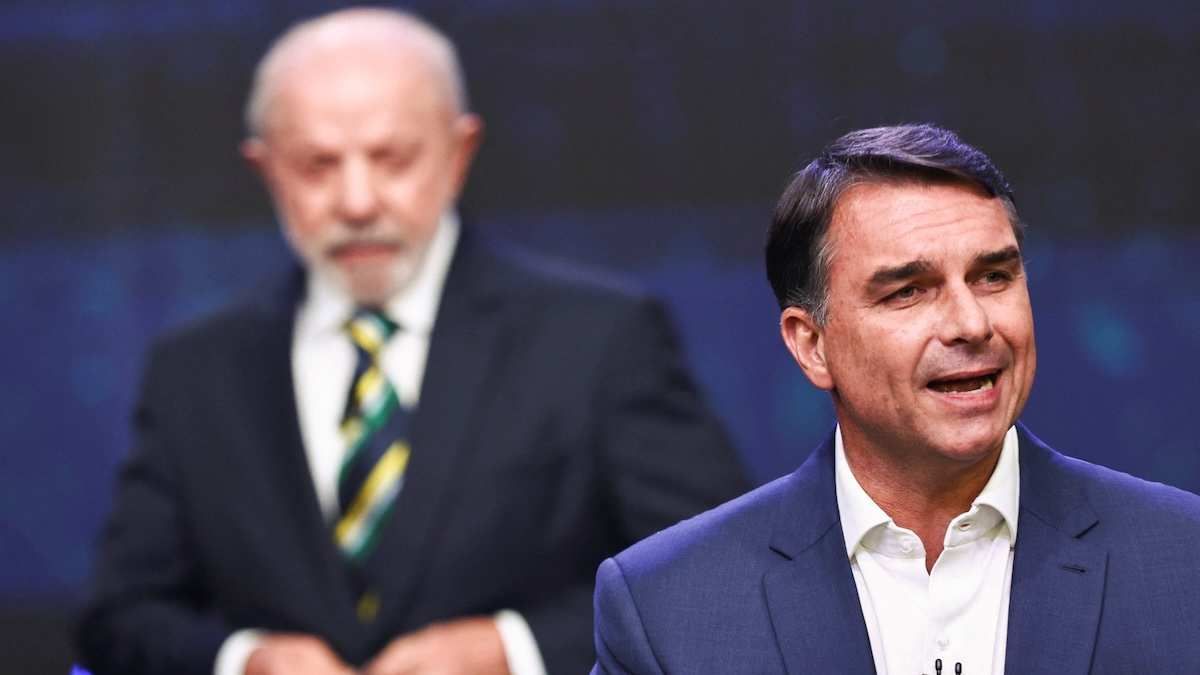
Brazil finally decides: Lula or Bolsonaro?
After a deeply polarizing campaign, Brazilian voters will finally go to the polls on Sunday to choose: left-wing incumbent Luiz Inácio “Lula” da Silva, who has served three terms since 2002, or right-winger Flávio Bolsonaro, whose father, former President Jair Bolsonaro, was jailed for plotting a coup. Lula has campaigned as a longtime champion of Brazil’s working poor and argues that a victory by Bolsonaro, who has pledged to pardon his father, would undermine Brazil’s democracy. Bolsonaro, a hardline law and order candidate, has benefited from widespread discontent with Brazil’s sluggish economy, persistent street crime, and perceptions of judicial overreach. Each candidate has framed the race as existential for the country. Both have also faced questions about corruption. A win by Bolsonaro, who holds a narrow lead in the polls, would tilt Latin America’s largest economy closer to the US, though China would remain Brazil’s largest trade partner.
Serbia’s protesters head to the polls
Student protesters in Serbia will finally take their frustrations to the polls on Sunday in a long-awaited national election. The Serbian Progressive Party (SNS), led by former President Aleksandar Vučić, has been in power since 2012, a 14-year stretch marked by economic growth but also significant democratic backsliding. In 2024, anti-government protesters took to the streets over alleged corruption after the collapse of a sketchily built railway station canopy that killed 16 people. Since then, the student-led movement has organized nationwide demonstrations and built a grassroots political campaign, fielding its own slate of candidates under the banner “Student List.” Vučić, meanwhile, resigned from the presidency in September to extend his grip on power by running for prime minister (Vladimir Putin should sue for plagiarism!). Polls suggest a tight race, and the stakes are high: A Vučić victory could fuel further unrest, while a Student List win could prompt resistance from the SNS.
Killing of IDF soldiers triggers massive new West Bank operation
After Palestinian gunmen killed two Israeli soldiers in the occupied West Bank on Friday morning, Israeli Prime Minister Benjamin Netanyahu closed off access to the territory and vowed to unleash the largest military operation there since the 1967 Arab-Israeli war. The violence comes just days before a pivotal national election, in which Netanyahu is polling neck and neck with an opposition coalition led by former IDF Chief of Staff Gadi Eisenkot. Neither bloc has a clear path to forming a government. Netanyahu’s reelection campaign has focused on his tough-on-security credentials, although he still faces serious questions about intelligence failures that preceded the Hamas-led October 7, 2023, attacks. Most Israeli voters support tough security measures in the West Bank, as well as Netanyahu’s military campaigns in Lebanon, Gaza, and Iran. His actions in the West Bank over the coming days will shape voters’ perceptions in the final stretch before the election.