October 01, 2025
Citizens’ assemblies helped Northern Ireland transform a violent past into today’s deliberative politics.
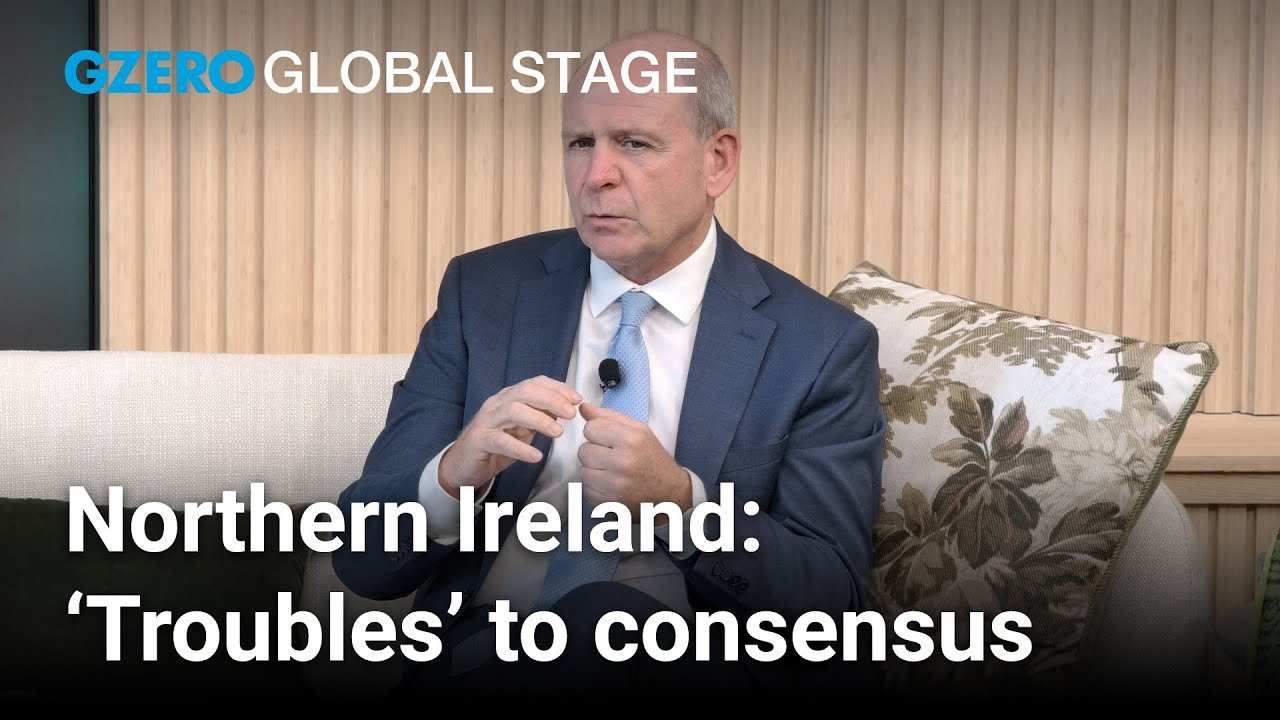
Ambassador Fergal Mythen traces the arc from the New Ireland Forum (1983–84) through national roadshows and town halls to today’s independent citizens’ assemblies, processes that fed into parliament, broadened public understanding, and built “losers’ consent.”
Together, these forums helped reshape how Ireland confronted the Northern Ireland conflict, moving from the divisive politics of the 1970s–80s to a more consensus-driven approach today.
“Parliamentary politics alone couldn’t bring people together … Citizens’ assemblies and national dialogues helped us build awareness and understanding," said Mythen.
Excerpt from a Global Stage livestream at UN HQ on the International Day of Democracy.
Watch more of GZERO Media’s Global Stage series, sponsored by Microsoft, from the 80th Session of the United Nations General Assembly here: gzeromedia.com/globalstage.
More For You
- YouTube
What happens when the world’s most powerful actors stop facing accountability? That’s the question at the heart of the Atlas and Impunity, an annual report from the Eurasia Group that measures how people experience the abuse of power in nearly 200 countries. Ian Bremmer sat down with International Rescue Committee president and CEO David Miliband on GZERO World to talk about why the levels of impunity in conflict states like Sudan and Syria are spiraling out of control, and what the data reveals about the state of democracy, human rights, and how power is wielded around the globe.
Most Popular
Think you know what's going on around the world? Here's your chance to prove it.
As the AI boom drives demand for data centers, smaller countries are betting that cheap energy and land can earn them a place in the global race for computing power
As America celebrates 250 years, Bank of America is proud to honor our shared history. Discover our commitment.
© 2025 GZERO Media. All Rights Reserved | A Eurasia Group media company.