February 27, 2025
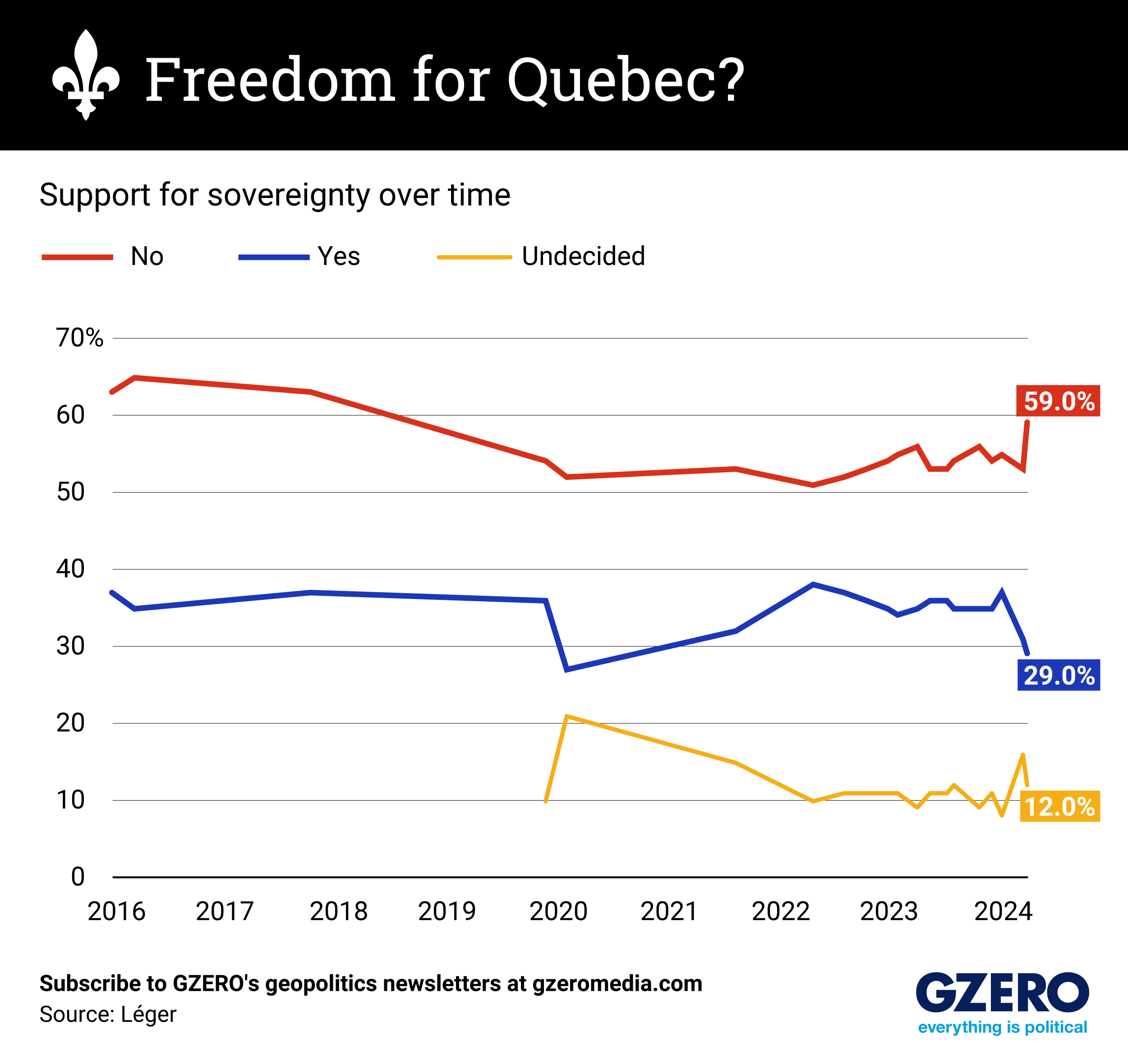
According to a recent Leger poll, 27% of Canadians see the US as an “enemy,” and there is nothing like a common enemy to spread unity. As Donald Trump’s threats against America’s northern neighbor ignite Canadian patriotism, the number of French-speaking Quebecois wanting sovereignty has declined. In fact, it fell six points during Trump’s first two weeks in office.
French-speaking Quebecois have always seen themselves as a distinct nation within Canada. Back in 1995, when Quebec held its last referendum on sovereignty, the vote was razor-thin — 50.6% voted to stay in Canada, and 49.4% wanted out.
Fast forward to today, and the independence movement is weaker than it was in the 1990s. Globalization, generational shifts, and an increasingly multicultural Quebec have changed the game. Younger Quebecois, even if they support more autonomy, aren’t as invested in full separation. Plus, economic fears about losing access to Canada’s federal transfers, an uncertain currency future, and the risk of companies relocating to Toronto or Vancouver have made the cost of sovereignty too high for most voters.
This has only been compounded under the new US administration, as Trump’s tariff threats, and hints at absorbing Canada into the US, have jeopardized Canada’s economy and security, resurging Canadian pride and unity.
More For You
Can Washington turn military pressure into a diplomatic strategy? Brett McGurk joins Ian Bremmer on the GZERO World podcast to discuss the Iran war, Houthi attacks, and how elections in Israel and the US could reshape the region.
Most Popular
Think you know what's going on around the world? Here's your chance to prove it.
Turkish President Recep Tayyip Erdogan receives Canadian Prime Minister Mark Carney with an official ceremony in Ankara, Turkiye on October 22, 2026.
Anadolu via Reuters Connect
Canadian Prime Minister Mark Carney is in Turkey on Thursday for talks with President Recep Tayyip Erdogan - the visit is the first by a Canadian prime minister.
© 2025 GZERO Media. All Rights Reserved | A Eurasia Group media company.