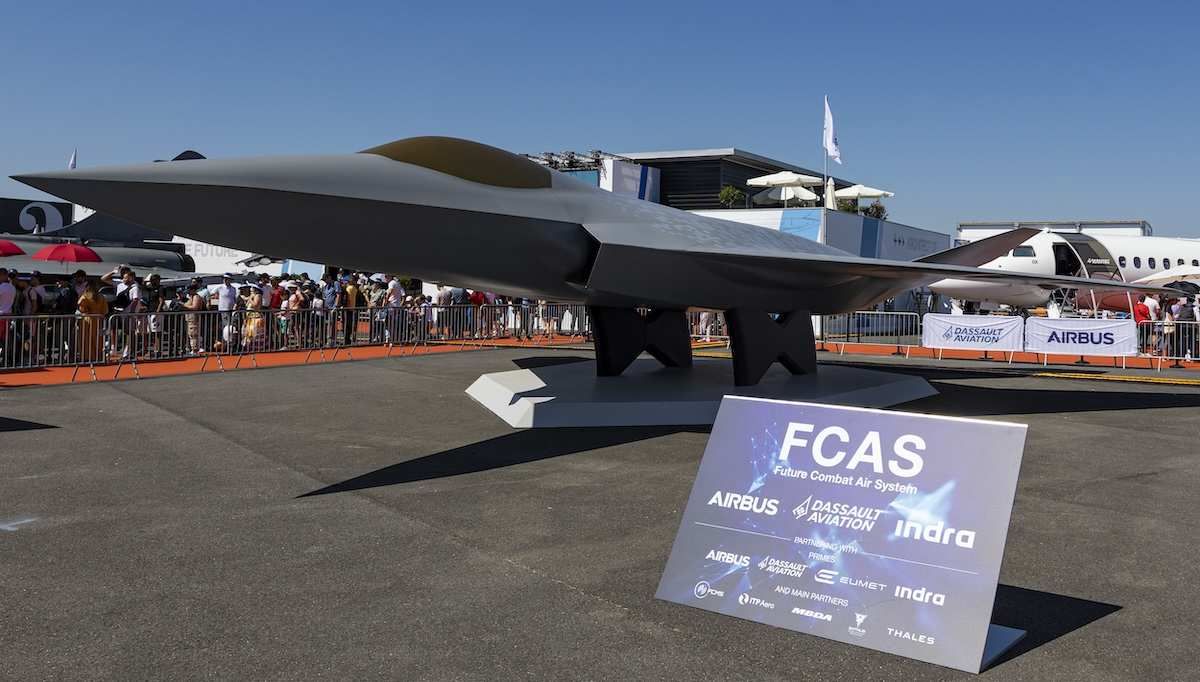
France and Germany scrap fighter jet plan
France and Germany pulled the plug on plans to jointly build a next-generation fighter jet on Monday, a core pillar of Europe’s largest defense project. The $115.6 billion Future Combat Air System (FCAS) defense initiative was launched by Macron and former German Chancellor Angela Merkel back in 2017, but months of disagreements between the companies involved, France’s Dassault Aviation and European Airbus representing Germany, culminated in its collapse. Hinted at being primarily a backout by Berlin, the scrapped plans are less than ideal for hopes of greater European security collaboration in an era of growing concern about American defense commitments and fears of Russian aggression on the continent.
Venezuela’s Rodríguez takes her show on the road
As part of her first major international tour since the US seized her former boss Nicolás Maduro, Venezuela’s Interim President Delcy Rodríguez met with Turkish President Recep Tayyip Erdoğan in Ankara on Monday with the aim of boosting trade with the transcontinental state. Maduro and Erdoğan got along well: the ousted Venezuelan strongman attended the Turkish leader’s 2023 inauguration, while Erdoğan was one of the few world leaders to recognize Maduro as the Venezuelan leader. Ankara, for its part, is interested in Venezuela’s energy, mining, and gold. Rodríguez’s trip to Turkey follows one to India last week, highlighting her efforts to boost trade with countries outside the West. What’s notable is that neither India nor Turkey is a close ally of China, either, suggesting that Rodríguez is still mindful of Washington as she bids to boost Venezuela’s standing on the world stage.
Taiwan chip rules could squeeze Beijing, and please Washington
Taiwan is
reportedly weighing new export controls on AI chip sales to Beijing, potentially bringing its policy closer to current US regulations. While Taiwan does not currently ban the sale of AI chips to China, it warns domestic companies that doing so could violate US rules. This gray zone has
created a sophisticated smuggling network – especially involving Nvidia chips – into China, whose semiconductor industry still depends heavily on foreign technology. Formal export controls would give Taipei the legal basis to prosecute smugglers directly, but such a move would likely trigger some economic retaliation from Beijing. The timing is notable for US–Taiwan relations as well, coming after US President
Donald Trumppaused a $14 billion arms deal to the island last month. Could this move help Taiwan win Trump over?