US to help Saudi Arabia go nuclear
Donald Trump has reportedly struck a deal to help the oil-rich Kingdom develop a civilian nuclear power industry. The deal could be worth billions of dollars for the US nuclear industry, but has raised fears of a nuclear arms race in the Middle East. That’s because the pact reportedly creates a pathway for Saudi Arabia to produce its own nuclear fuel, but limits the access of international nuclear inspectors to key sites. Faced with an increasingly aggressive Israel — still the only regional nuclear power — and an unbowed Iran, Saudi Arabia is increasingly worried about the lack of firm security guarantees from the US. Crown Prince Mohammed bin Salman has previously threatened to develop nuclear weapons if Iran ever does so. Israel, for its part, has long opposed allowing the Saudis to have a nuclear program. Congress will review the deal, but would need a veto-proof majority to quash it.
Zelensky fires Ukraine’s top general in major reversal
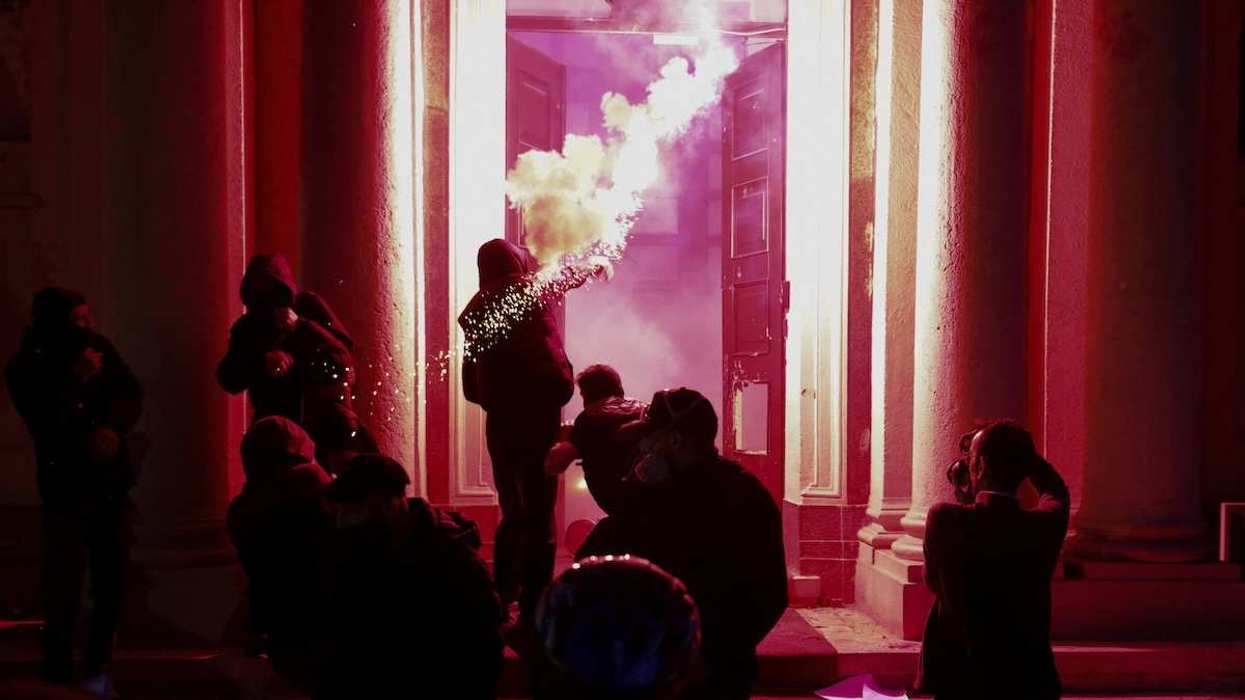
Ukrainian President Volodymyr Zelensky fired his commander in chief, Oleksandr Syrsky, on Tuesday following days of mass protests over the ousting of his popular defense minister, Mykhailo Fedorov. In sacking Syrsky, Zelensky heeded the demands of demonstrators who viewed Syrsky as an old-school military chief who allegedly slowed efforts to modernize military technology. By contrast, Fedorov, just 35 years old, had become the public face of Ukraine’s cutting-edge drone program and a symbol of a younger generation of wartime leadership. Syrsky was replaced by Mykhailo Drapatyi, a 43-year-old commander of the Joint Forces with a focus on integrating drones into warfighting. Zelensky may have quelled the backlash for now, but will he run into more issues with the public down the road? Just last year, Ukrainians staged protests over a corruption scandal that rocked Zelensky’s inner circle. The latest demonstrations could be a sign of a Ukrainian public less trusting of the president’s decision-making.
Big tech and governments clash over WhatsApp change
A new WhatsApp feature designed to boost personal privacy for its roughly three billion users is raising security concerns for governments. The update, which will be rolled out gradually over the next few months, will allow users to communicate using usernames instead of phone numbers, enabling them to chat without revealing their personal contact information. The fact that usernames can be edited at any point, however, is sparking pushback. India, with 850 million WhatsApp users, warned that cybercriminals could create usernames resembling those of verified celebrities, public figures, or politicians. Somalia echoed those fears this week, arguing that the change could hinder efforts to track criminals and members of the militant group al-Shabab, as the organization has previously used WhatsApp for recruitment, propaganda, and extortion.