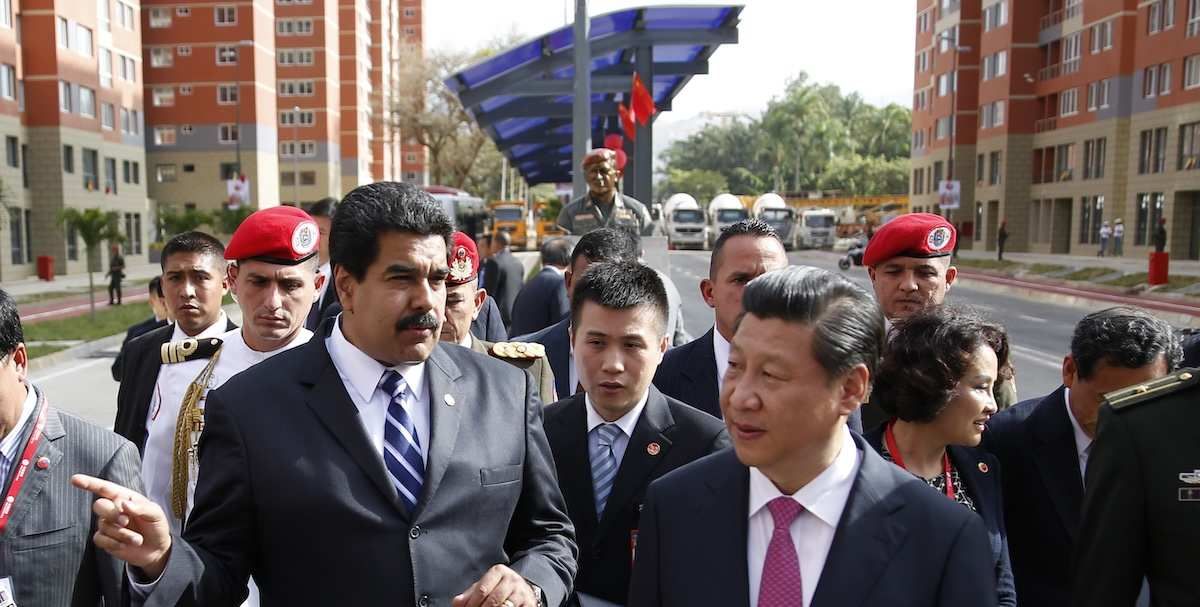
What happens to China’s claim to Venezuelan oil?
US President Donald Trumpsaid Tuesday Venezuela would ship up to 50 million barrels of crude oil, worth about $3 billion, to the US. Hours later, the US energy secretary said Washington would “indefinitely” control Venezuela’s oil industry, which is currently run by the Venezuelan government. Details on how this will work are scant, but one immediate question is: what happens to China, the single largest importer of Venezuelan oil? Beijing is entitled to roughly 4.4 billion barrels of Venezuelan crude under current agreements. Some of that is in-kind repayment for Chinese loans that date back to Maduro’s predecessor, Hugo Chávez. About 80% of that debt has been paid, but Caracas still owes Beijing around $12 billion. US Secretary of State Marco Rubio has reportedly told Venezuela’s interim president Delcy Rodriguez to cut off China –along with Russia, Iran, and Cuba. Will she comply? If so, how will China – in danger of losing an important foothold in Latin America– react? The story of Venezuela’s oil is about to become a global one.
Relatedly: Earlier today, the US seized two empty and rusting oil tankers, including a Russian-flagged vessel in the North Atlantic. The US Coast Guard had been pursuing the Bella 1 for weeks: it said the tanker violated oil sanctions and was operating under a false flag. Russia reportedly dispatched at least one naval vessel to escort the tanker during the US pursuit, but no Russian ships or submarines were in the vicinity during the Coast Guard’s seizure.
Europe makes concrete plan for long-term Ukrainian security
When it comes to postwar Ukrainian security, the big question has been whether Kyiv’s allies are willing to lend troops to support its defense. The answer, from the United Kingdom and France, is yes, following a meeting of pro-Ukrainian countries in Paris yesterday. The specifics were unclear, though France said it could offer thousands of personnel. The US backed the pledge, but their own role in postwar peace remains unclear. The greater challenge, though, is getting Russia to agree to make a deal to end the war, as the two sides continue to dispute which territories Ukraine should concede. Yesterday’s announcement is also unlikely to go down well in Moscow: the Kremlin has said that any foreign troops in Ukraine would be “legitimate targets.”
Old enemies get new incentives as Israel and Syria enter US-mediated talks
On Tuesday, long-time enemies Syria and Israel held US-mediated talks on reducing tensions along their shared border. The aim is to revive a United Nations-patrolled buffer zone between the two countries' armies, and Syria is also hoping that Israel withdraws troops that it has stationed in Syrian territory since the fall of the Assad regime. Israel has also carried out strikes deeper into Syria in recent months, stalling peace talks. However, both sides are incentivized to make a deal to curry favor with the Trump administration, which is hoping the two Middle East rivals can reconcile under a US-brokered agreement.