UN's Guy Ryder calls for inclusivity and collaboration to tackle global problems

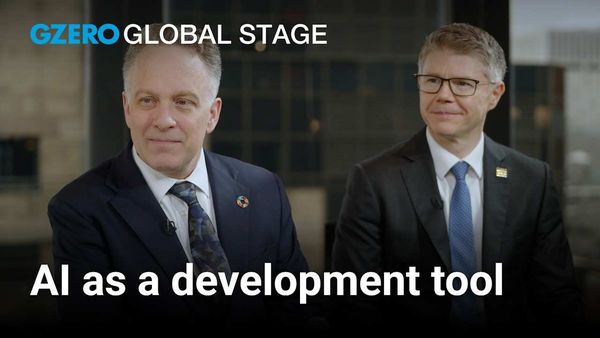
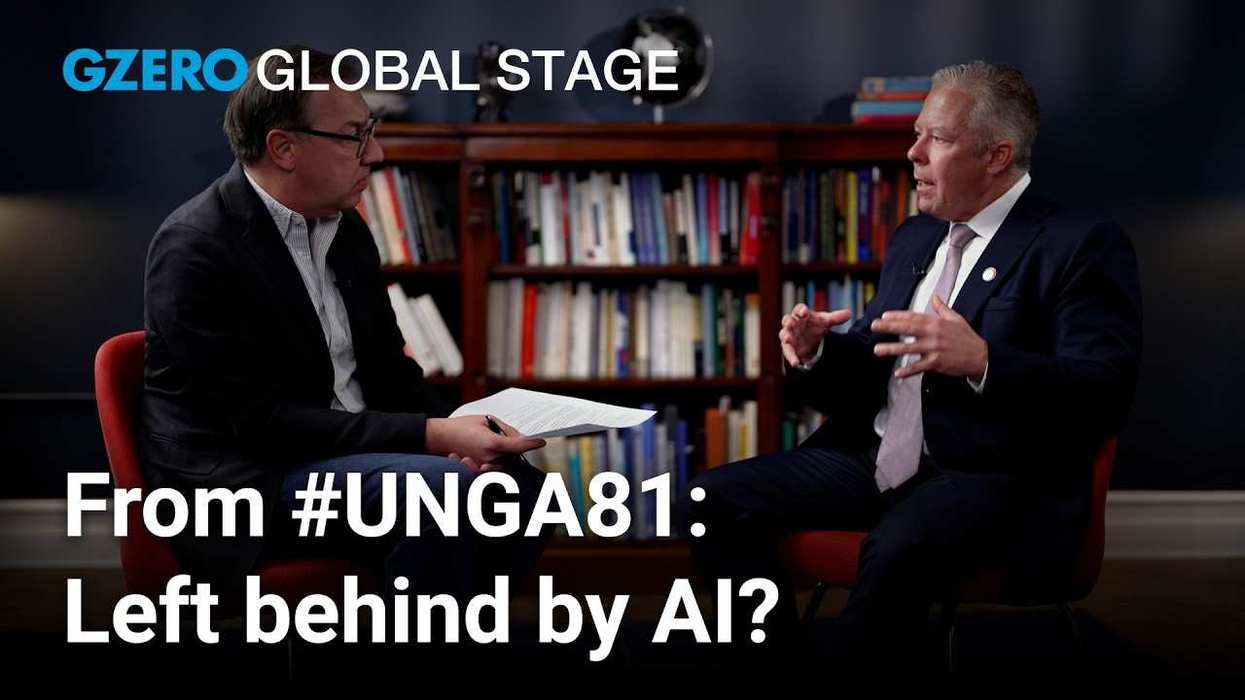
In a Global Stage conversation from inside the United Nations headquarters during the 79th General Assembly, Guy Ryder, Under-Secretary-General of the United Nations, addressed the challenges of global collaboration in today’s divided world. Despite geopolitical tensions and ongoing conflicts, Ryder stressed that member states are committed to implementing the Pact for the Future, an inter-governmentally negotiated pact focused on tackling today's global issues to protect the needs and interests of future generations.
Speaking with GZERO’s Tony Maciulis, Ryder highlighted the importance of inclusivity in moving forward. "We need to work not for young people but with young people as well. Everybody's involved," he said. Ryder emphasized that collaboration across governments, the private sector, and civil society is critical, particularly in areas like technology and youth participation.
The discussion also touched on the UN’s role in AI governance, with Ryder noting that the UN remains the only place where all 193 member states have a seat at the table. He acknowledged the UN’s shortcomings but highlighted how UN successes are often invisible. "What about that war that never happened because of UN mediation?"
Mr. Ryder also reinforced that the UN is not above reform: "Let's not think that was put in place in 1945, and has served very well the international community for decades, is immutable, is perfect, cannot be improved."
On the topic of the Sustainable Development Goals (SDGs), Ryder remained optimistic, despite setbacks. “We were off track almost from the first day,” he said, adding that the world must continue pushing towards the 2030 goals. Ryder sees technology as a powerful tool for both skilling and education, critical for achieving the SDGs.