Skip to content
Search

Latest Stories

News

Anti-corruption candidate, Bernando Arévalo, wins Guatemalan election

Bernardo Arevalo of the Semilla party addresses supporters

Bernardo Arevalo of the Semilla party addresses supporters

Reuters
Make us preferred on Google

The votes are in, and Guatemalans have overwhelmingly chosen Bernando Arévalo to be their next president, with a majority forcefully rejecting the establishment and voting for a candidate who promises to clean up government corruption. If only it was that simple.


Arévalo won the election by running an aggressive anti-corruption campaign, which helped galvanize young people — who make up a huge portion of the voting population (the average age in Guatemala is 26, compared to 38 in the US) — behind him. Being a self-declared Taylor Swift fan may have helped, but when it comes to the deep-rooted corruption in the government will he be able to just “Shake it off?”

Arévalo won 58% of the vote, but he faces a long road to the Jan. 14 inauguration. The attorney general’s office – which needs to certify the election – is already attempting to suspend the legal status of Arévalo’s Movimiento Semilla Party.

Arévalo will face massive barriers to fulfill his promises to voters of unraveling deep-rooted corruption in Guatemalan politics – and that presumes he makes it. Last week, the attorney general said it was investigating how the party got its signatures to register, its founders, and potentially Arévalo himself, and with the party losing its legal protections on Oct. 31, the outgoing Congress could strip Arévalo of his immunity.

How is this possible? The last two presidential administrations have purged Guatemala’s judicial system and attorney general’s office of anti-corruption judges, forcing dozens of prosecutors and judges into exile. The current president, Alejandro Giammattei, is seeking to overhaul the supreme court before leaving office to stack it with judges friendly to his coalition who will be ready to strike down Arévalo’s anti-corruption agenda.

More For You

Alternative for Germany (AfD) top candidate Ulrich Siegmund speaks on stage as he campaigns ahead of the upcoming Saxony-Anhalt state elections, in Magdeburg, Germany.

Alternative for Germany (AfD) top candidate Ulrich Siegmund speaks on stage as he campaigns ahead of the upcoming Saxony-Anhalt state elections, in Magdeburg, Germany, September 4, 2026.

REUTERS/Annegret Hilse
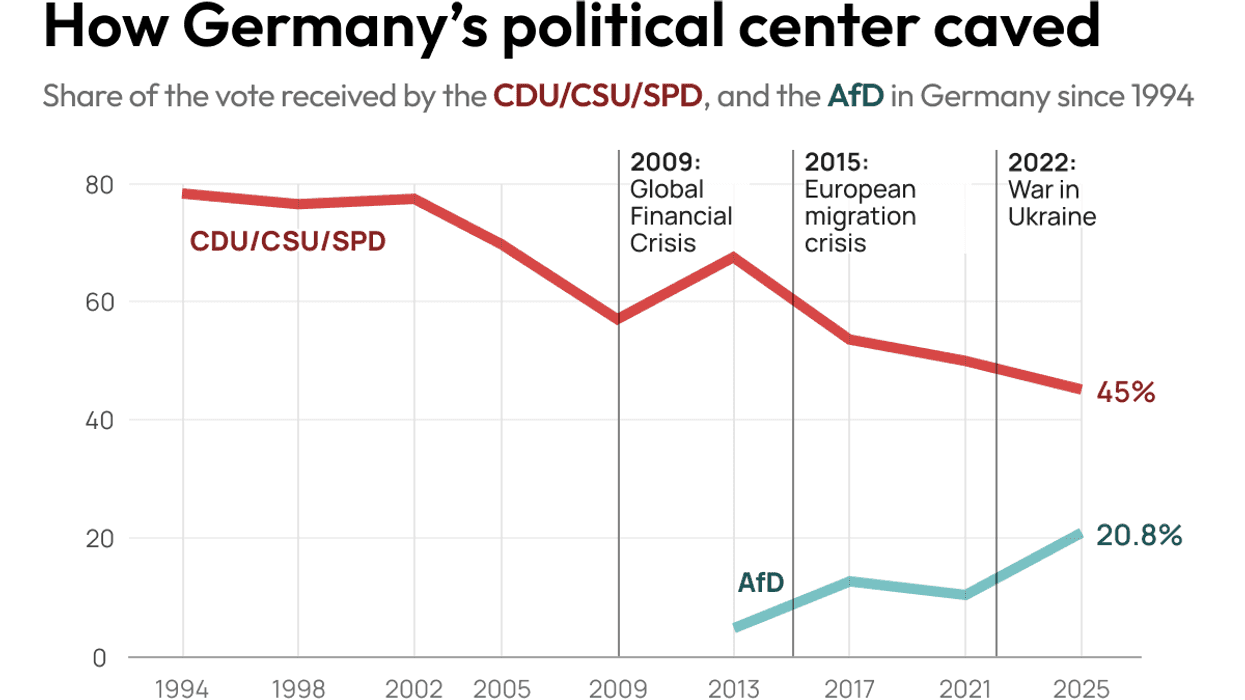
Far-right AfD set to win German state election on SundayThe party, which opposes immigration and favors closer ties with Russia, has a double-digit polling lead in Saxony-Anhalt, a former East German region where many people have felt economically and socially left behind since reunification in 1989. That poses a big dilemma for German Chancellor [...]
Africa, unshrunk
Will Fitzpatrick
Gall-Peters, Mollweide, Eckert IV – take your pick. There are plenty of world maps that show Africa in closer proportion to its true size, and today the UN General Assembly will vote on a resolution encouraging governments, schools, and international organizations to use them. Led by Togo and backed by the African Union, the push targets the [...]
Thousands of people gather at the Palacio de Cibeles, seat of the Madrid City Council, in Madrid, Spain during demonstrations held outside city halls in autonomous communities across Spain in protest of the mass entry of migrants at the Ceuta border.

Thousands of people gather at the Palacio de Cibeles, seat of the Madrid City Council, in Madrid, Spain, on September 2, 2024, during demonstrations held outside city halls in autonomous communities across Spain in protest of the mass entry of migrants at the Ceuta border.

Aaron Heredia/NurPhoto
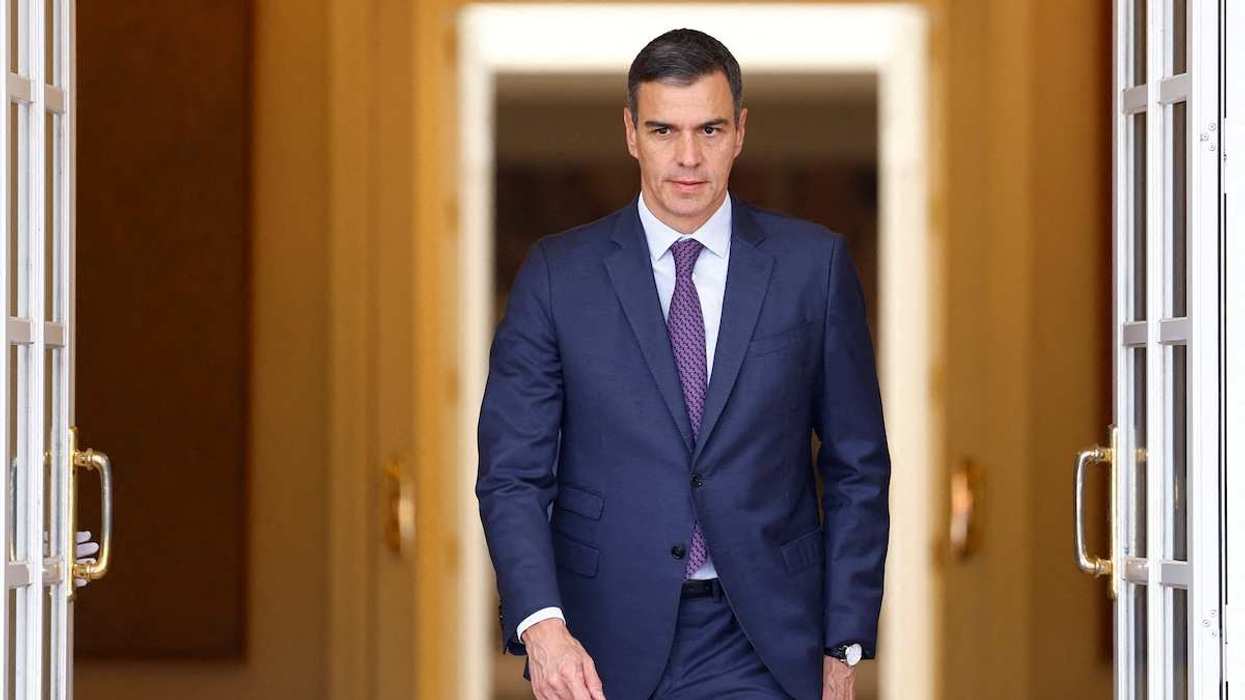
Immigration protests rock Spain Tens of thousands of people took to the streets across Spain on Wednesday in protest against Prime Minister Pedro Sánchez’s welcoming immigration policy and his handling of the immigration crisis in the North African Spanish enclave of Ceuta. In July, more than 70,000 people crossed into Ceuta from Morocco in the [...]
America’s expanding proletariat
Will Fitzpatrick
There is no official definition of “working class” – an economist might point to a certain income bracket or education level, while a Marxist might say it includes anyone who has to sell their labor to survive. But in the US now, the label seems to extend well beyond the traditional industrial proletariat – according to the poll, nearly half of [...]