
Skip to content
Search

Latest Stories

popular

Presented by

Podcast: Dr. Larry Brilliant Explains How to End the COVID-19 Pandemic

Podcast: Dr. Larry Brilliant Explains How to End the COVID-19 Pandemic

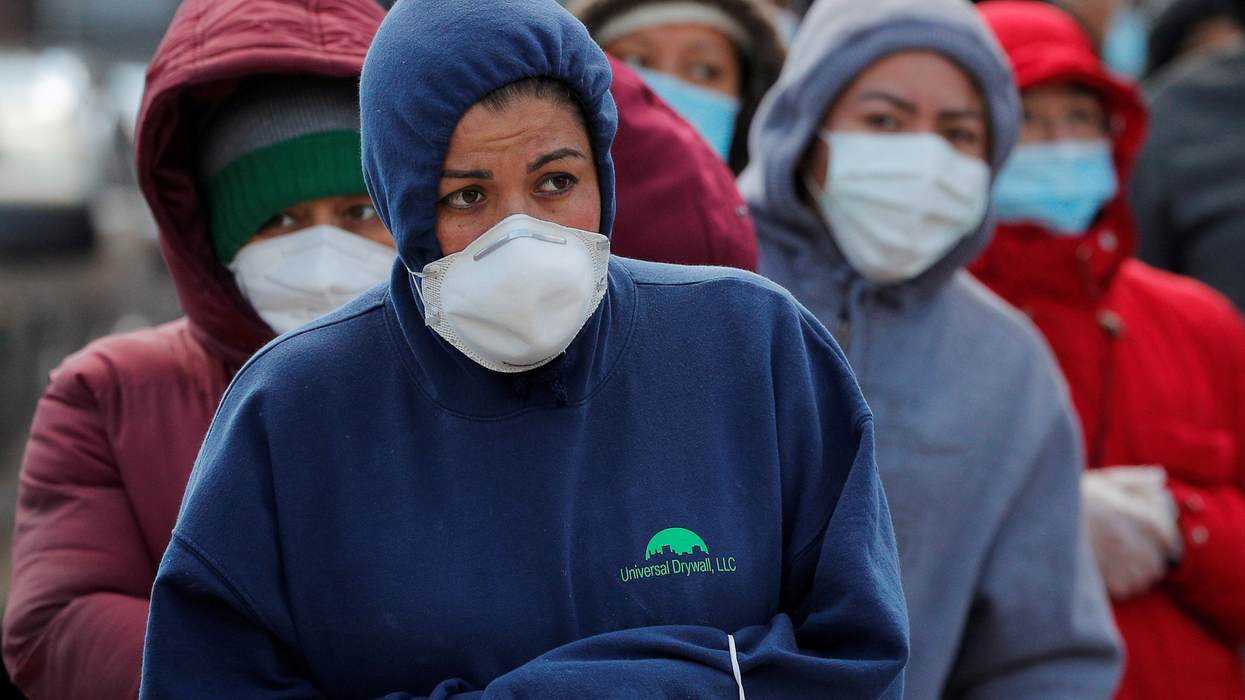
Listen: Epidemiologist Dr. Larry Brilliant, whose work helped eliminate Smallpox forever, explains the steps necessary to eradicate the COVID-19 virus from the world. Brilliant methodically details a three-tiered approach to combating this health threat: Vaccination and herd immunity, proper protection to prevent spread including masks and gloves, and the technology tools that can track illness and infection.
Transcript

Listen: Epidemiologist Dr. Larry Brilliant, whose work helped eliminate Smallpox forever, explains the steps necessary to eradicate the COVID-19 virus from the world. Brilliant methodically details a three-tiered approach to combating this health threat: Vaccination and herd immunity, proper protection to prevent spread including masks and gloves, and the technology tools that can track illness and infection.
Subscribe to the GZERO World Podcast on Apple Podcasts, Spotify, Stitcher, or your preferred podcast platform, to receive new episodes as soon as they're published.
Next Page

More from GZERO World Podcast

Join us live on Jan. 5 for the Top Risks of 2026 with Ian Bremmer

Of all the threats to the world, what are the top 10 most urgent global risks for 2026? On Monday, January 5, at 12 pm ET, join us for a livestream discussion with Ian Bremmer and global experts to discuss the Top Risks of 2026 report from Eurasia Group. This report will mark 20 years of Ian Bremmer’s annual forecast of the political risks that are most likely to play out over the year. Watch it live on Jan. 5 here: gzeromedia.com/toprisks


The Top Risks of 2026 with Ian Bremmer & Eurasia Group
Monday, January 5, 2026 | 12:00 PM ET | https://www.gzeromedia.com/toprisks


Sign up for GZERO's newsletters to get a reminder about this and other GZERO events.

Of all the threats to the world, what are the top 10 most urgent global risks for 2026? On Monday, January 5, at 12 pm ET, join us for a livestream [...]

More >

Europe takes control of Ukraine’s future

Ian Bremmer explains a major shift in the Ukraine war: Europe, not the United States, is now driving the strategy.

The EU has agreed to indefinitely freeze $247 billion in Russian assets, unlocking Belgian support for a nearly $200 billion loan to Ukraine. This guarantees Kyiv enough funding to continue fighting for years, regardless of what Washington does.

Keep reading...Show less

Ian Bremmer explains a major shift in the Ukraine war: Europe, not the United States, is now driving the strategy.The EU has agreed to indefinitely [...]

More >

An ally under suspicion

In an unprecedented move last week, Denmark labeled its ally the United States as a potential security risk. A report by the Danish Defense Intelligence Service argued Washington is using its economic and military power to “assert its will,” creating new security risks for Europe and for Greenland, Denmark’s semi-autonomous territory.

NATO allies have been at odds before: Turkey and Greece clashed over Cyprus when Turkey invaded the island in 1974, Canada and Spain during a 1995 dispute over fishing rights. But the Danish report stands apart: It is one of the strongest warnings about the US to come from another member state.

Keep reading...Show less

In an unprecedented move last week, Denmark labeled its ally the United States as a potential security risk. A report by the Danish Defense [...]

More >

How chads and China shaped our world

Twenty-five years ago, Destiny’s Child, NSYNC, and Britney Spears were atop the US charts, “Google” was a little known search website with a weird name, and two things happened that would shape the world we live in today, where populism defines politics and great power competition is back.

First, Congress passed a bill that paved the way for China to join the World Trade Organization and enjoy preferential trade relations with the US.

By the late 1990s, China had already ditched the command economy of the Mao era and embraced capitalism, enabling hundreds of millions to move from the countryside to work in the country’s booming, low-cost factories.

But China’s leaders hadn’t liberalized their political system. US President Bill Clinton thought he could change that: bringing China into the World Trade Organization, he believed, would eventually make China not only more capitalist, but inevitably more democratic too.

Keep reading...Show less

Twenty-five years ago, Destiny’s Child, NSYNC, and Britney Spears were atop the US charts, “Google” was a little known search website with a weird [...]

More >

GZERO Podcasts

At a moment when Americans can’t agree on much of anything, one unlikely institution still commands broad trust: Wikipedia. On the GZERO World [...]

More >

Listen: What does global energy transition look like in a time of major geopolitical change, including rebalancing of trade? In this special episode [...]

More >

Listen: Creating artificial human retinas in zero gravity. Mining rare minerals on the moon. There seems to be no limit to what could be possible if [...]

More >

EU-Mercosur trade deal is on the chopping blockThe trade deal between the European Union and South America’s Mercosur bloc is on the chopping block, [...]

More >

Transcript Listen: “The equivalent of what we spent in World War II was spent in the course of a year and a half to support the US economy, and that [...]

More >

Listen: Investing in health and science research isn’t just about curing diseases. It has huge impacts across society, from creating jobs to driving [...]

More >

Listen: As populations grow and communities evolve, transportation authorities and urban infrastructure are seeking ways to modernize.In this episode [...]

More >