Search
AI-powered search, human-powered content.
scroll to top arrow or icon

The power of women leaders in global decision-making & peacebuilding

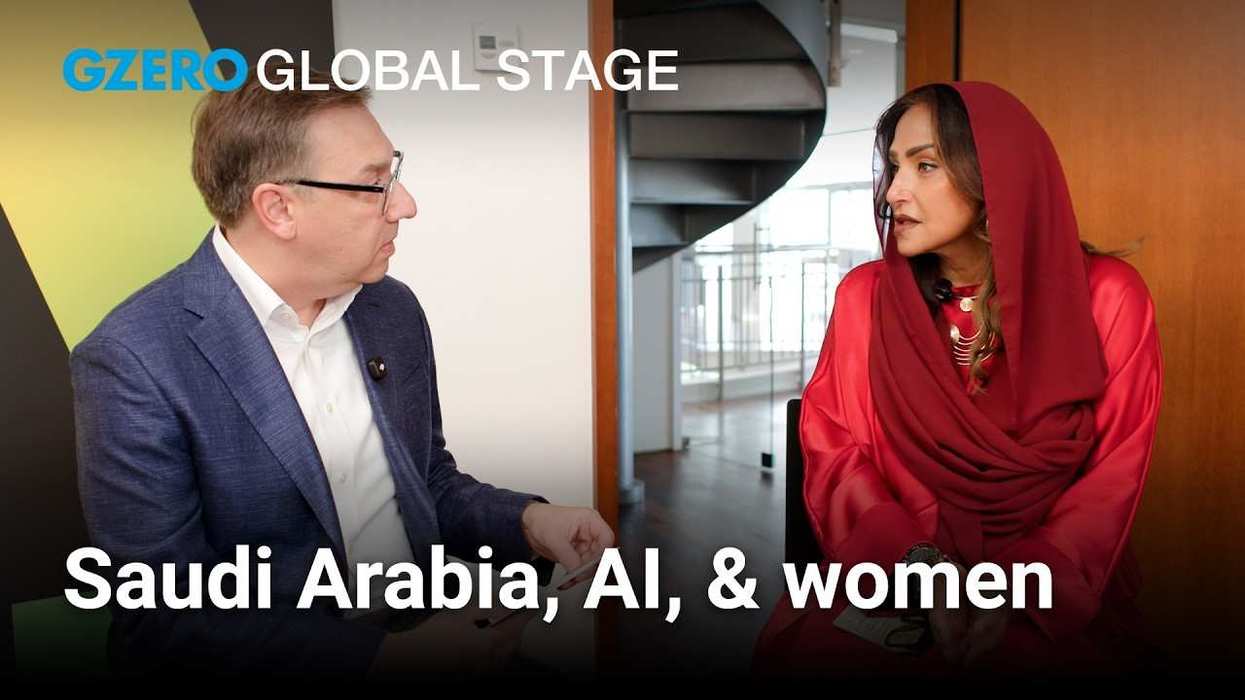
On the sidelines of the 2026 Munich Security Conference, Annemarie Hou, Executive Director of the United Nations Office of Partnerships, joined Tony Maciulis to discuss the power of women leaders in global decision-making.

Hou highlighted the UN’s Women Rise for All initiative, explaining that during the COVID pandemic, women “came to the front lines of leading in really different and creative ways.” She emphasized that when women participate in peace processes, agreements are 35% more likely to succeed. “Women naturally bring more people in, are looking around to see who’s missing,” she said, underscoring the importance of inclusivity.


Hou also stressed the need to support girls at the community level, addressing barriers such as mental health and access to leadership pathways. Reflecting on optimism in conflict-affected areas, she noted, “When women have voice and agency, they have a much more optimistic viewpoint.”

This conversation is presented by GZERO Media in partnership with Microsoft. The Global Stage series convenes global leaders for critical conversations on the geopolitical forces reshaping our world.
More from Global Stage

Can we use AI to secure the world's digital future?

How do we ensure AI is safe, available to everyone, and enhancing productivity? It’s a big topic at this year’s UN General Assembly. That’s why GZERO’s Global Stage livestream brought together leading experts at the heart of the action for “Live from the United Nations: Securing our Digital Future,” an event produced in partnership between the Complex Risk Analytics Fund, or CRAF’d, and GZERO Media’s Global Stage series, sponsored by Microsoft.

Is the Europe-US rift leaving us all vulnerable?

As the tense and politically charged 2025 Munich Security Conference draws to a close, GZERO’s Global Stage series presents a conversation about strained relationships between the US and Europe, Ukraine's path ahead, and rising threats in cyberspace.

How can AI improve everyday life for citizens?

How can artificial intelligence improve everyday life for citizens? Speaking at the United Nations, Parvathaneni Harish highlighted India’s approach to digital public infrastructure. “Today in India, the cost of access to internet is the lowest in the world… and data usage per capita is one of the highest,” he said.

Preparing the workforce for AI

How will artificial intelligence reshape the global workforce, and who will be ready for it? Speaking at the United Nations, Doreen Bogdan-Martin said the rapid growth of AI will transform jobs worldwide, making large-scale workforce training essential. “We’ve seen estimates that 170 million new jobs will be created; maybe 90 million jobs will be lost,” she said. “So how do we ensure that we’re prepared?”

Expanding AI access worldwide

Could AI deepen global inequality or help close the gap? Lisa Monaco, President of Global Affairs, Microsoft, says it all comes down to trust. She argues that “people won’t use technology that they don’t trust,” especially as geopolitical tensions raise concerns about the reliability and resilience of digital infrastructure.

How can we fix the AI divide?

AI is moving fast, but not everyone is moving with it. Inside the UN, global leaders debate how to close the widening AI divide.
Artificial intelligence isn’t just about innovation. It’s about access, infrastructure, and whether the benefits of a transformative technology will be shared or concentrated.