Security in a fragmented world: Cyber deterrence, NATO reform & the future of trusted tech

Security today isn’t just about tanks and treaties. It’s about algorithms, undersea cables, digital sovereignty, and whether democracies can adapt fast enough in a world that feels increasingly disorderly.
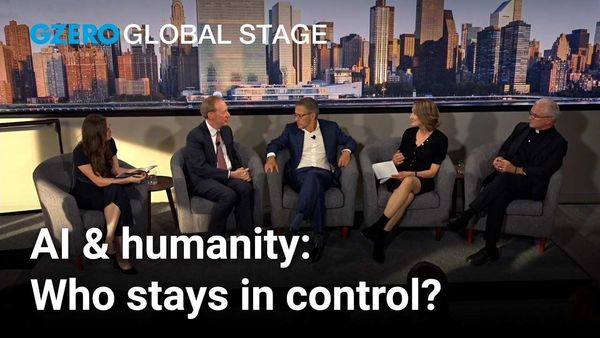
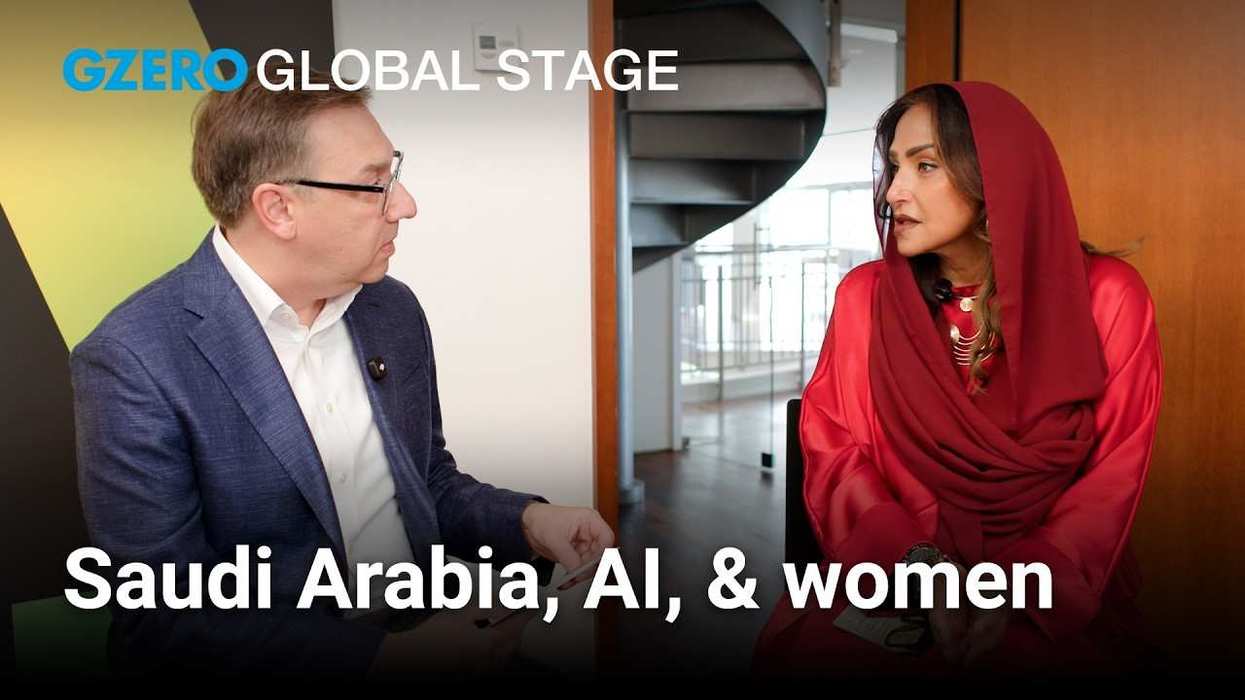
In a new Global Stage livestream from the 2026 Munich Security Conference, New York Times White House and national security correspondent David Sanger moderates a conversation with Ian Bremmer (President & Founder, Eurasia Group and GZERO Media), Brad Smith (Vice Chair & President, Microsoft), Benedetta Berti (Secretary General, NATO Parliamentary Assembly), and Wolfgang Dierker (Global Head of Government Affairs, SAP) on how technology and defense are colliding in real time.
So what is Europe’s greatest danger right now? Ian Bremmer argues it’s not immediate escalation, but a failure to adapt. NATO does not face an existential threat today, he says, but it does face a reform test. The fastest-growing security risks are driven by new technologies the alliance was never designed to integrate. Survival isn’t the question. Modernization is.
Brad Smith warns that cyber conflict has entered a new phase, with artificial intelligence accelerating both attack and defense. Ransomware networks now operate with AI-enhanced infrastructure, lowering the barrier for bad actors. While defenders are collaborating more closely, responses have often been “too timid.” Without stronger attribution and real cyber deterrence, asymmetric attacks will continue with few consequences.
Benedetta Berti describes hybrid warfare, such as cable sabotage, energy coercion, and disinformation, as the “new normal.” NATO’s answer has been resilience: intelligence sharing, hardened infrastructure, and deterrence by denial. “We may not be at war,” she notes, “but we’re not at peace.”
The conversation also turns to digital sovereignty and the launch of a new Trusted Tech Alliance: 16 companies from 11 countries committing to protect cross-border technology flows and reinforce shared principles. Wolfgang Dierker highlights rising demand for sovereign cloud and sovereign AI solutions, even as definitions remain fragmented.
Ian Bremmer places it all in a wider geopolitical context: China’s relative absence from Munich underscores the deeper problem. In the US–China AI space, he argues, there is “literally zero trust.” Without governance frameworks to manage technological competition, fragmentation could harden into decoupling.
Running through it all is a central tension: speed versus safeguards. Can democracies build resilience and impose real costs on cyber aggression while preserving trust and rule of law?
The Global Stage series, presented by GZERO Media in partnership with Microsoft, convenes leaders at major international forums to examine how technology, politics, and security intersect in an era of accelerating change.