Trending Now
We have updated our Privacy Policy and Terms of Use for Eurasia Group and its affiliates, including GZERO Media, to clarify the types of data we collect, how we collect it, how we use data and with whom we share data. By using our website you consent to our Terms and Conditions and Privacy Policy, including the transfer of your personal data to the United States from your country of residence, and our use of cookies described in our Cookie Policy.
{{ subpage.title }}
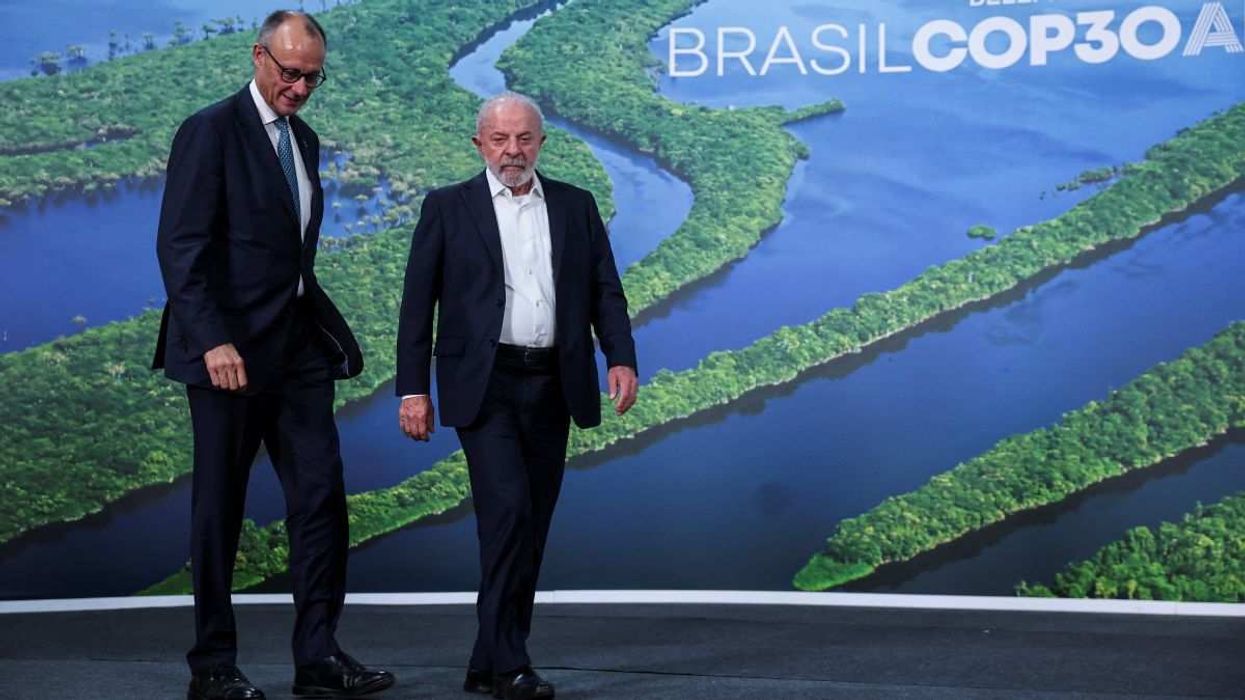
Brazil's President Luiz Inácio Lula da Silva and Germany's Chancellor Friedrich Merz walk after a bilateral meeting on the sidelines of the UN Climate Change Conference (COP30), in Belem, Brazil, on November 7, 2025.
Q+A: Climate tries for a comeback at COP30
When it comes to global warming, the hottest ticket in the world right now is for the COP30 conference, which runs for the next week in Brazil.
What’s COP30? It’s the 30th installment of an annual UN-backed event that brings together world leaders, diplomats, and experts for two broad purposes: finding ways to slow global warming and to address the impacts of climate change.
This year’s meeting, held in the Amazon rainforest city of Belém, comes amid huge new challenges to the climate agenda. The government of the world’s largest economy, the US, is once again actively hostile towards climate policy. The world’s leading philanthropist, Bill Gates, has recently downgraded climate change as a key concern.
What’s more, it’s been ten years since nearly 200 countries signed the Paris Agreement, pledging to reduce emissions in order to keep global temperature rises within specific targets. The efforts have largely failed, and the targets are now unreachable.
So what is achievable at this year’s COP? To learn more we sat down with Herbert Crowther, an energy and climate expert at Eurasia Group. Our conversation has been lightly edited.
GZERO: Herbert, you’re on your way to COP 30 in Brazil. How does this COP feel different from previous ones? Are the stakes higher? Lower?
This COP feels different because there isn’t a single trademark deliverable or negotiating point. Most other recent COPs have had that: last year at COP29 it was about setting financing targets, for example.
This year the larger question is how to find ways to address the current geopolitical obstacles. The Brazilian COP hosts have tried to frame this in terms of COP30 being about “implementation” of prior commitments rather than negotiating new commitments, but that framing has faced some pushback.
So it’s all much more unpredictable than other recent gatherings. From a negotiating point of view, the stakes are perhaps lower – but from a political sentiment point of view, the stakes are higher.
GZERO: The Trump administration has left the Paris Agreement. Bill Gates is focusing on other things. That means two huge, longstanding pillars of support for climate policy are now gone. Who is going to drive this stuff now?
Those are real headwinds. But there are other data points that are less foreboding. Besides the US, no other country has departed the Paris Agreement. The costs of low-carbon energy continue to drop, driven in significant part by Chinese manufacturers. The private sector generally remains bullish on decarbonization technologies. And many philanthropies will still engage in climate work, even as they change their public framing around it or prioritize other issues. The area where politics may be most disruptive is in the question of financing: projects may be more difficult to finance and more reliant on government support.
GZERO: What’s a realistic expectation of what can be achieved at this COP? What are you most optimistic about and what are you most pessimistic about?
We will likely see more agreements between countries on carbon trading, as well as some new targets for financing and monitoring projects that help countries to adapt to climate change.
I’m more pessimistic on the ability of COP30 to find a political message that will respond effectively to this geopolitical environment. In many ways, a positive vision for COP30 is simply to maintain credibility for the multilateral process, and to create conditions for a COP31 next year that has more time to identify solutions tailored to this geopolitical environment.
GZERO: A lay reader, or a person who doesn’t follow climate policy closely, might look at the headlines about how countries keep failing to meet their obligations, and wonder “why keep having COP at all?” How would you answer that?
That’s a very understandable concern. What is sometimes lost by those headlines is the value of the COP process as a choreography mechanism to encourage countries to regularly deepen their long-term climate ambitions. Most countries have done this ahead of COP30 with new 2035 targets, even if those commitments are not as ambitious as many observers would like. Recalibrating expectations and finding a new political framework for the whole process will be a topic of discussion in Belém.
No matter what happens, you’ll be in Brazil! What’s one thing you’re excited to do there that has NOTHING to do with climate change?
I am looking forward to seeing Belém – my first time in the Amazon! I will be consuming lots of Brazilian espressos throughout the week.
Have a couple for us too – enjoy!
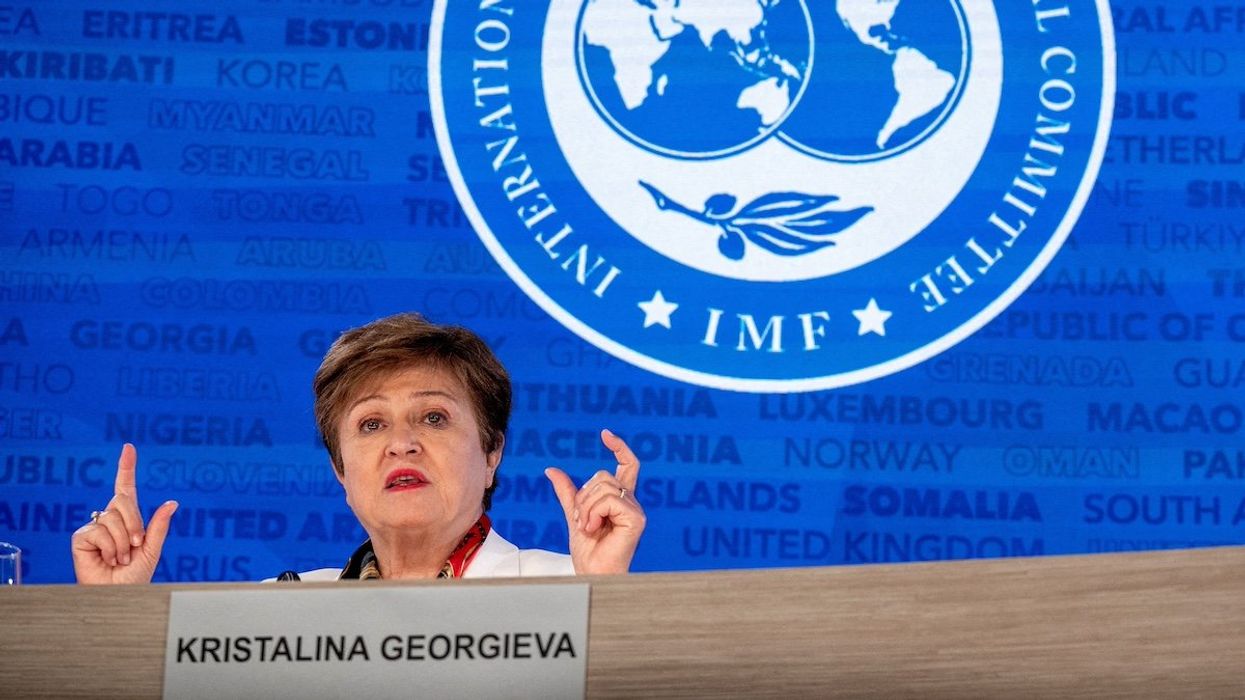
FILE PHOTO: MF Managing Director Kristalina Georgieva speaks during a press briefing at the International Monetary and Financial Committee (IMFC) plenary session at the IMF and World Bank?s 2024 annual Spring Meetings in Washington, U.S., April 19, 2024.
Building a better world: GZERO on the ground at IMF and World Bank Annual Meetings
The great and the good of international development are in Washington, DC, this week for the most important event on their annual calendar: the World Bank and International Monetary Fund annual meetings. Heavy hitters like World Bank President Ajay Banga and IMF Managing Director Kristalina Georgieva will discuss the world’s economic outlook in 2025, while central bank heads from some of the most fragile economies will discuss their successes and challenges.
Ukraine’s central bank chief will talk about how to keep his country’s economy functioning with Russian missiles raining down while young Ukrainians in their prime are fighting in trenches instead of building wealth. Pakistan’s finance minister will focus on his country’s daunting challenges, from devastating floods and massive debt to deeply divisive politics. And on a more positive note, South Africa’s central bank chief will be happy to discuss the rand’s hopeful summer turnaround – and what it could mean for the Rainbow Nation.
GZERO Senior Writer Matthew Kendrick will be rubbing elbows to broach the elephant in the room: What is everyone thinking about the US election? GZERO’s Chief Content Officer Tony Maciulis will be interviewing M. Ayhan Kose, the World Bank’s deputy chief economist, and Hana Brixi, global director of gender, among others. We’ll also cover efforts to ensure that development is spread evenly across societies and focus on women’s empowerment and health care. Don’t forget to follow Tony, Matt, and GZERO on social media to stay up to date.