Trending Now
We have updated our Privacy Policy and Terms of Use for Eurasia Group and its affiliates, including GZERO Media, to clarify the types of data we collect, how we collect it, how we use data and with whom we share data. By using our website you consent to our Terms and Conditions and Privacy Policy, including the transfer of your personal data to the United States from your country of residence, and our use of cookies described in our Cookie Policy.
{{ subpage.title }}
Firefighter douses a vehicle after a blast outside a court building in Islamabad, Pakistan November 11, 2025.
Hard Numbers: Pair of suicide bombers strike Pakistan, World’s biggest mining project breaks ground, Israel’s Parliament to impose death penalty for some, “Cryptoqueen” to be sentenced
15: A pair of suicide attacks in Pakistan yesterday killed at least 15 people. One struck the capital Islamabad, killing at least 12 and injuring another 27 – the Pakistani Taliban claimed responsibility for it, prompting Pakistan’s defense minister to say the country is in a “state of war.” The other bomber detonated outside a military school in the northwest, near the Afghan border.
$23 billion: The world’s biggest mining project is breaking ground in Guinea today, financed by China. The $23-billion iron-ore mine aims to reduce the energy needed to produce steel, quadruple Guinea’s GDP by 2040, and deepen China’s dominance over Africa’s resources.
39: Israel’s Parliament voted to advance a bill that would impose a death penalty for Palestinians who murder Jewish Israelis for nationalist reasons, but not for Jewish Israelis who kill Palestinians for the same reasons. The vote was 39 to 16. A member of National Security Minister Itamar Ben-Gvir’s far-right Jewish Power party proposed the bill. Israel abolished the death penalty in 1954.
$5.6 billion: A Chinese woman who was found guilty of stealing Chinese pensioners’ funds to buy billions of dollars worth of cryptocurrency before fleeing to the United Kingdom is set to be sentenced today for money laundering. Qian Zhimin, otherwise known as “cryptoqueen,” received deposits of 40 billion yuan ($5.6 billion) from 120,000 people in China.
8: Eight Democratic senators joined 52 of the 53 Republicans in the upper chamber to formally pass the continuing resolution that would fund the US government through the end of January. House progressives were seething, furious that their Senate peers passed the bill without extending healthcare subsidies. Speaker Mike Johnson has told House members that the lower chamber could vote on the bill by Wednesday.
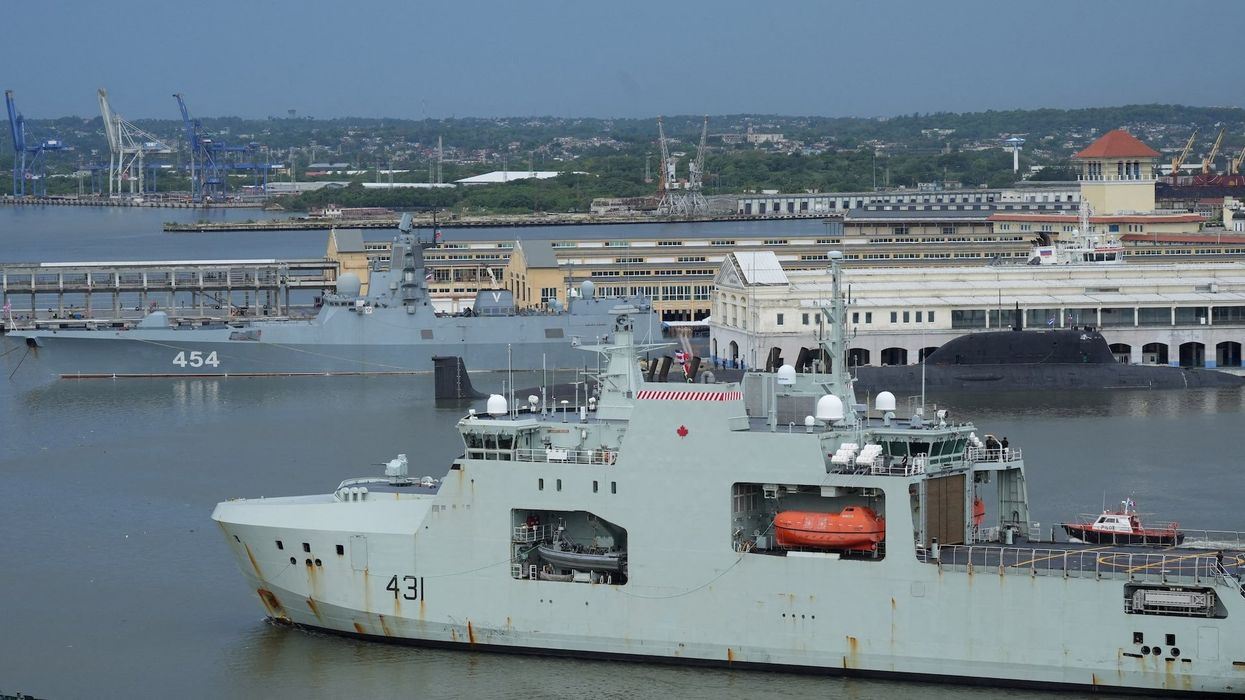
Canadian navy patrol boat HMCS Margaret Brooke passes by Russian nuclear-powered cruise missile submarine Kazan and frigate Admiral Gorshkov, as it enters Havana’s bay, Cuba, June 14, 2024.
Our men in Havana
Even a summer trip to Cuba is fodder for controversy in Canada these days. This week, a Canadian warship paid a controversial visit to the port of Havana – docking near Russian warships that were also on a high-profile visit to the Cuban capital.
Defense Minister Bill Blair said there was nothing special about the naval drop-in, which was meant to demonstrate Ottawa’s commitment to freedom of navigation in the Western Hemisphere. It was, he said, announced by the Canadian Armed Forces “in advance.”
Canada’s Joint Operations Command had a slightly different gloss on it, saying the port visit was to recognize “the long-standing bilateral relationship between Canada and Cuba.”
Ottawa has kept up strong ties with Cuba over the years, in stark contrast to the US, which has maintained a crippling embargo against the Communist regime there for more than six decades.
But Canada’s opposition seized on the naval visit to criticize the Trudeau government, with Conservative leader Pierre Poilievre calling the apparent challenge to Russia “reckless, radical, and dangerous.” Conservative foreign affairs spokesman Michael Chong said it was a bad look to “‘celebrate’ relations with a communist dictatorship.”
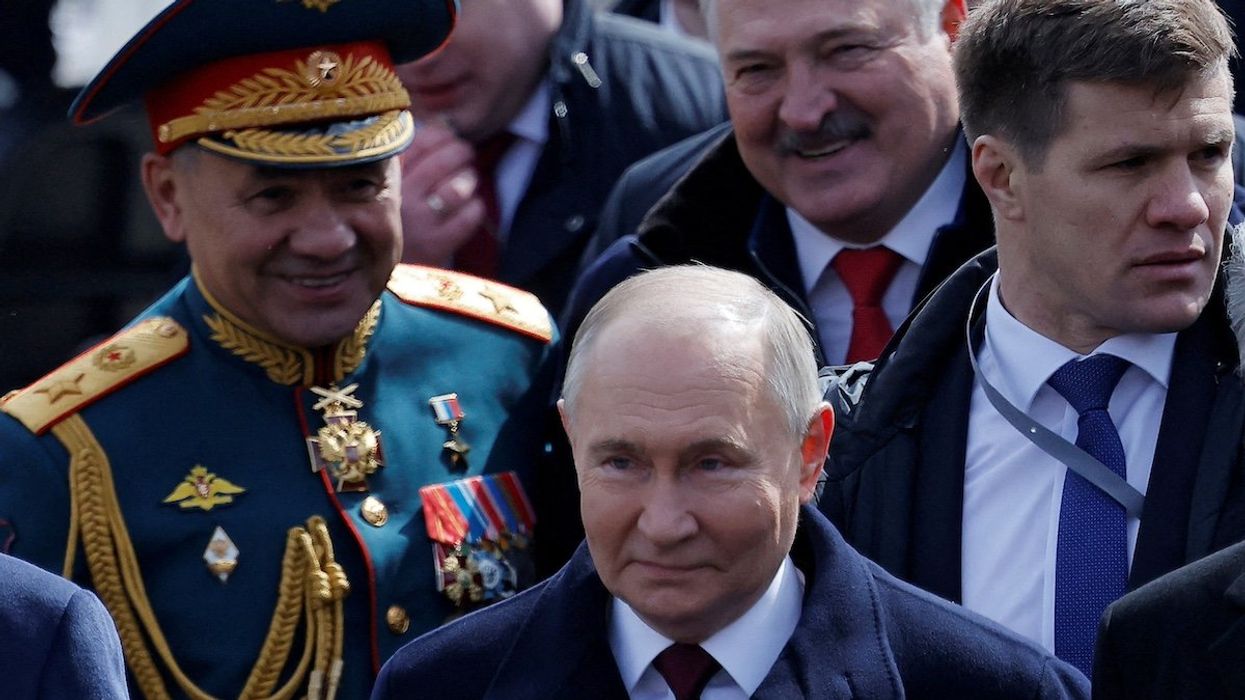
FILE PHOTO: Participants, including Russian President Vladimir Putin, Defence Minister Sergei Shoigu and Belarusian President Alexander Lukashenko, attend a military parade on Victory Day, which marks the 79th anniversary of the victory over Nazi Germany in World War Two, in Red Square in Moscow, Russia, May 9, 2024.
Putin’s cabinet shakeup: Does it signal a new approach in Ukraine?
Shoigu will transition to become secretary of Russia's national security council, replacing Nikolai Patrushev. Andrei Belousov, currently deputy prime minister with a background in economics but no military experience, has been proposed as the new defense minister.
Rather than firing Shoigu, Putin has offered his longtime ally a soft landing, says Eurasia Group analyst Alex Brideau. Brideau says the move is “a reflection that Putin thought he needed a change at defense.” But rather than an outright snub, it’s also an example, he says, of how rarely Putin outright fires those who have demonstrated long-term loyalty.
According to Kremlin press spokesman Dmitry Peskov, the appointment of Belousov emphasizes the need for “innovation” in the role. Philip Ingram, a former British military intelligence colonel and NATO planner, believes that the shuffle allows Putin “to keep Shoigu on side,” while bringing in a civilian better able to deal with the impact of corruption in the Defence Ministry. Others have described the shift as a sign that Putin wants to put the war in Ukraine on an “economically sustainable footing” – something an economist like Belousov might be better positioned to do.