Trending Now
We have updated our Privacy Policy and Terms of Use for Eurasia Group and its affiliates, including GZERO Media, to clarify the types of data we collect, how we collect it, how we use data and with whom we share data. By using our website you consent to our Terms and Conditions and Privacy Policy, including the transfer of your personal data to the United States from your country of residence, and our use of cookies described in our Cookie Policy.
{{ subpage.title }}
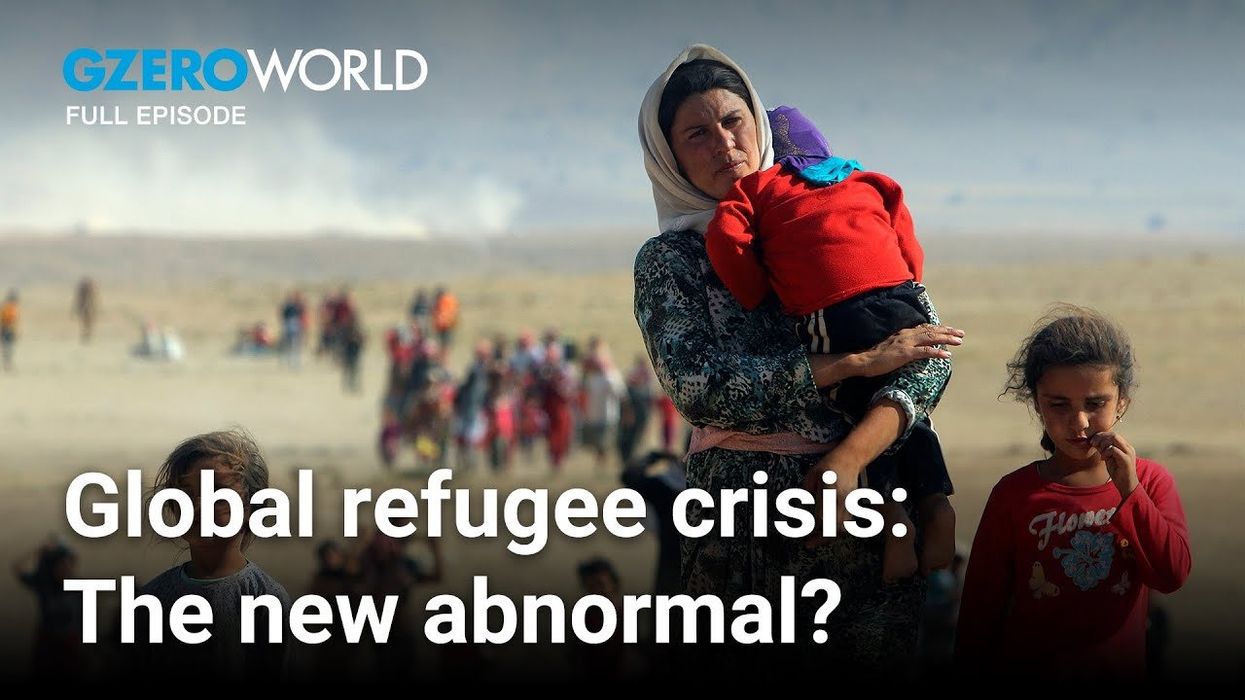
The global refugee crisis is at breaking point
The global refugee population is at historic highs, driven by war in Ukraine, violence in Sudan, state collapse in Venezuela, Taliban rule in Afghanistan, and a worsening humanitarian disaster in Gaza. On GZERO World, David Miliband, president & CEO of the International Rescue Committee joins Ian Bremmer to discuss the refugee crisis, the rise of forcibly displaced people around the world, and the crumbling humanitarian aid system amid the cancellation of USAID. What happens when the poorest countries are left to solve the hardest problems? And who–if anyone–is stepping up to help?
Miliband says that in 20 countries in crisis, there are more than 275 million people in humanitarian need, people that depend on international aid and organizations like the IRC to survive. There have been some recent positive developments—hundreds of thousands of refugees returning to Syria after the fall of the Assad regime, the potential for progress in the Eastern DRC, new technologies improving aid delivery. Still, Miliband says the world is facing a humanitarian crisis of historic proportions and unless the international community steps up, tens of millions will suffer.
“We face a new abnormal. 10 years ago, there were 50 to 60 million internally displaced people and refugees. Now, there's 120 million,” Miliband says, “The scale of impunity, the loss of international engagement is epic.”
GZERO World with Ian Bremmer, the award-winning weekly global affairs series, airs nationwide on US public television stations (check local listings).
New digital episodes of GZERO World are released every Monday on YouTube.Don't miss an episode: subscribe to GZERO's YouTube channel and turn on notifications (🔔). GZERO World with Ian Bremmer airs on US public television weekly - check local listings.
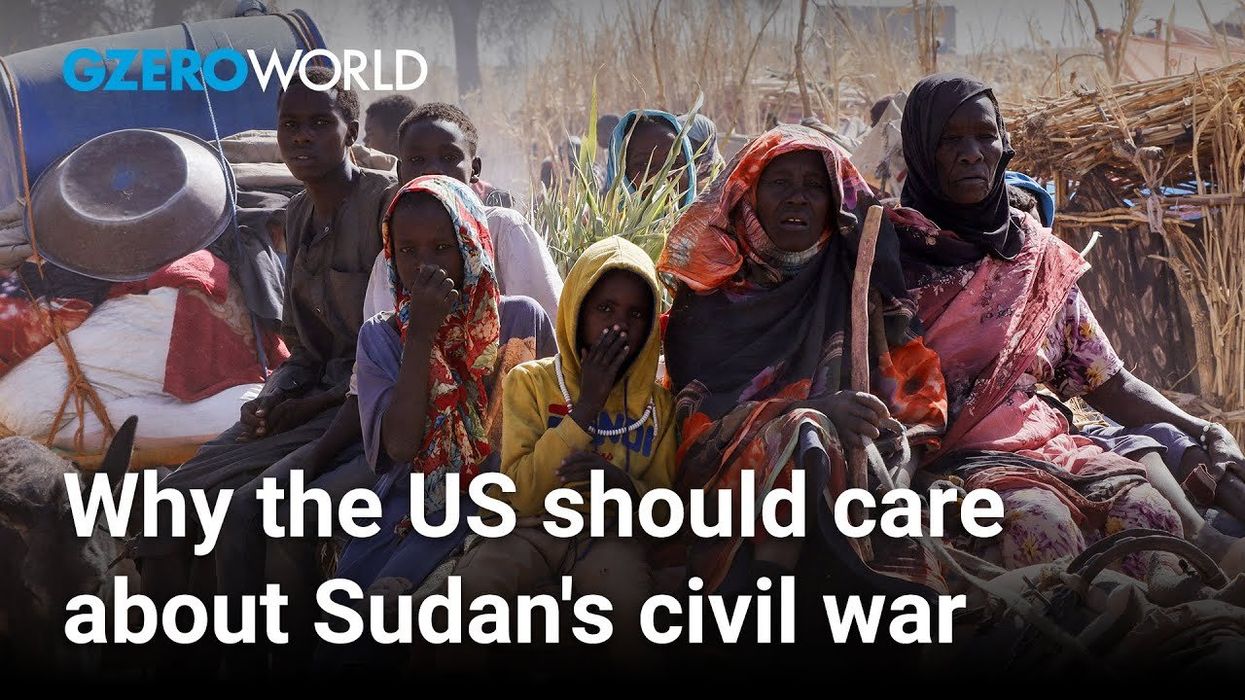
The Trump admin can do more to help Sudan, says Sen. Warner
In this clip from GZERO World with Ian Bremmer, Senator Mark Warner explains why he’s taken on Sudan’s brutal civil war as a personal and political priority—and why the US, under both Joe Biden and Donald Trump, has failed to act. “More people die every day in Sudan than in Gaza and Ukraine combined,” Warner says, calling the conflict a humanitarian catastrophe hiding in plain sight.
Warner argues that neither side in Sudan’s civil war deserves US backing—“both teams are bad”—but that Trump, in particular, has a unique opportunity to pressure Saudi Arabia and the UAE to stop funding the violence. “It would be a huge policy win,” he says. Yet, despite bipartisan concern, Warner says there’s been no serious focus on the crisis. As US aid gets clawed back and global attention stays elsewhere, Warner warns the price isn’t just moral—it’s geopolitical. “When we don’t step up, China fills the void—for pennies on the dollar.”
GZERO World with Ian Bremmer, the award-winning weekly global affairs series, airs nationwide on US public television stations (check local listings).
New digital episodes of GZERO World are released every Monday on YouTube. Don't miss an episode: subscribe to GZERO's YouTube channel and turn on notifications (🔔).
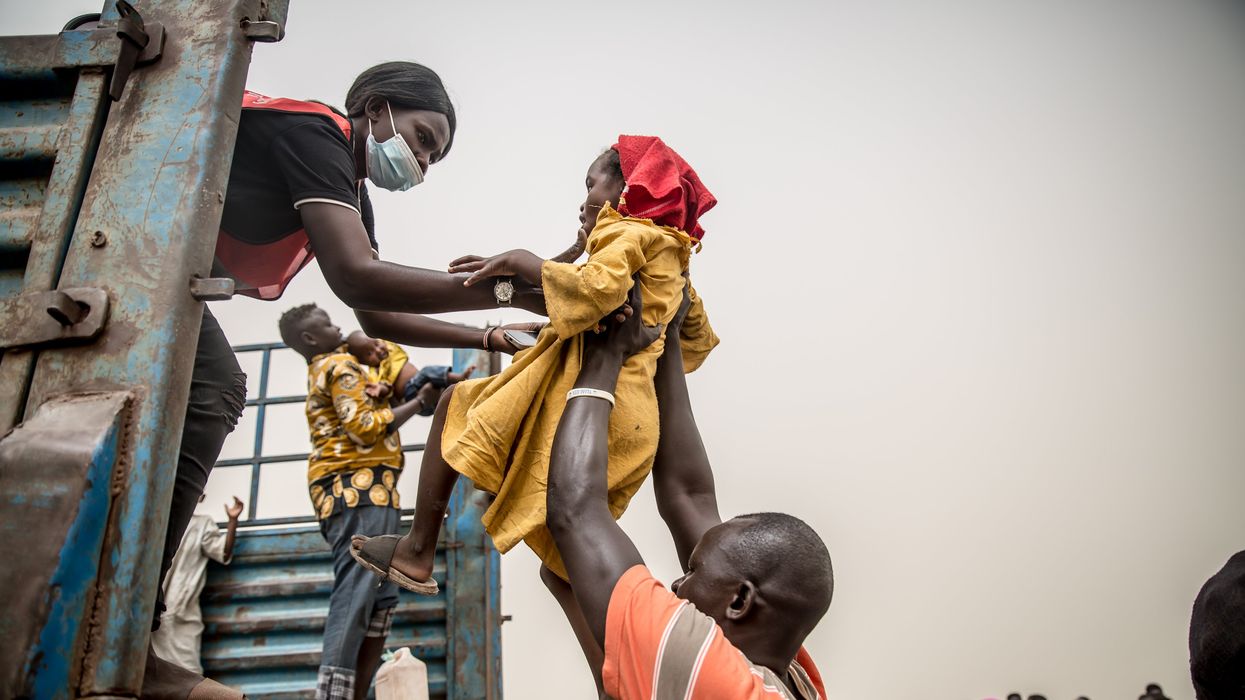
A child is loaded into a truck taking people fleeing Sudan's war from Joda, on the Sudanese border
The UAE’s hidden hand in Sudan’s humanitarian crisis
The war in Sudan between the paramilitary Rapid Support Forces and Sudanese Armed Forces has created one of the worst humanitarian crises in the world, and it is becoming increasingly apparent that the United Arab Emirates is playing a role in prolonging it.
Passports recovered from battlefields in Sudan suggest the United Arab Emirates is covertly putting boots on the ground to support the RSF — a charge the UAE denies. The allegations come after a UN report surfaced evidence the UAE has provided weapons to the RSF to the degree many analysts believe that “without the UAE’s alleged involvement, the conflict driving the world’s worst ongoing humanitarian crisis would already be over.”
Why would the UAE support the war? Sudan is key, militarily and economically, to the UAE’s strategy in Africa and the Middle East. Militarily, it has sourced fighters from both factions to join its conflict in Yemen. Economically, it is the primary importer of Sudan’s gold, and it plans to develop ports along its Red Sea coast. Meanwhile, Iran is supplying weapons to SAF, and Russia is supporting both sides in exchange for access to a strategic Red Sea port.
The United States plans to revive peace talks next month in Switzerland, where the UAE is invited to attend as an observer. US Ambassador to the UN Linda Thomas-Greenfield says Washington has “engaged” with the UAE on the issue. But Washington faces accusations of hypocrisy, as it calls for an end to weapons supplies in Sudan while continuing to provide billions’ worth to Israel during its offensive on Gaza.