Trending Now
We have updated our Privacy Policy and Terms of Use for Eurasia Group and its affiliates, including GZERO Media, to clarify the types of data we collect, how we collect it, how we use data and with whom we share data. By using our website you consent to our Terms and Conditions and Privacy Policy, including the transfer of your personal data to the United States from your country of residence, and our use of cookies described in our Cookie Policy.
{{ subpage.title }}
Is Serbia pivoting towards Ukraine?
In this episode of Europe in :60, Carl Bildt breaks down Serbia’s evolving foreign policy, and political developments in Poland.
After President Vučić’s visit to Ukraine, Bildt notes, “I think he is in the black book of the Kremlin because of that particular visit,” highlighting shifting alliances in the Balkans.
On Poland, following Donald Tusk’s post-election confidence vote, Bildt explains the challenges ahead: “The president can veto legislation, he can block important appointments.”
As Serbia weighs its EU path and Poland navigates internal politics, Bildt offers timely analysis on regional stability and European security affairs.
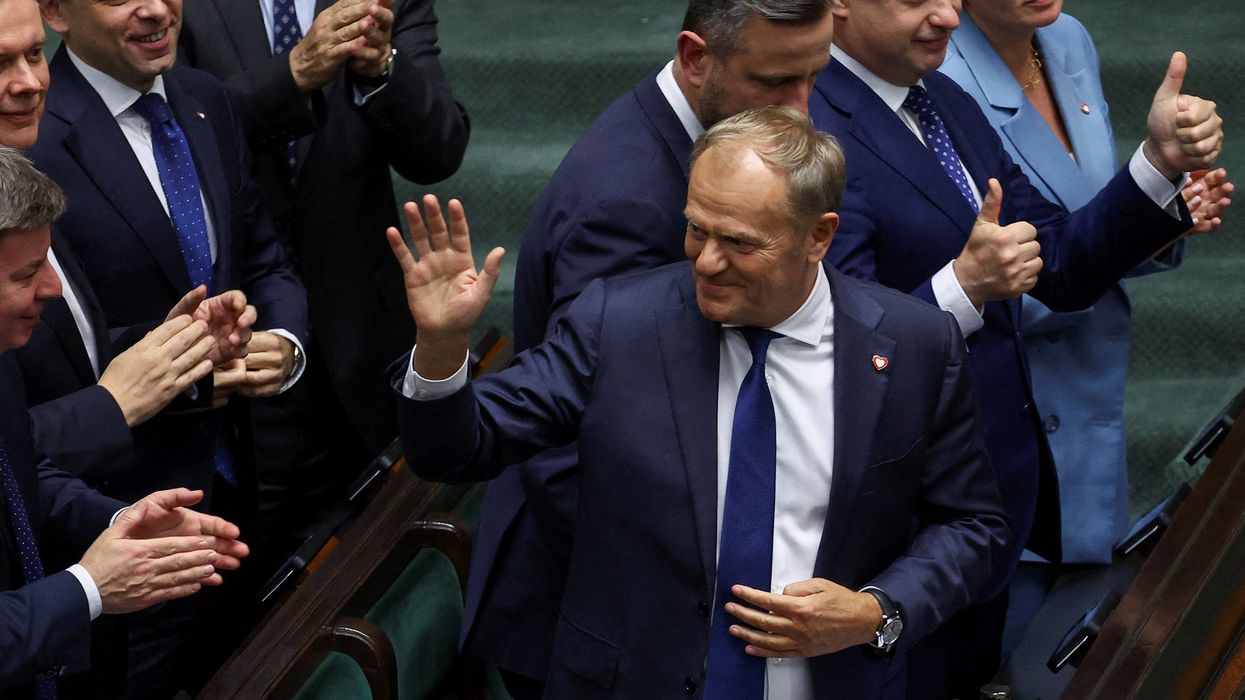
Polish Prime Minister Donald Tusk reacts after a vote of confidence for his center-left coalition government, in Warsaw, Poland, June 11, 2025.
Hard Numbers: Polish PM’s gamble pays off, UK sanctions Israeli government ministers, Taiwan indicts Chinese “spies”, and more
33: Poland’s Prime Minister Donald Tusk survived a no-confidence measure on Wednesday by a margin of 33 votes in the 460 seat legislature. Tusk had called the vote himself in a bid to reinforce his mandate after an ally of his lost the presidential election to a rightwing challenger late last month.
4: Taiwanese prosecutors indicted four former members of the ruling Democratic Progressive Party over allegations of spying for China. One of the alleged suspects worked as an assistant to former Foreign Minister Joseph Wu, who is now the secretary-general of Taiwan’s National Security Council.
0.1%: The US’ annual inflation index rose by 0.1 points from 2.3% last month—an early indication that Trump’s tariffs are having only a modest impact on consumer prices so far.
5: Five western countries – Australia, Canada, New Zealand, Norway, and the UK – imposed sanctions on two of Israel’s far-right ministers on Tuesday, accusing Itamar Ben-Gvir and Bezalel Smotrich of “inciting extremist violence” in the West Bank and denying essential aid to Palestinians in Gaza. Israel’s foreign minister Gideon Saar pledged a response to the “outrageous” move.
40%: US National Institutes of Health Director Dr. Jay Bhattacharya defended his agency during a Senate hearing on Tuesday after the Trump administration proposed a 40% budget cut to it. Sen. Susan Collins (R-ME) slammed the proposed cuts, which would lower the NIH’s total budget to $27.5 billion for the next fiscal year.
1,200: Russia and Ukraine began a major prisoner swap earlier this week, with each side expected to hand over at least 1,200 prisoners. However, prospects for a ceasefire remain distant: Kyiv and Moscow have exchanged ferocious aerial assaults in recent days.
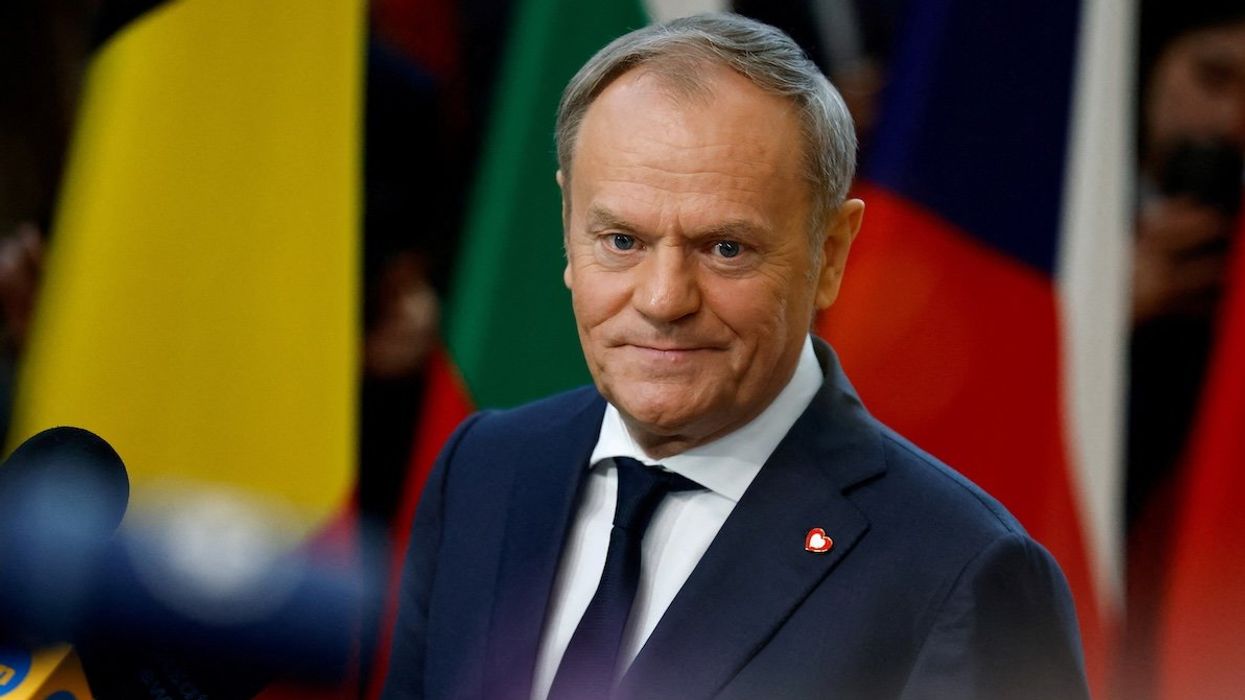
Polish Prime Minister Donald Tusk attends a European Union leaders special summit to discuss Ukraine and European defense in Brussels, Belgium, on March 6, 2025.
Might Poland go nuclear?
As Ukraine’s Volodymyr Zelensky was in Saudi Arabia Monday ahead of US-Ukrainian talks, his military launched its largest drone attack on Moscow overnight, killing two people. And if you ask Elon Musk, he was also busy attacking X. On Monday, Musk claimed without evidence that his social media platform went dark yesterday because it was targeted by a “massive cyberattack” traced to “the Ukraine area.”
Meanwhile, Poland’s Prime Minister Donald Tusk has made waves in recent days.
When Poland joined NATO in 1999, it appeared the country could count on the most successful military alliance in history to protect its borders against future threats. At the time, an American renunciation of NATO was hard to imagine.
On Friday, Tusk warned his country that a “profound change of American geopolitics” forces his government to prepare to double the size of its military and to “reach for opportunities related to nuclear weapons.” In the past, Poland’s leaders have suggested hosting the nuclear weapons of others, but the hint that Poland might develop its own arsenal in response to potential Russian aggression and a feared US retreat from Europe is something new.
Tusk’s jarring comments reflect a spiral in relations between Tusk’s government and the Donald Trump administration. A series of accusations and insults flew over the weekend between Poland’s foreign minister, Trump adviser Elon Musk, and US Secretary of State Marco Rubio over the Musk-owned Starlink satellite system that supports Ukraine’s forces on the battlefield.
The PM’s suggestion that Poland might look to nuclear weapons in part reflects political worries. Poland will hold a first round of presidential elections in May, and Poles look likely to back a leader they believe can stand up to both Trump and Vladimir Putin.
But acquiring nuclear weapons would be time-consuming, politically fraught, and enormously expensive for Poland.
The Civic Coalition's leader Donald Tusk speaks during the election night in Warsaw.
Poles push populists out at polls
Exit polls from Sunday’s Polish national election show the ruling Law and Justice party, or PiS, failing to secure enough support to form a third majority government.
While it won the most seats, opposition leader Donald Tusk is claiming victory as his Civic Coalition looks to build a government with the Third Way and the Left, who scored a combined 248 seats, surpassing the 231 needed for a majority. The Third Way performed better than expected with 13% of the vote, while the far-right Confederation party, on whose support PiS depended, got only 6.2%, which the party called a defeat.
Turnout was the highest since 1989 when voters turfed the ruling communist party. Some 73% of Poles voted, compared to the expected 55-60%, suggesting that the liberal opposition mobilized enough voters in the last two weeks of the campaign to turn the tide in its favor.
“The outcome is good news for Poland’s domestic political and economic trajectory as well as its position in the EU,” says Eurasia Group expert Anna-Carina Hamker. “The incoming liberal opposition government will take steps to restore the rule of law and depoliticize state institutions while adopting a more consensus-oriented approach towards Brussels and other European capitals.”