Ian Explains
Ian Explains: Will the Gaza campus protests work?
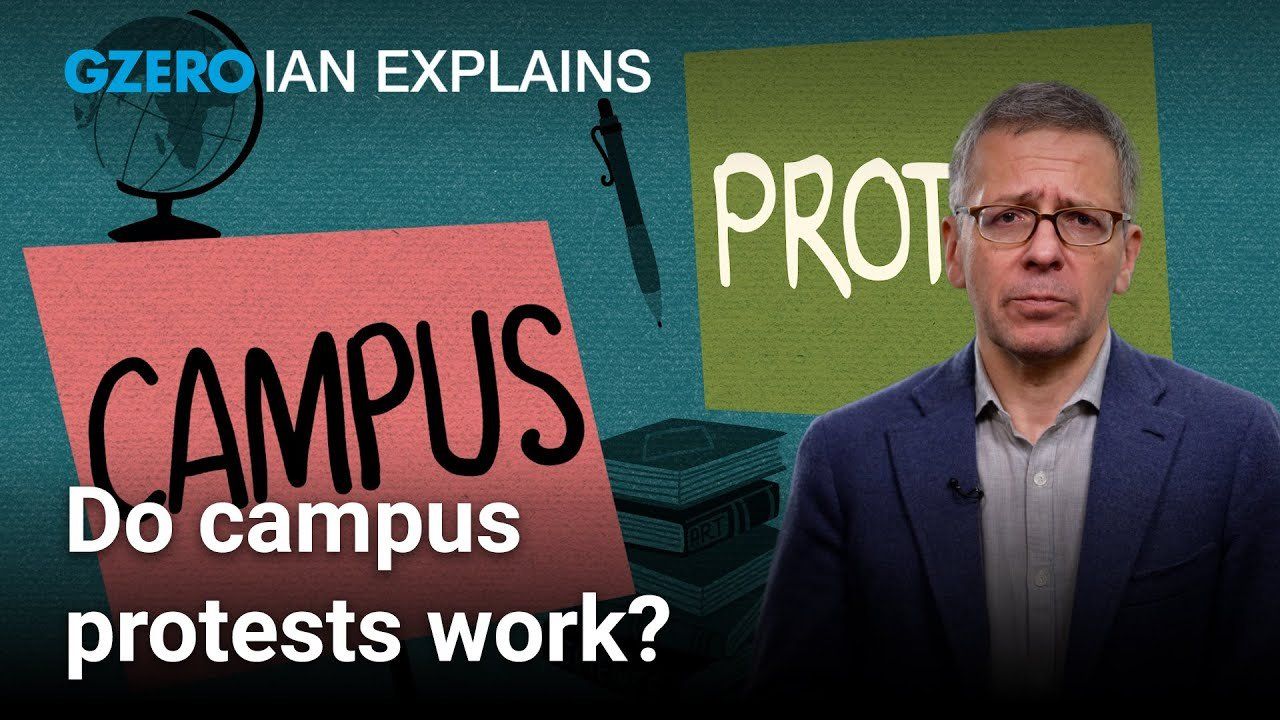
Will the Gaza campus protests work? | Ian Bremmer explains | GZERO World
Have the student protests worked? College campuses nationwide have become protest hubs, echoing past movements demanding change. From Columbia to UCLA, students are pitching tents, occupying buildings, and clashing with police over Israel's actions in Gaza. The core demand: divestment from Israel. Whether it's cutting ties with Israeli donors or businesses, students are risking penalties to be heard, Ian Bremmer explains on GZERO World.
This activism mirrors the 1968 protests at Columbia, which targeted US involvement in Vietnam. Then, as now, divestment was a central demand, albeit from different sources. Some progress has been made; Brown and Northwestern students have reached agreements with administrators. Worldwide, youth are voicing discontent over Gaza.
However, not all support these protests. Some lament another disrupted commencement, while Jewish students feel marginalized and threatened. Can these efforts change US policy? President Biden's recent remarks suggest otherwise, as does Congress' recent passing of $15 billion in military aid for Israel. But Biden needs Gen Z's support for reelection. They have leverage, and they know it.
In his latest Quick Take, Ian Bremmer discusses the on-again off-again ceasefire between the United States and Iran and why it has failed to hold, arguing that both sides remain locked in a fundamental disagreement over who has the leverage.
Can a war-torn Lebanon disarm Hezbollah, end Israel’s occupation of its southern territory, and reclaim control of its future? Beirut-based journalist Kim Ghattas joins Ian Bremmer on GZERO World.
As Hezbollah’s power weakens and Israel occupies parts of southern Lebanon, could the country finally reclaim its sovereignty? Or is it headed toward another war? Journalist Kim Ghattas joins Ian Bremmer on the GZERO World Podcast.
Ian Bremmer breaks down how Iran spent four decades building Hezbollah into a powerful proxy against Israel, and why the group’s uncertain future could reshape the Middle East.