US blockade faces early test
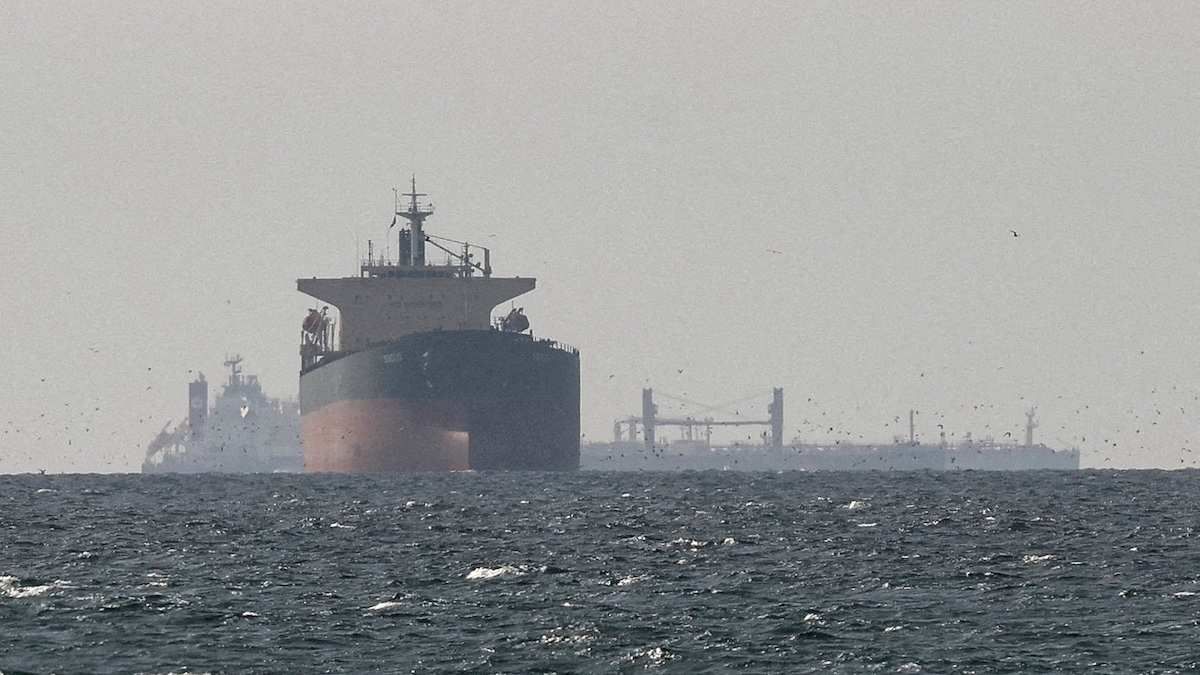
One day after US President Donald Trump announced that he had started a blockade of ships coming in and out of Iranian ports via the Strait of Hormuz, Tehran is already testing those US commitments. A sanctioned tanker called Elpis that took on cargo in an Iranian port has reportedly crossed the Strait of Hormuz. It’s not the only one: three more ships that stopped at Iranian ports reportedly tried to pass through the waterway. It’s not yet clear what actions the US is taking, but it claimed that no ships have passed through its blockade in the first 24 hours – Elpis appears to have stopped outside the Strait. This comes as Washington and Tehran ponder a second round of talks in Pakistan, after last weekend’s failed efforts. The US reportedly wants Iran to halt nuclear enrichment for 20 years, while Iran is only willing to do so for five years.
Speaking of negotiating, Israel and Lebanon are set to hold their first face-to-face talks in decades in Washington, D.C., today. The two sides are looking to resolve Israel’s war with Hezbollah – the Iranian-backed Lebanese militant group isn’t part of the talks.
Will Spain’s anti-Trump leader help China boost EU ties?
After publicly feuding with Trump, it seems only natural that Spanish Prime Minister Pedro Sánchez’svisit to the US’s chief rival, China, this week – his fourth in as many years – would be a friendly one. Indeed, Chinese President Xi Jinping tacitly praised Sánchez on Tuesday for acting with “moral rectitude” in criticizing Washington over the Iran war, while acknowledging that the Spanish leader has been a helpful conduit between Beijing and Brussels. It’s not all sunshine and rainbows, though: Sánchez said the EU-China trade imbalance was “unsustainable.” What’s more, the EU quietly approved plans to halt clean energy projects that use Chinese inverters, a critical input for solar and wind power systems. Meanwhile, Beijing wants to punish foreign firms that shift supply chains out of China. All to say: EU-China relations still have a way to go.
Has the Terminator arrived in warfare?
Ukraine says it has taken a new step into the future of warfare – without any boots on the ground. On Monday, President Volodymyr Zelenskyy announced that Ukrainian forces captured three Russian soldiers back in January using only ground robots and drones, the first time in history that such an operation was executed “exclusively” with unmanned tools. Robotic systems have already performed more than 22,000 frontline missions in Ukraine this year, according to Zelensky, replacing soldiers in the most dangerous operations. Analysts say that Ukraine’s use of drones has given it an advantage on the battlefield, increasing Russia’s casualty rates and allowing more strikes on Russia’s air defense systems. The capture using ground robots, however, marks a whole new chapter for modern warfare.