August 13, 2020
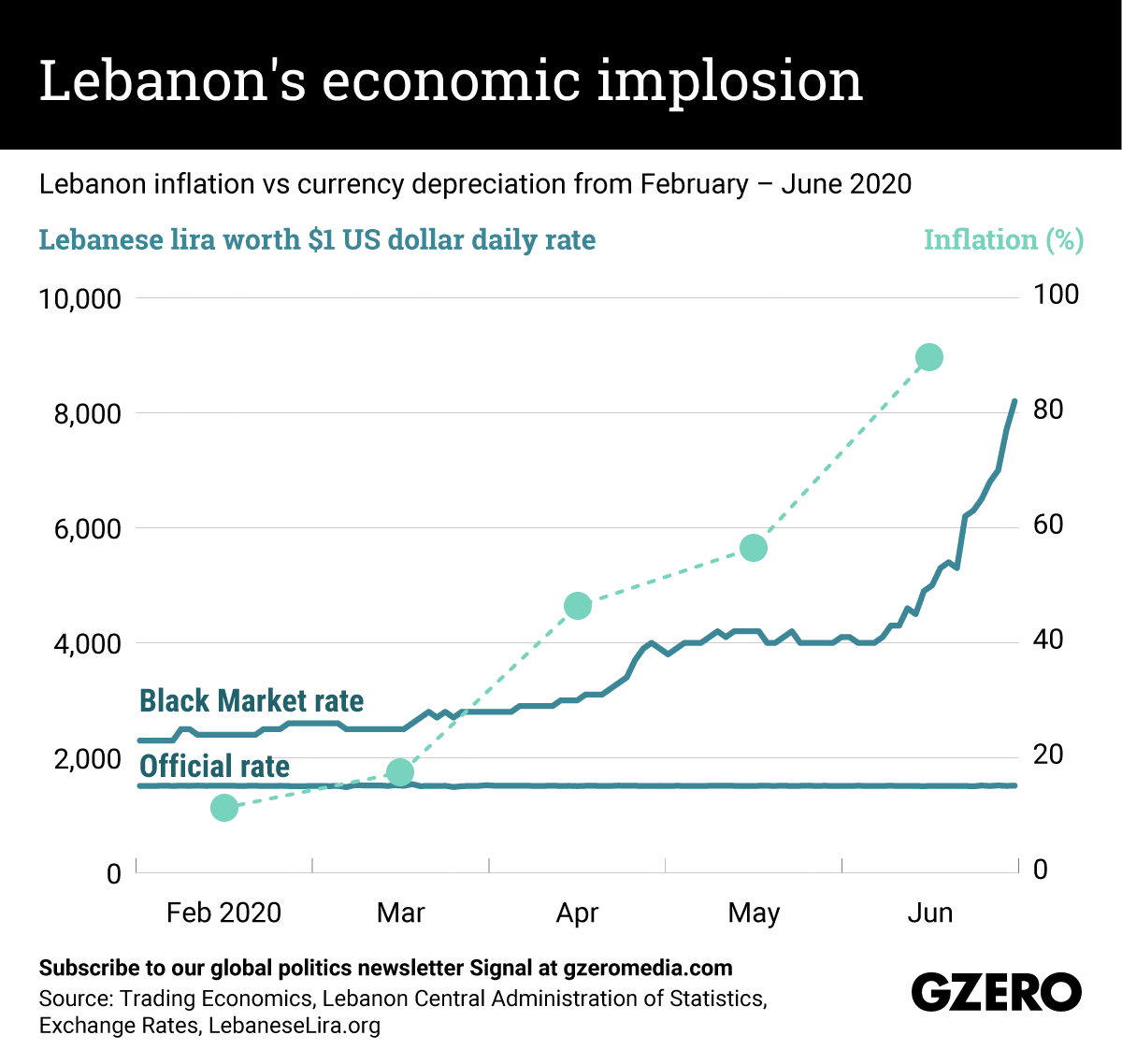
Even before last week's explosion — which killed over 200 people, turned downtown Beirut into rubble, and forced the government to resign — Lebanon was already in economic dire straits. The value of the local currency has plunged following decades of corruption, mismanagement and political chaos, dragging about half of the population into poverty. Since the beginning of 2020, the depreciation of the Lebanese pound (on the black market, while the official rate remains somewhat pegged to the US dollar) and soaring inflation have increased the price of basic goods beyond what most citizens can afford, and wiped out pensions and salaries. If the situation does not improve soon, Lebanon could see unprecedented levels of hunger — and international assistance may not be enough to feed everyone. We compare how the Lebanese pound has traded with the US dollar amid rapidly rising inflation over the first half of the year.
From Your Site Articles
More For You
- YouTube
In this Quick Take, Ian Bremmer breaks down Brazilian President Luiz Inácio Lula da Silva’s historic re-election victory and what it means for the country’s political future and democracy.
Most Popular
- YouTube
Could replacing Benjamin Netanyahu change Israel’s direction? Brett McGurk explains why a government led by Gadi Eisenkot would likely maintain Israel’s security doctrine while taking a different approach to the West Bank.
The competition to master this technology shapes everything from high-level tensions between the US and China to the local politics of where to build data centers.
© 2025 GZERO Media. All Rights Reserved | A Eurasia Group media company.