September 30, 2024
Political scientists have longdebated the importance of presidential debates, but they tend to agree that vice-presidential debates are simply sideshows without much importance for election results. The most famous moment from any past VP debate was Lloyd Bentsen’s admonition of Dan Quayle as “no Jack Kennedy” in 1988, and it was Quayle’s running mate – then-vice president George Herbert Walker Bush – who easily won that election.
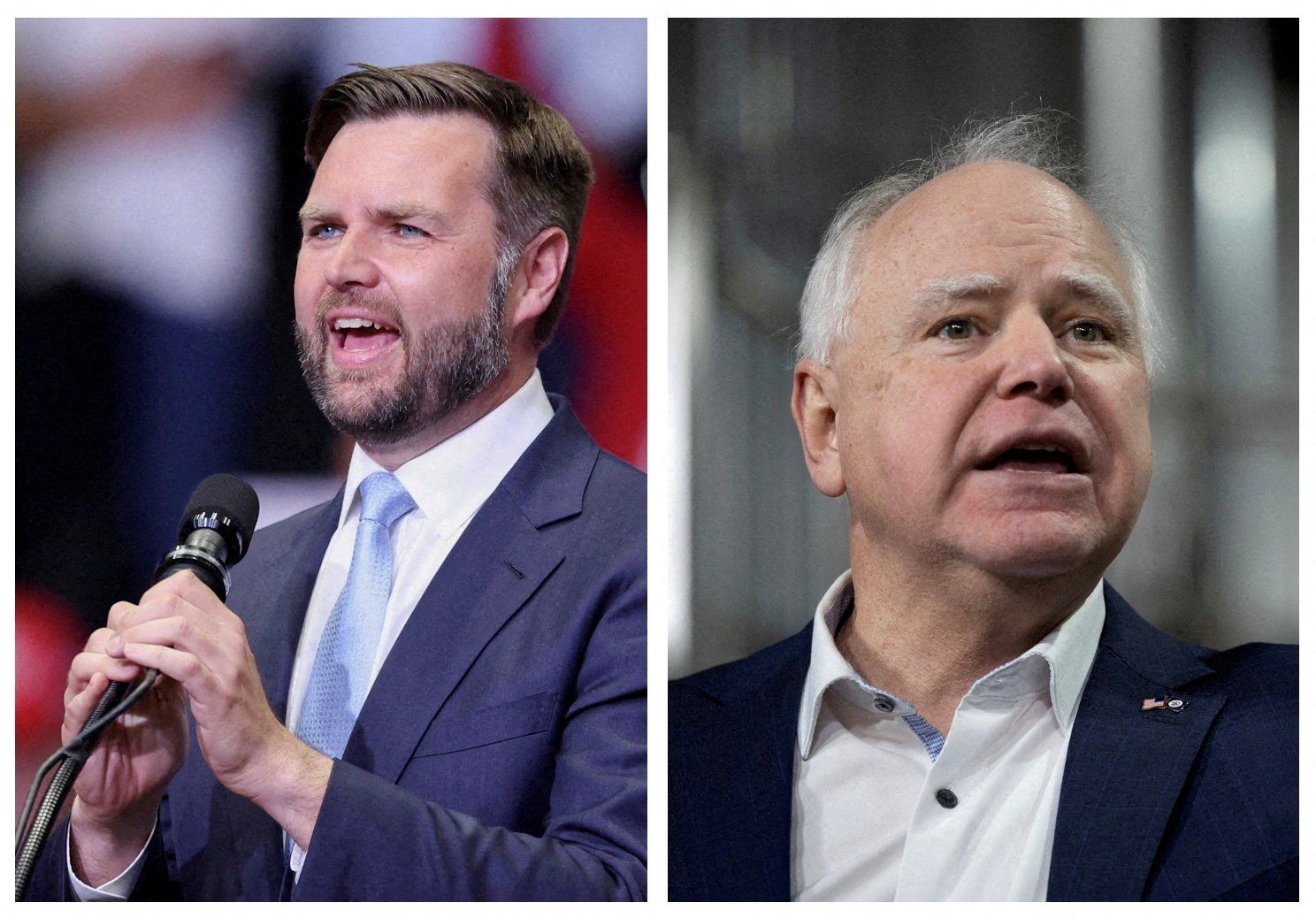
But Tuesday's faceoff between Republican JD Vance and Democrat Tim Walz may be different. National and swing-state polls suggest this might be the tightest presidential race in decades, and there hasn’t been much news in the past week to give either candidate new momentum. The Sept. 10 debate between Donald Trump and Kamala Harris is now old news, and the two don’t appear likely to debate again. That may spark more interest in tonight’s faceoff.
The current stalemate may also increase the audience for tonight’s vice-presidential debate, Vance, currently a senator from Ohio, will likely prove much more disciplined than Trump did against Harris in advancing the campaign’s strongest arguments and exploiting Harris’ biggest vulnerabilities. Walz, the Democratic governor of Minnesota, will be introducing himself to many voters who haven’t yet heard the sound of his voice. His humor and Midwestern accent may marginally boost Harris’ chances in Wisconsin, Michigan, and Pennsylvania, the states that offer her the likeliest path to victory.
Will you be watching? If so, check out GZERO's debate bingo card!
More For You
U.S. President Donald Trump and Chinese President Xi Jinping talk as they leave after a bilateral meeting at Gimhae International Airport, on the sidelines of the Asia-Pacific Economic Cooperation (APEC) summit, in Busan, South Korea, October 30, 2025.
REUTERS/Evelyn Hockstein
China has defied Western sanctions for years and buys as much as 90% of Iran’s oil exports.
Most Popular
Sponsored posts
Show your undying devotion to The Regime
Sponsored posts
Invested in America’s curiosity
Think you know what's going on around the world? Here's your chance to prove it.
President Bola Tinubu faces strong headwinds in his bid for a second term.
Ukraine's Minister of Defence Mykhailo Fedorov speaks at a joint press conference with his Swedish counterpart Pal Jonson (not pictured), amid Russia's attack on Ukraine, in Kyiv, Ukraine, July 1, 2026.
REUTERS/Alina Smutko
Critics have said that Zelensky – now in his seventh year in office – has been in power for too long.
© 2025 GZERO Media. All Rights Reserved | A Eurasia Group media company.