Skip to content
Search

Latest Stories

Graphic Truth

AI has students rethinking their majors

Graphic Truth: AI has students rethink their majors (infographic) | How much, if at all, have you thought about changing your major or field of study because of the impact AI might have?
Eileen Zhang and Natalie Johnson
Make us preferred on Google

School will soon be back in session, and AI is playing a growing role in what college and university students choose to study. New polling from Gallup and the Lumina Foundation finds that 42% of bachelor’s degree students have reconsidered their major because of how AI will affect the value of their degree. With graduates entering a sluggish “low-hire, low-fire” job market, students are increasingly focused on how to stand out. And some are acting on those concerns: 16% of college students say AI has already prompted them to change their program of study.


But the AI rethink isn’t evenly distributed. Students in technology and vocational programs are the most likely to reconsider their course of study. For technology students, that trend reflects how AI is used in the workforce: Gallup has found that workers in technology-related fields are adopting AI at particularly high rates. That presents something of a paradox for tech students: they want to master the technology but also worry it could perform some of their jobs.

Vocational students face a different calculation. These programs prepare students for specific trades and other hands-on careers that many young people consider relatively “AI-proof.” Enrollment in programs for welding, construction, and mechanical work has risen in recent years, even as interest in computer science has declined.

Students in healthcare and the natural sciences were the least likely to rethink their plans. Just 9% said AI had made them consider changing their major “a great deal,” while 27% of natural science students and 25% of healthcare students said AI had made them consider it “a fair amount.” For healthcare students in particular, the logic may be straightforward: AI can assist with the work, but much of the job still requires hands-on skills and human care that are difficult to replace.

More For You

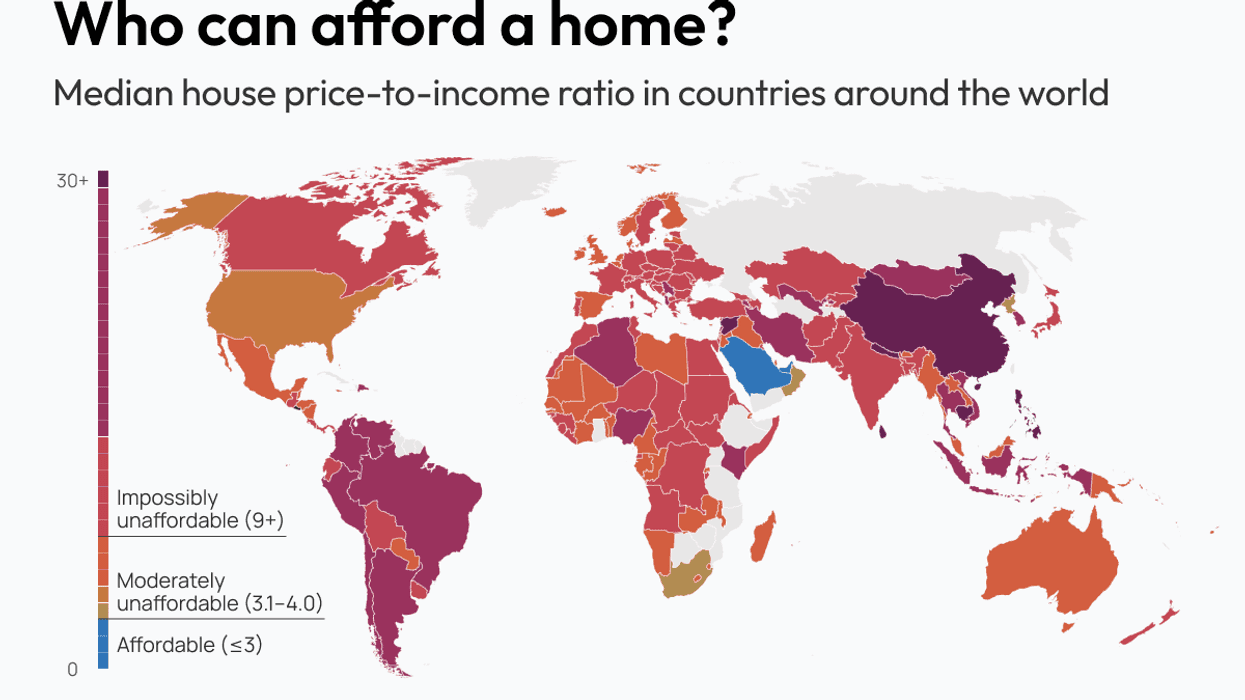
The housing crisis is global
Credit: GZERO Media / Eileen Zhang
In more than half of the countries in the world, buying a home is now classified as “impossibly unaffordable.” According to the UN’s 2026 World Cities Report, the global average house price-to-income ratio – which measures how many years of a median household’s annual income it takes to purchase a median-priced home – rose from 9.3 in 2010 to 11.2 [...]
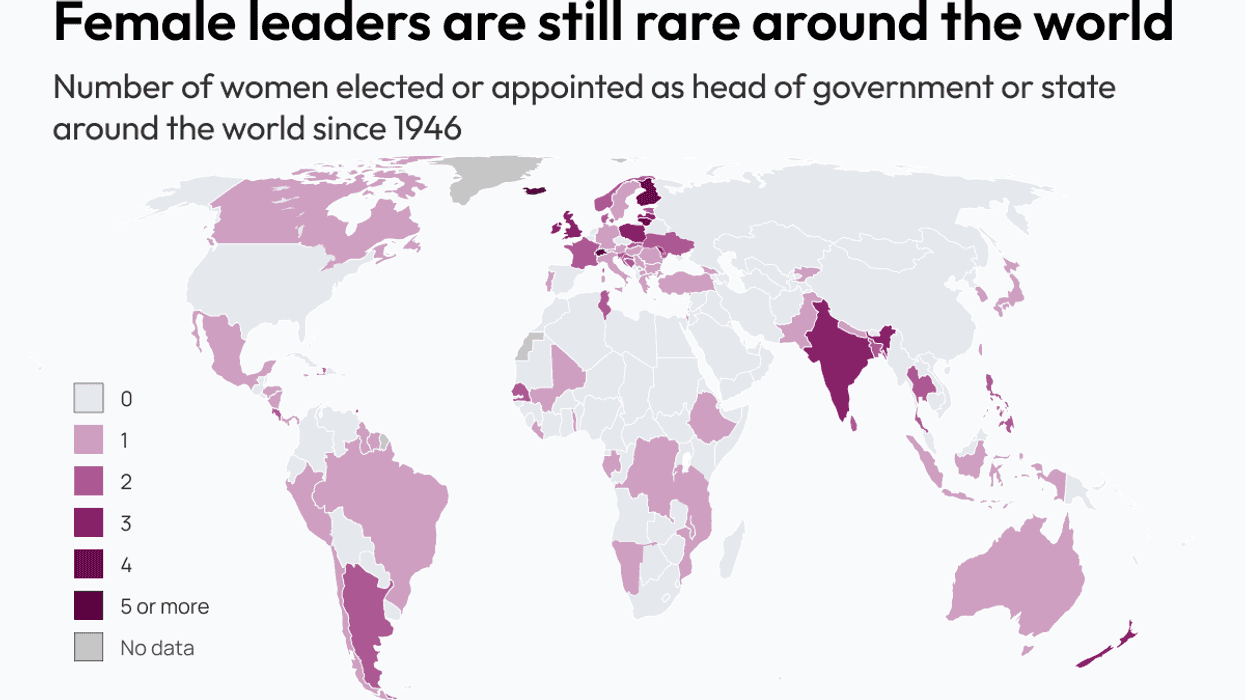
Female leaders are still rare around the world
Eileen Zhang
Several elections next year could bring historic firsts for women in politics. In France, Marine Le Pen leads the polls in the country’s presidential race, while Ilse Aigner is the leading contender to become Germany’s next president. Meanwhile, attention is already turning to the 2028 US presidential race, and former Vice President Kamala Harris [...]
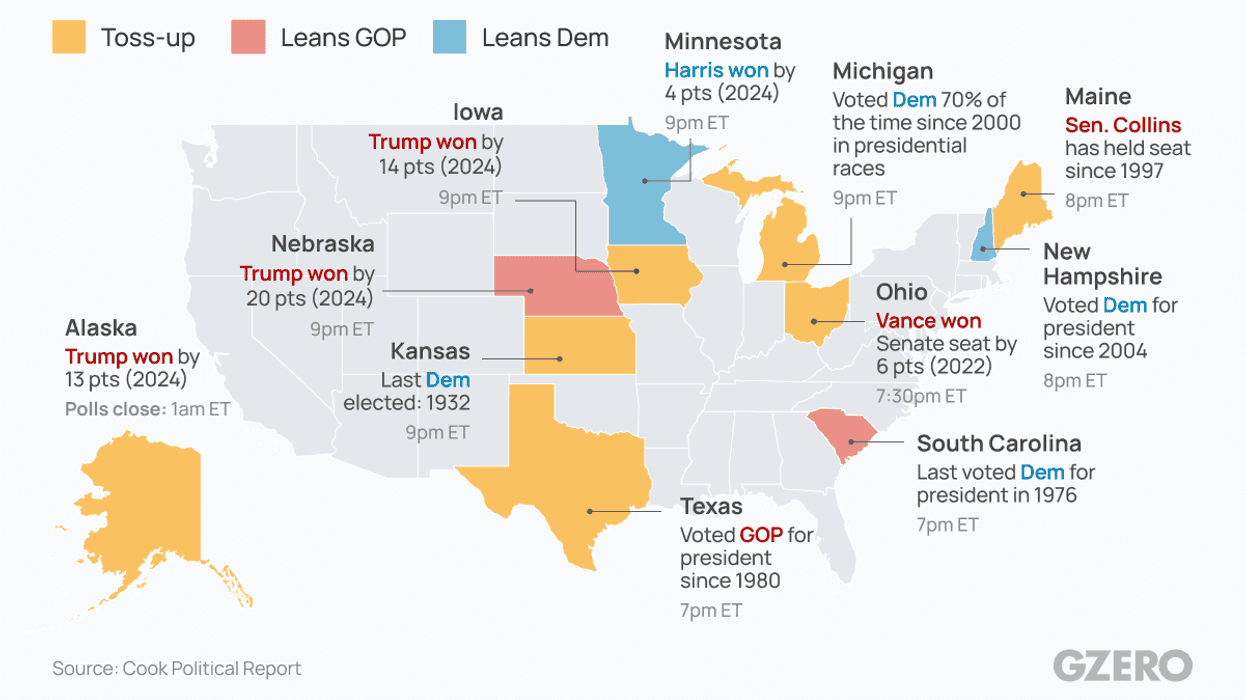
The midterms: Races that could decide the Senate
Eileen Zhang
If predictions hold, Democrats are on track to win a majority of seats in the House. The real battle today is for the Senate, where Republicans currently hold 53 seats. Democrats need a net gain of four seats to hold a true majority, since Vice President JD Vance can cast a tie-breaking vote in their favor. We’ve put together a cheat sheet of 11 [...]
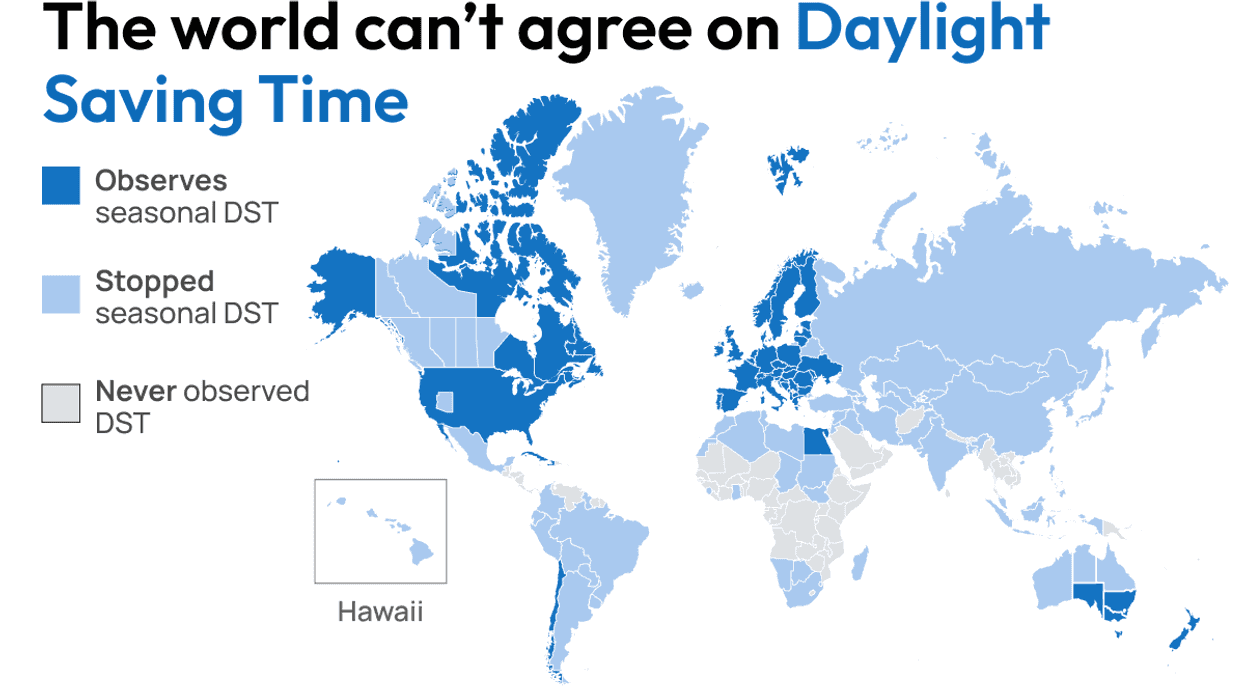
The world can't agree on Daylight Saving Time
GZERO Media
On Sunday, Americans turned their clocks back an hour to mark the end of Daylight Saving Time. The seasonal shuffle began in World War I, when Germany and Austria-Hungary did so to conserve energy. A century later, the world can't agree on whether changing the clocks is worth the trouble. More than 140 countries have used DST at some point, but [...]