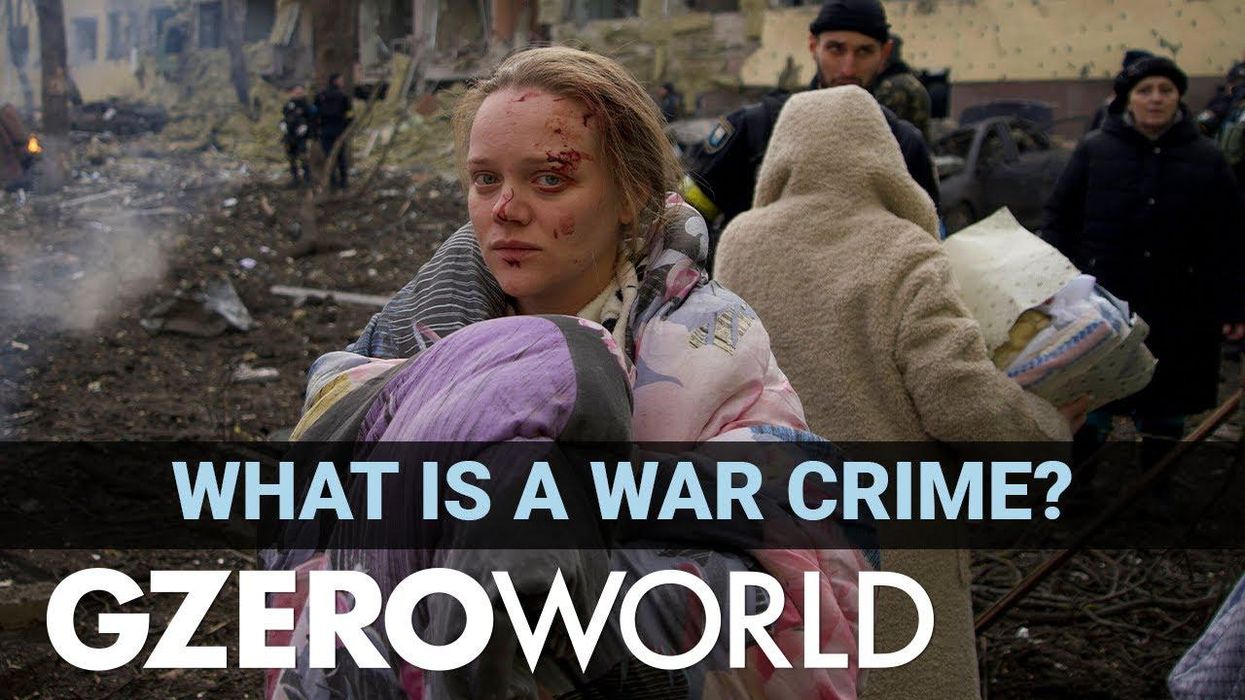
The accusations of Russian war crimes in Ukraine have shocked the world. The Kremlin, of course, denies targeting civilians and says it’s the Ukrainians who are violating the rules of war. So what happens when one side does commit atrocities during a conflict?
It might be prosecuted for war crimes, like the Nazis who were tried in Nuremberg after World War II, just a few years before the latest version of the Geneva Convention was ratified in 1949, establishing the core of international humanitarian law.
More recently, the UN has set up special courts to prosecute war crimes like those in the former Yugoslavia (this week is the 30th anniversary of the start of the war in Bosnia), and 20 years ago the UN-backed International Criminal Court was established.
Such bodies were able to try the likes of Slobodan Milošević, the former president of Yugoslavia, and convict Charle Taylor, the Liberian warlord-turned-president.
But others evaded justice. Not everyone is on board with international tribunals for war crimes.
The US, China, and Russia have not joined the ICC — in the American case, Bill Clinton tried but it was never ratified by Congress.
Lack of jurisdiction will make it hard — but not impossible — to go after Russians accused of war crimes in Ukraine.