VIDEOSGZERO World with Ian BremmerQuick TakePUPPET REGIMEIan ExplainsGZERO ReportsAsk IanGlobal Stage
Site Navigation
Search
Human content,
AI powered search.
Latest Stories
Sign up for GZERO Daily.
Get our latest updates and insights delivered to your inbox.
Puppet Regime is up for a Webby Award!
VOTE HERE
GZERO World Clips
Highlights from the GZERO World with Ian Bremmer weekly television show.
Presented by
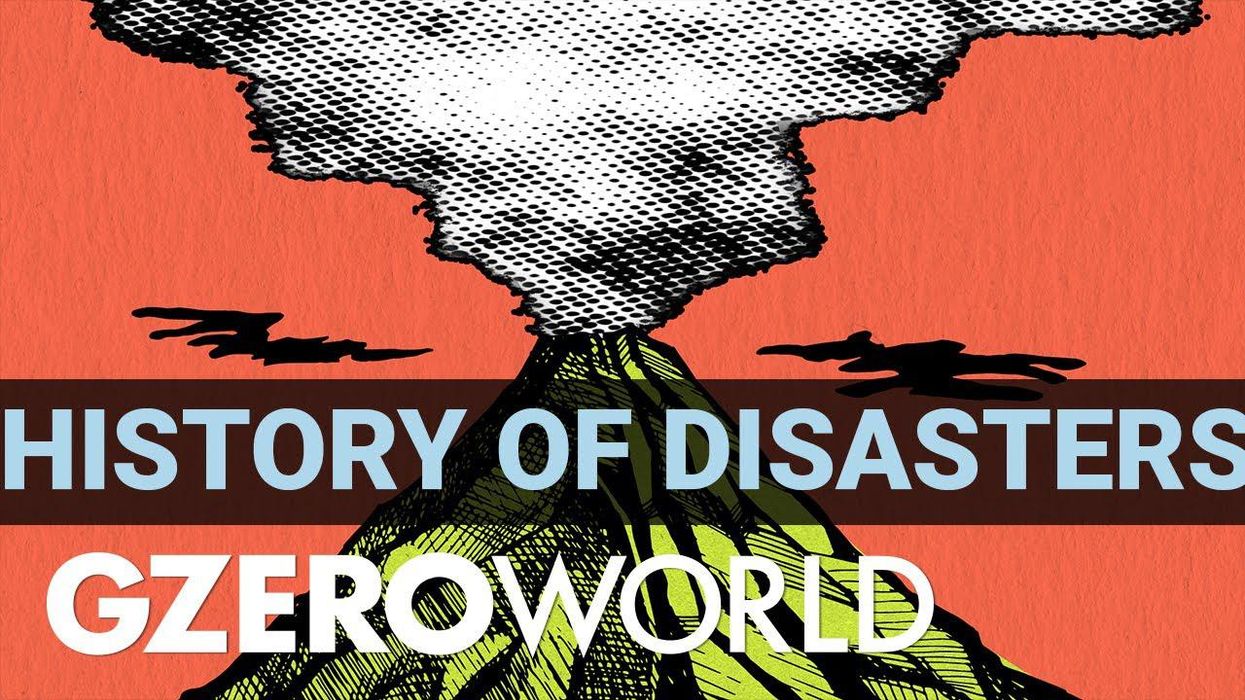
It's easy to judge the Pompeiians for building a city on the foothills of a volcano, but are we really any smarter today? If you live along the San Andreas fault in San Francisco or Los Angeles, geologists are pretty confident you're going to experience a magnitude 8 (or larger) earthquake in the next 25 years—that's about the same size as the 1906 San Francisco quake that killed an estimated 3,000 people and destroyed nearly 30,000 buildings. Or if you're one of the 9.6 million residents of Jakarta, Indonesia, you might have noticed that parts of the ground are sinking by as much as ten inches a year, with about 40 percent of the city now below sea level.
The fact is, human beings just aren't all that great at learning from past disasters, and that includes the ones we can see coming, like those caused by climate change. Firefighters in the American West, for instance, are bracing for the worst wildfire season in recorded history, thanks to protracted drought and record-high temperatures. And yet, a June report found that California state and local officials are encouraging rebuilding in areas destroyed by wildfires.
After more than a year of enduring the greatest calamity of our lifetimes in the COVID-19 pandemic, it's time we learned a lesson or two from the disasters of the past.
Watch the episode: Predictable disaster and the surprising history of shocks
Keep reading...Show less
More from GZERO World Clips
GZERO Series
GZERO World with Ian Bremmer
Puppet Regime
Quick Take
ask ian
Ian Explains
GZERO Reports
GZERO Europe
The Debrief
GZERO Daily: our free newsletter about global politics
Keep up with what’s going on around the world - and why it matters.