Graphic Truth
Graphic Truth: US government to get 15% of chip sales to China
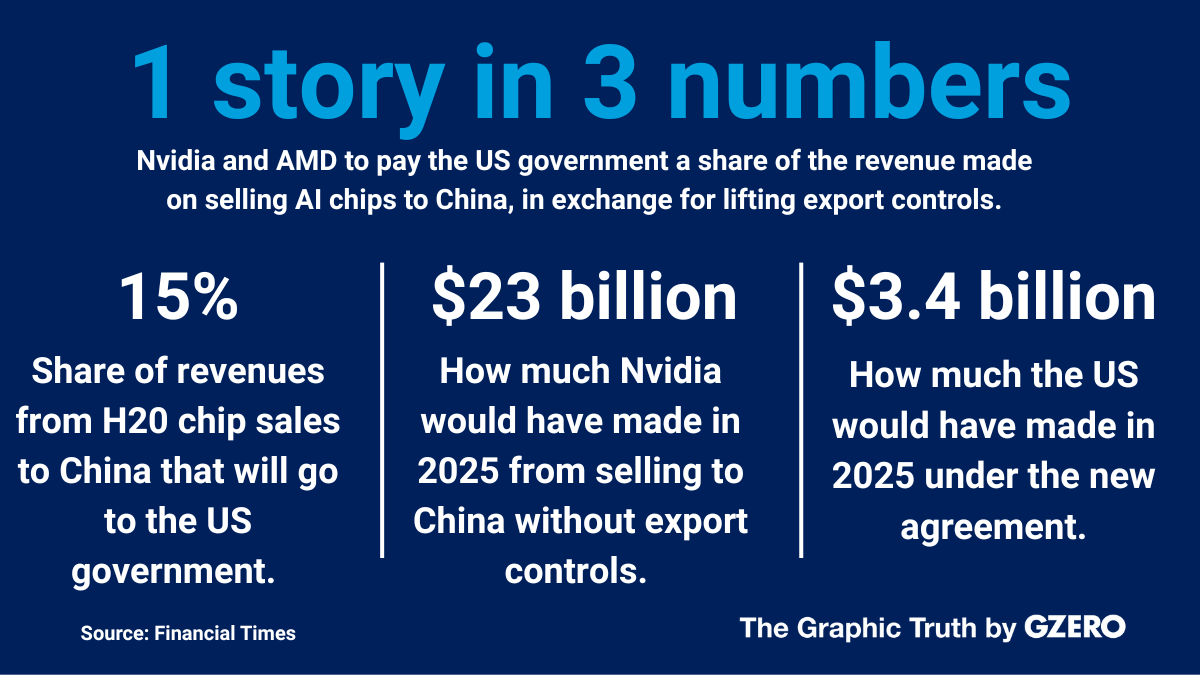
In a first-of-its-kind deal, Nvidia and AMD will hand 15% of revenues from AI chip sales to China over to the US government in exchange for export licenses.
Riley Callanan
In a first-of-its-kind deal, Nvidia and AMD will hand 15% of revenues from AI chip sales to China over to the US government in exchange for export licenses.
In a first-of-its-kind deal, Nvidia and AMD will hand 15% of revenues from AI chip sales to China over to the US government in exchange for export licenses. The arrangement, greenlit after Nvidia CEO Jensen Huang met with Donald Trump, reverses an earlier ban and has national security hawks on edge, warning the chips could boost China’s military AI capabilities. The move comes amid ongoing US-China trade talks and pressure from Beijing to relax tech controls. Here’s a look at what the US’s coffers stand to gain through the deal, based on Nvidia’s estimated sales in China this year if export controls had been lifted.
The US and China are racing to develop increasingly powerful AI, but what does it actually mean to win? Former White House AI advisor Ben Buchanan joins Ian Bremmer to discuss the geopolitical stakes of superintelligence, the growing risks of AI development, and how democracies can compete without sacrificing their values.
Look on the bright side. #PUPPETREGIME
At the 2026 Paris Peace Forum, former Georgian President Salome Zourabichvili reflects on why Western democracies failed to respond more forcefully to Vladimir Putin’s efforts to expand Russian influence over neighboring countries and challenge European security, despite years of warning signs.
As voters spend more time scrolling through social media on their phones, politicians are following them. Long reliant on horizontal TV ads, candidates are increasingly embracing short, vertical videos to grab voters' attention and get their message out.